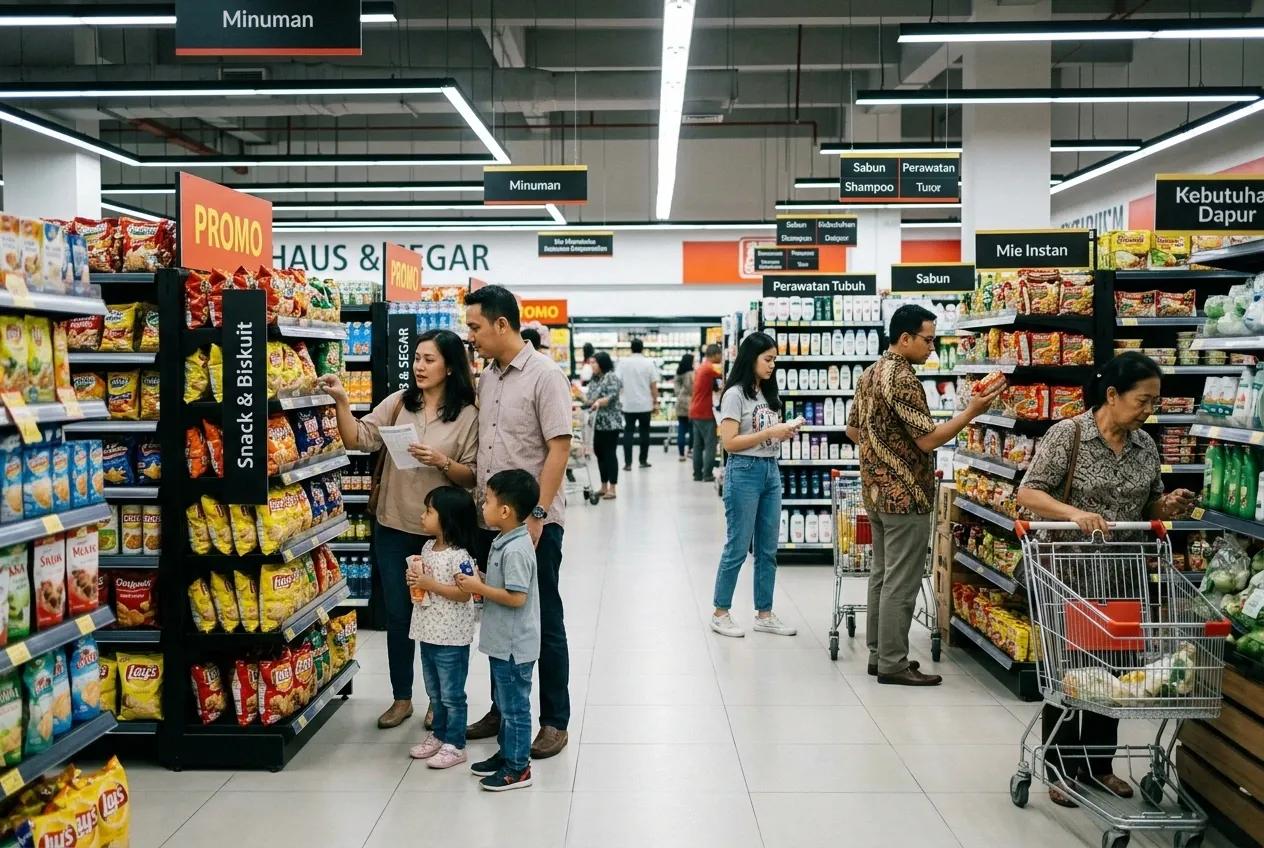
Every FMCG product is designed for a specific group of consumers. Each customer segment has different needs, preferences, purchasing habits, and buying behavior.
Understanding your target market is the foundation of many business decisions. It influences product development, pricing, packaging, marketing campaigns, and even distribution strategies. When businesses know who their customers are, they can develop products and deliver them through the channels that best match customer needs.
Target market insights also help businesses understand customer expectations. Companies can identify which products are in demand, what type of packaging customers prefer, and where products should be available.
That is why identifying the right target market is an essential part of every FMCG business strategy. It informs promotional campaigns and digital advertising, pricing strategies, and distribution planning.
How to Identify the Right Target Market for FMCG Businesses
In the FMCG industry, consumer preferences can vary based on location, demographics, lifestyle, and purchasing behavior.
Below are several approaches commonly used to identify the right target market.
- Determine Who Your Customers Are
Once a product concept has been defined, the next step is identifying the customers most likely to purchase it. One of the most effective ways to do this is through market segmentation, which groups consumers based on shared characteristics and behaviors.
- Geographic
Groups customers based on location, such as country, region, city, or climate. Consumer demand often differs between locations, making geography an important factor in determining product availability.
For example, certain food products may sell better in regions where the ingredients are commonly consumed. Likewise, consumers in urban areas often have a higher demand for convenient products such as ready-to-eat meals and instant food.
- Demographic
Classifies customers based on characteristics such as age, gender, income, occupation, education, and family status.
For example, cosmetic products designed for adults typically use packaging, colors, and messaging that appeal to their target audience. Those same products may not be as attractive to younger consumers with different preferences.
- Psychographic
Focuses on consumer lifestyle, interests, values, personality, and purchasing preferences.
For example, consumers with an active lifestyle may prefer healthier food and beverage options, while others may prioritize convenience or affordability. - Understand Your Target Market's Needs
After identifying potential customer segments, the next step is understanding what those customers actually need. Market research helps businesses understand product preferences, purchasing behavior, price expectations, packaging preferences, and the factors that influence buying decisions.
Businesses can also validate their assumptions through product testing, trade fairs, and bazaars. Customer feedback provides valuable insights into whether a product meets market expectations and highlights areas that should be improved before expanding distribution. - Evaluate Your Target Market
Identifying a target market is an ongoing process. Consumer preferences, market conditions, and purchasing behavior can change over time. Businesses can assess their target market by monitoring sales performance, customer feedback, purchase frequency, product demand, and market size. - Determine Your Marketing Strategy
Different customer segments respond to different marketing channels and promotional activities. Businesses should choose marketing strategies based on how their target customers discover, evaluate, and purchase products.
For example, younger consumers may respond well to social media campaigns and digital content, while other customer groups may be more influenced by in-store promotions, product demonstrations, or traditional advertising.
Marketing and distribution strategies should also work together. Understanding where customers prefer to shop helps businesses determine the right sales channels and ensure products are available where demand exists. - Evaluate Market Response
Launching a product is only the beginning. Businesses need to continuously monitor how the target market responds to their products and marketing activities.
Sales performance, customer feedback, purchase frequency, and product demand provide valuable insights into customer acceptance and market potential.
In addition to market performance, businesses should monitor financial indicators such as revenue, marketing expenses, distribution costs, and operating expenses to measure the overall effectiveness of their marketing and investments.
BOSNET Solutions for FMCG Business
BOSNET provides an integrated suite of solutions that helps improve productivity, increase visibility, and manage distribution activities across the business. The following solutions are designed to increase revenue and reduce costs:
- Distribution Management System (DMS)
Distribution Management System (DMS) is a core solution designed to manage and automate distribution processes end-to-end. Built for distributors with high transaction volumes and complex operational requirements, DMS centralizes key distribution activities into a single platform. - Mobile Distribution
Mobile Distribution is a mobile application designed to help field sales teams manage customer visits and sales activities.
The application provides visibility into field operations, standardizes sales reporting, and enables sales representatives to record activities directly on their mobile devices. As a result, businesses can monitor performance, improve execution, and identify sales opportunities more effectively. - Warehouse Management System (WMS)
Warehouse Management System (WMS) helps distributors manage warehouse operations with greater accuracy and efficiency. From inventory management and product tracking to inbound, outbound, and order fulfillment processes, WMS improves inventory visibility, reduces operational errors, and optimizes warehouse productivity. - Smart Route
Smart Route analyzes key parameters for delivery planning such as delivery schedules, customer locations, vehicle capacity, and route conditions. The system generates the most efficient delivery routes to reduce transportation costs, shorten delivery times, improve vehicle utilization, and increase delivery productivity. - Mobile Delivery
Mobile Delivery enables drivers and delivery teams to manage distribution activities directly from their mobile devices. The solution provides real-time delivery tracking, digital proof of delivery, and delivery confirmation.
150+ Renowned Brands Trust BOSNET for Their Distribution
Over 150 brands rely on BOSNET to manage their distribution and sales processes efficiently. BOSNET provides an end-to-end solution for distributors to track operations, performance, and sales in real time.
Contact us to see how BOSNET can streamline your operations and deliver real-time visibility across your distribution network.
#BOSNET #BestFMCGRunsBOSNET #Distribution #SupplyChain #IncreaseRevenue #ReduceCost