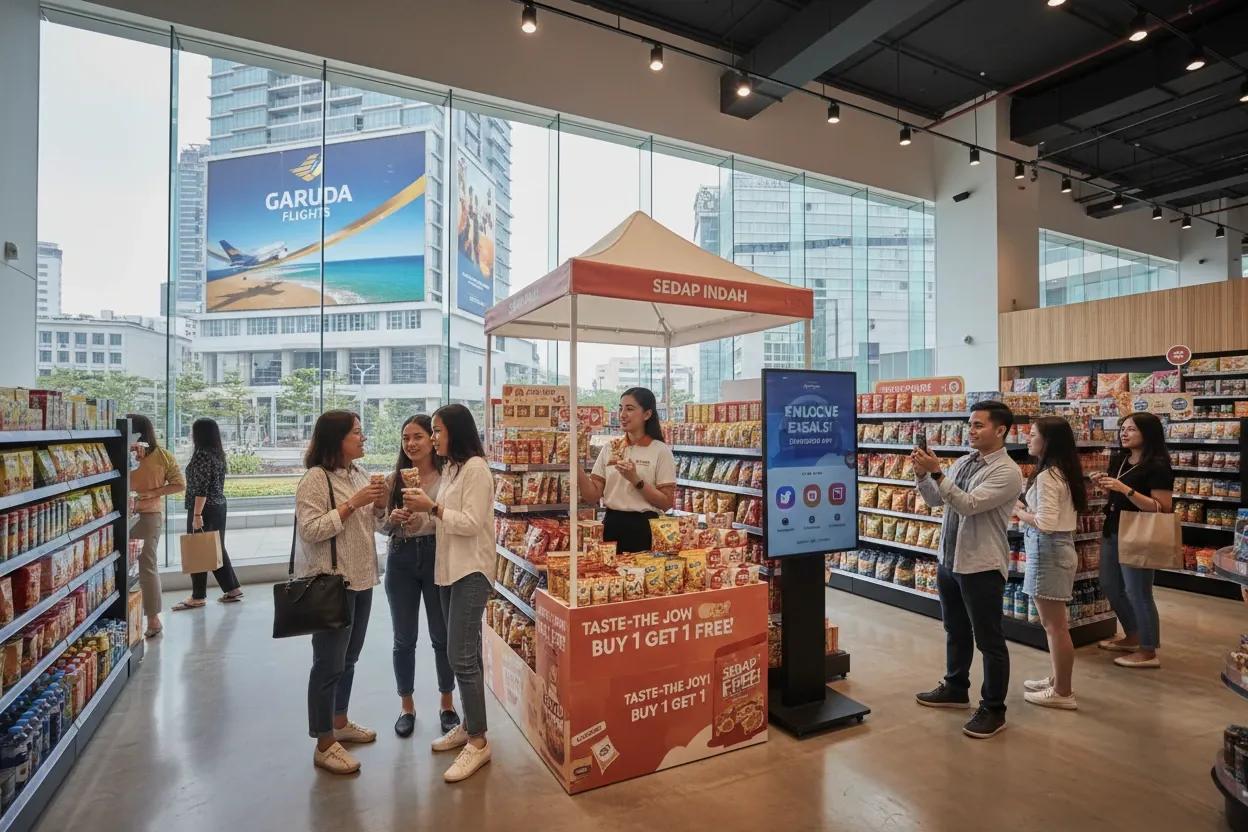
Marketing strategies such as ATL, BTL, and TTL continue to develop along with changes in market trends and customer behavior. Promotional activities today are significantly different from five years ago, especially with the growing use of digital channels and integrated marketing.
Companies are now required to manage promotional campaigns across multiple channels while maintaining coordination between marketing activities and field execution. As marketing operations become increasingly complex, businesses need better visibility and faster operational coordination.
What are ATL, BTL, and TTL?
ATL, BTL, and TTL are marketing strategies that define how brands communicate with their audience. Each approach uses a different delivery method and target focus, depending on campaign objectives and customer engagement goals.
- Above The Line (ATL)
ATL is a marketing strategy focused on building broad brand awareness. It uses mass communication channels such as television, radio, and digital media to reach a wide audience and increase visibility at scale. - Below the Line (BTL)
BTL is a more targeted and personal marketing approach. It targets specific customer groups through direct activities like in-store promotions, events, and personalized campaigns. The main goal is to increase engagement and encourage direct interaction with the brand. - Through the Line (TTL)
TTL combines the advantages of both ATL and BTL to create a 360° campaign that covers the full customer journey, from building initial awareness through to customer retention. TTL gives businesses the flexibility to reach a broad audience while still engaging specific segments with personalized touchpoints.
Which Should You Use?
The right strategy depends on the business's goals and needs. It comes down to what the business is trying to achieve: building brand awareness, increasing engagement, or driving sales.
ATL works well for businesses looking to expand brand exposure at scale. BTL is a better fit when the goal is to reach a specific audience with a more personal and targeted approach. For businesses that want both working together in one integrated campaign, TTL is the optimal choice.
Promotion Example of ATL, BTL, and TTL
- Above the Line (ATL)
ATL marketing commonly uses conventional media channels to reach a broad audience.
• Television Advertising
Television remains one of the most widely used ATL promotional channels because it can reach audiences across local, national, and international markets.
• Radio Advertising
Radio is often used to support advertising frequency and creative campaign delivery through audio-based promotions.
• Print Advertising
Magazines and newspapers are still used as promotional media to increase brand exposure through printed advertisements. - Below the Line (BTL)
BTL marketing focuses on more targeted promotional activities and direct audience interaction.
• Direct Marketing
Promotional campaigns can be delivered personally, tailored to customer needs, via email, text messages, or other direct communication channels.
• Sponsorship Activities
Companies can increase brand visibility by sponsoring events, communities, or specific activities.
• In-Store Promotion
Promotional activities conducted in-store help brands engage customers directly at the point of purchase. - Through the Line (TTL)
TTL combines ATL and BTL approaches within a connected marketing campaign.
• Digital Marketing
Digital campaigns can reach broad audiences through online media while also supporting personalized engagement based on customer behavior and preferences.
• 360 Marketing Campaigns
TTL supports integrated campaigns across multiple channels to create connected customer experiences from awareness to customer retention.
Difficulty in Implementing ATL, BTL, and TTL
Implementing ATL, BTL, and TTL strategies involves challenges in coordinating multiple marketing channels and managing large amounts of data. Each campaign requires proper planning so promotional activities can run consistently across media, stores, and field operations.
Campaign execution can also become challenging when promotional materials are not installed properly in stores or when merchandising activities are not carried out correctly. Without proper monitoring, businesses may struggle to measure campaign results and overall marketing performance.
Digitalizing ATL, BTL, and TTL Marketing Strategy
Distributors now must adapt to evolving market demands. Marketing campaigns are no longer solely about promotion but also about how campaign execution directly links to sales, stock levels, and field activities.
With digital distribution systems, sales orders can be processed directly through the Distribution Management System (DMS), while stock data updates automatically through the Warehouse Management System (WMS). Promotional activities can also be monitored directly through E-Claim.
By integrating operational and marketing activities, ATL, BTL, and TTL campaigns can connect directly with field execution, sales performance, and distribution activities. Companies can monitor campaign implementation, product movement, and promotional effectiveness from a centralized system.
Unfortunately, many distributors still face difficulties in executing marketing strategies because operational activities are still managed manually. As a result, campaign monitoring, stock coordination, and sales execution often become less efficient.
Through BOSNET distribution software, distributors can digitalize ATL, BTL, and TTL within one integrated platform.
150+ Renowned Brands Trust BOSNET for Their Distribution
Over 150 brands rely on BOSNET to efficiently manage their distribution and sales processes. BOSNET provides an end-to-end solution for distributors to track operations, performance, and sales in real time.
Contact us to see how BOSNET can streamline your operations and deliver real-time visibility across your distribution network.
#BOSNET #BestFMCGRunsBOSNET #Distribution #SupplyChain #IncreaseRevenue #ReduceCost