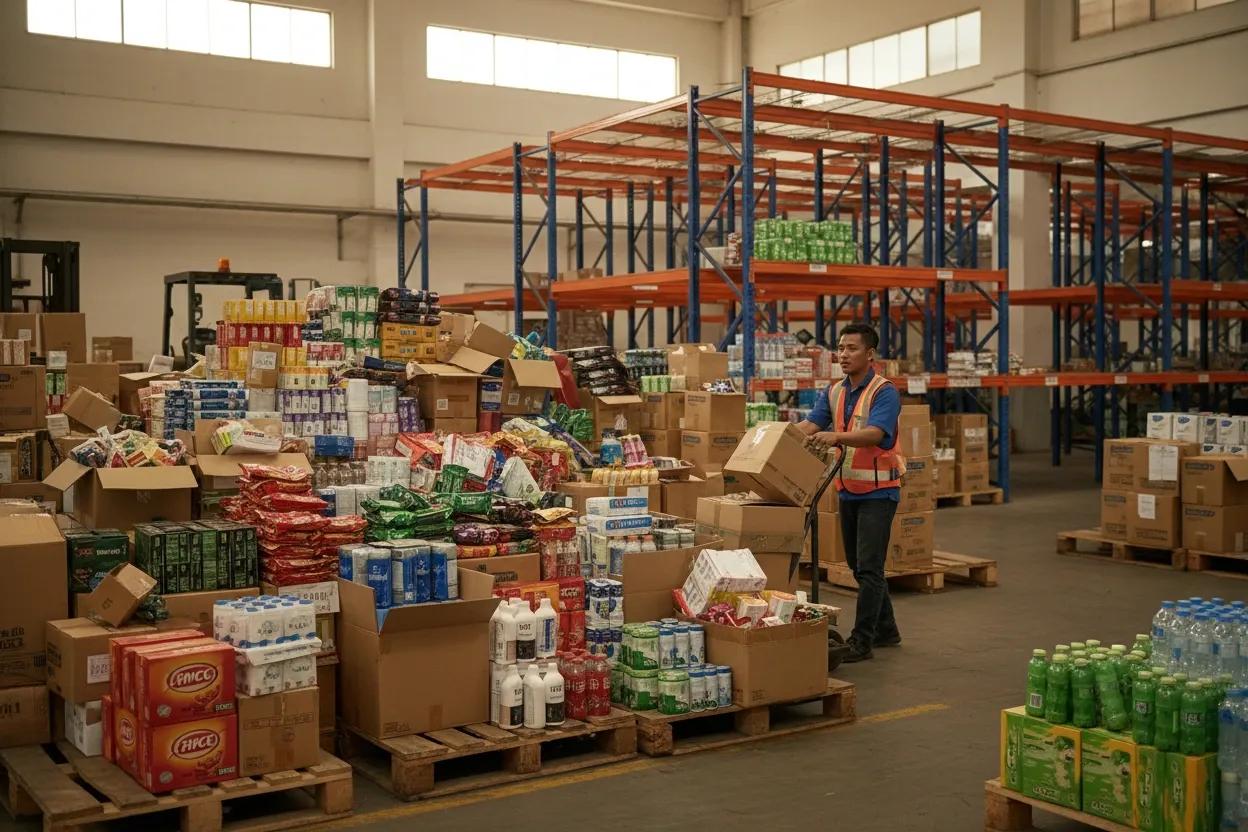
Warehouses often handle inventory that varies in size, quantity, and frequency of movement. Small items can take up valuable shelf space when they are not arranged according to their dimensions and storage requirements. Staff may also spend unnecessary time checking different storage areas when product locations are not easy to identify.
Choosing a suitable storage method can help warehouses make better use of available space while keeping inventory accessible during daily activities. Bin storage offers a practical option for handling small and medium-sized items, particularly in warehouses that need designated spaces for individual products or SKUs.
What Is Bin Storage?
Bin storage is a warehouse storage method that uses individual containers to hold and arrange inventory. Each container is assigned to specific items, giving warehouse teams a designated location for storing and retrieving stock.
The method is commonly applied to small and medium-sized products that need dedicated storage spaces. Separating items into individual containers can help staff identify products during daily warehouse activities while making use of available storage capacity.
Common examples include electronic components, spare parts, accessories, tools, and other small inventory. The warehouse bins are typically placed on racks or shelving units and arranged according to product category, item type, or Stock Keeping Unit (SKU).
Function of Bins in Warehouses
Storage bin provides warehouses a practical option for handling small inventory. Separating products into assigned locations helps warehouse staff manage stock placement and carry out daily activities with less time spent locating items.
- Grouping Inventory
Products can be arranged according to category, item type, size, or usage frequency. Placing similar items together helps staff identify where each product belongs and maintain an orderly inventory layout. - Maximizing Storage Capacity
Individual containers can be placed on racks or shelving units to utilize available floor and vertical space. Placing bins on racks or shelving units allows multiple inventory items to be stored within a compact area. - Simplifying Picking and Putaway
A designated bin location gives warehouse staff a specific place to store and retrieve each item. Picking becomes easier because staff can locate inventory based on its assigned bin, while putaway activities can follow the same location system after receiving or returning stock. - Reducing Search Time
A defined location allows warehouse personnel to go directly to the assigned area when looking for a product. Labels or location records can guide staff to the required item instead of checking multiple storage areas.
Key Elements of Bin Storage
Effective bin storage involves several elements that help warehouses organize, identify, and manage inventory. The setup typically includes:
- Warehouse Bins
Warehouse bins are containers used to store small and medium-sized inventory items. They come in various sizes and materials, such as plastic or metal, allowing warehouses to select options based on product dimensions, quantities, and storage conditions. - Racks
Storage racks provide designated spaces for arranging multiple bins within the warehouse. Options can include conventional shelving, multi-level racks, or rack systems designed specifically for bin containers. - Labels and Identification Codes
Each bin requires an identification method so warehouse staff can recognize its contents and location. Labels may contain product names, SKU numbers, barcodes, QR codes, or other identifiers. Identification codes also help staff verify inventory during picking and putaway activities. - Warehouse Management System (WMS)
A Warehouse Management System (WMS) manages digital information related to warehouse inventory, including stock quantities, storage locations, and inventory movements. Staff can use the system to check where products are stored and record movements between locations.
Optimizing Warehouse Bin with BOSNET Warehouse Management System (WMS)
BOSNET Warehouse Management System helps businesses manage stock across the warehouse. By automating inventory processes and providing real-time visibility, businesses can identify products faster, track stock movement accurately, and maintain records across multiple warehouse locations.
With its self-correcting system, BOSNET Warehouse Management System automatically updates inventory records based on the latest physical activity, delivering precise data for smarter decision-making and helping FMCG businesses increase revenue and reduce costs.
Contact us to see how BOSNET can efficiently manage your warehouse.
#BOSNET #BestFMCGRunsBOSNET #Distribution #SupplyChain #IncreaseRevenue #ReduceCost