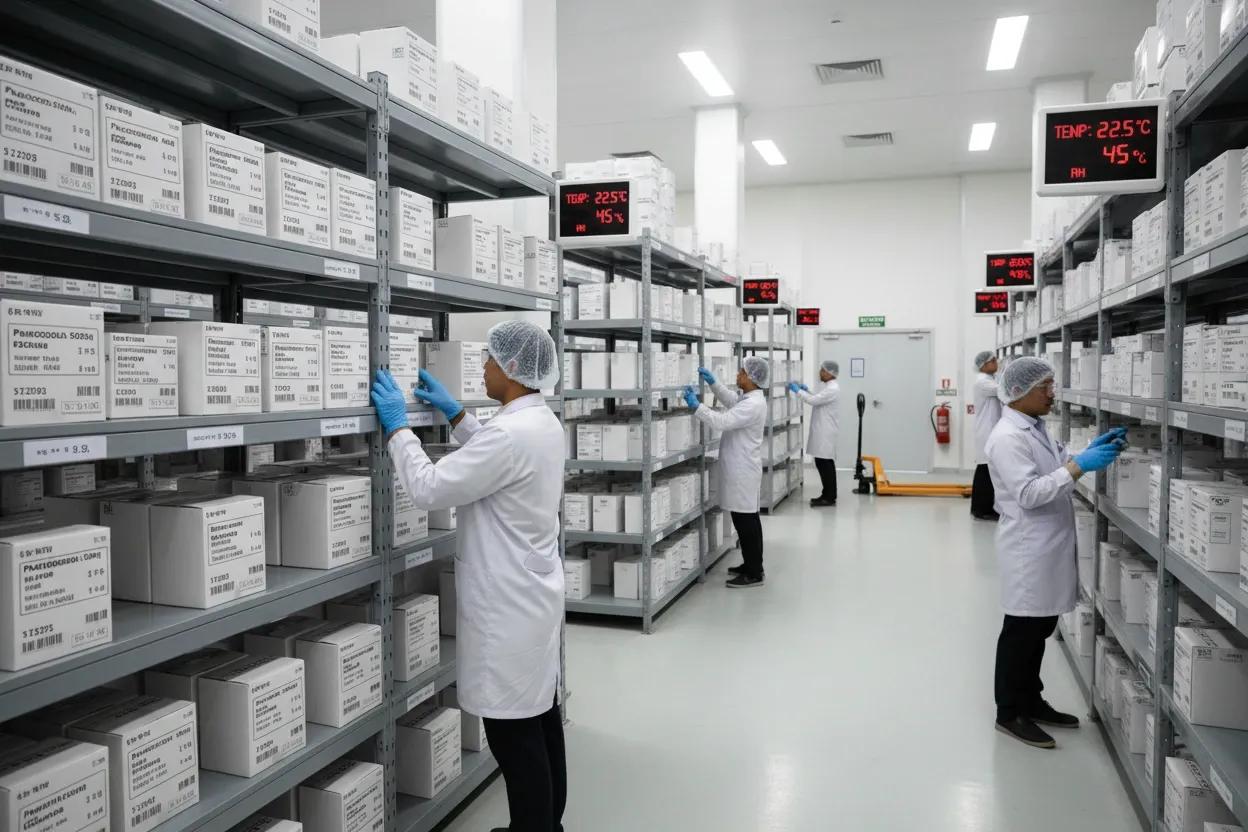
Distribution in the pharmaceutical industry requires a structured process across the supply chain. Without proper standards, gaps in handling and storage can affect product quality and availability.
In Indonesia, this is regulated by BPOM through Good Distribution Practice, known as CDOB. This standard guides how medicines are handled, stored, and distributed
Definition of CDOB
CDOB (Cara Distribusi Obat yang Baik) is a set of operational standards and guidelines designed to ensure the quality, safety, and efficacy of pharmaceutical products are maintained throughout the distribution process.
CDOB applies to every stage in the supply chain, including storage, handling, transportation, and delivery to end users. Each process is managed under controlled conditions to keep products within required quality standards.
The primary objective of CDOB is to prevent the circulation of counterfeit or damaged medicines as well as products that may pose risks to consumers, including serious health consequences.
Parties Involved in CDOB Distribution
CDOB defines clear responsibilities across the pharmaceutical distribution chain. Each party plays a role in maintaining product quality, safety, and compliance at every stage.
- Manufacturers
The starting point of the chain. Manufacturers are responsible for ensuring products leave the facility in full compliance with quality standards before entering distribution. - Pharmaceutical distributors (PBF)
PBFs handle the storage and transfer of pharmaceutical products between manufacturers and end-point facilities. - Hospitals & Pharmacies
As the final recipients in the formal distribution network, hospitals and pharmacies are responsible for maintaining product integrity up to the point of patient use. - Staff
This includes all staff operating within the facility, such as transporters, cleaning staff, delivery teams, and security personnel. If they interact with the facility or its products, CDOB applies to them. - Delivery Team
Ensure medicines are transported under required conditions, including temperature control and secure handling.
Important Distribution Aspect of CDOB
CDOB outlines key aspects that must be managed across the pharmaceutical distribution process, they are:
- Quality management
Covers policies, procedures, and monitoring activities that ensure all processes meet defined standards and remain consistent. - Organization, management, and personnel
Defines roles, responsibilities, and qualifications required for all individuals involved in distribution activities. - Buildings and equipment
Includes cleanliness of warehouse, proper storage areas, pest prevention and control programs, temperature mapping, and routine equipment maintenance. - Operational activities
Covers procurement of medicines and raw materials, supplier and customer selection, stock opname, and distribution processes. - Audit
Regular internal and external reviews to ensure compliance with CDOB guidelines and identify gaps in procedures. - Transportation
Ensures products are delivered under controlled conditions, including temperature management and secure handling during transit. - Handling of suspected counterfeit products
Defines procedures for identifying, isolating, and reporting products that are suspected to be falsified. - Distribution facilities
Refers to the infrastructure and systems used to manage storage and product flow within the supply chain. - Documentation and traceability
Includes accurate record-keeping and geotagging to track product movement and ensure transparency. - Raw materials
Covers handling and distribution requirements for pharmaceutical raw materials to ensure they meet quality standards before use.
Standard Principles of CDOB
CDOB establishes general principles that guide how pharmaceutical products are handled across the distribution chain.
- Applies Across the Full Distribution Cycle
Covers procurement, storage, distribution, and return of medicines and raw materials within the supply chain. - Shared Responsibility Across All Parties
Every party involved is responsible for maintaining product quality and preserving the integrity of the distribution process. - Includes Donated and Clinical Trial Products
The same standards apply to donated medicines and products used in clinical trials, ensuring consistent handling requirements. - Traceability and risk identification
Requires systems that enable track and trace, along with processes to identify and manage potential risks during distribution. - Collaboration across stakeholders
Involves coordination between government authorities, customs, and all parties responsible for pharmaceutical supply. This ensures product quality, safeguards patient safety, and reduces exposure to counterfeit medicines.
150+ Renowned Brands Trust BOSNET for Their Distribution
Over 150 brands rely on BOSNET to manage their distribution and sales processes efficiently. BOSNET provides an end-to-end solution for distributors to track operations, performance, and sales in real time.
Contact us to see how BOSNET can streamline your operations and deliver real-time visibility across your distribution network.
#BOSNET #BestFMCGRunsBOSNET #Distribution #SupplyChain #IncreaseRevenue #ReduceCost