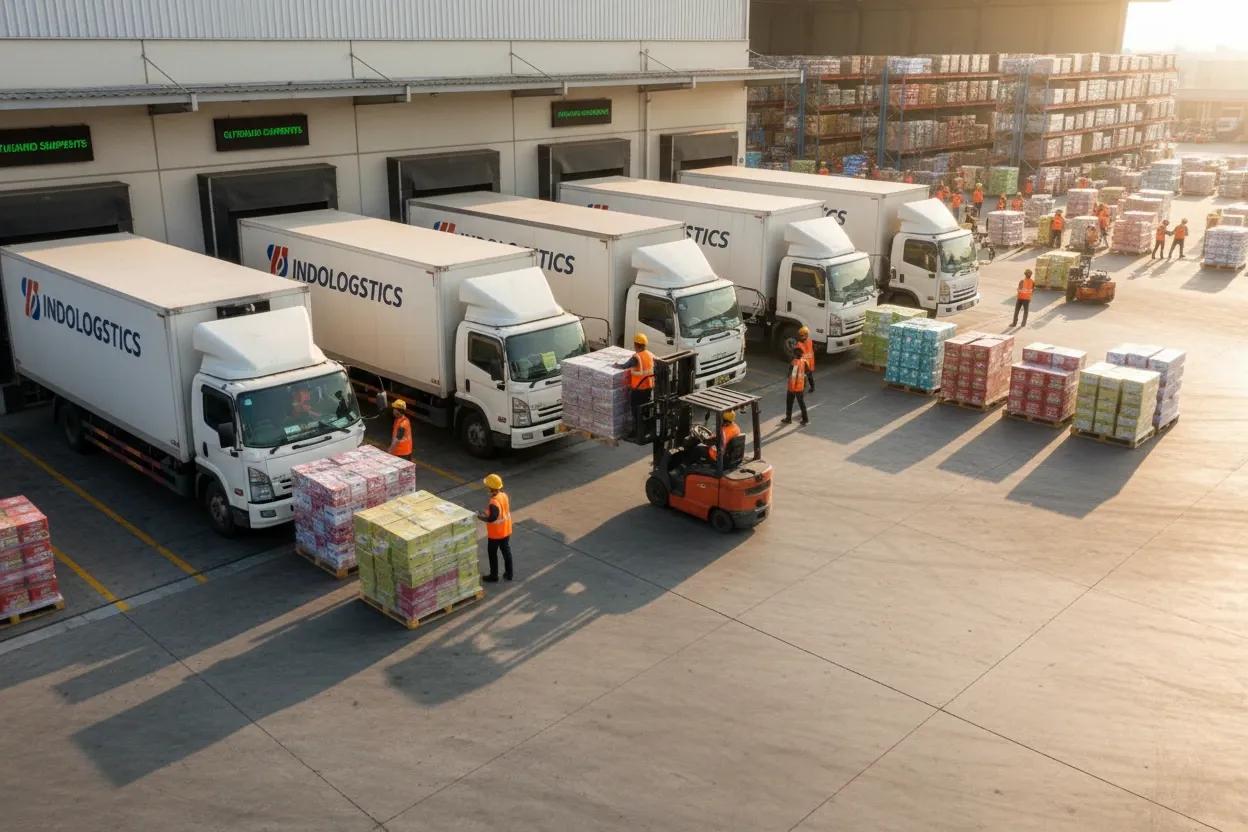
Distribution logistics is one of the most important functions in the supply chain. It serves as the link between manufacturers, distributors, retailers, and customers.
However, distribution logistics involves far more than simply transporting goods from one location to another. It includes a series of interconnected activities, including warehousing, inventory management, order fulfillment, packaging, route planning, and delivery execution. Without proper coordination across these activities, businesses may face delays, inventory issues, and rising operational costs.
Definition of Distribution Logistics
Distribution logistics is the process of planning, managing, and delivering products from a warehouse to customers. It ensures products are available in the right place and can be delivered when needed.
The process includes warehousing, packaging, transportation, and inventory management. Its main objective is to ensure products can be delivered according to schedule while maintaining product quality throughout the distribution process.
Functions of Distribution Logistics
The main purpose of distribution logistics is to help businesses deliver products efficiently while maintaining product availability across the supply chain. Below are some of its key functions.
- Meeting Customer Demand
A well-managed distribution process helps businesses maintain product availability and fulfill customer orders according to delivery schedules. By managing the flow of goods properly, companies can support customer satisfaction and business growth. - Reducing Costs
An efficient distribution network can help reduce transportation, warehousing, and handling costs. By optimizing delivery routes, warehouse operations, and inventory placement, businesses can improve resource utilization and lower operational expenses. - Managing Inventory
Distribution logistics plays an important role in preventing stockouts and excess inventory. Businesses need accurate sales data to estimate demand and maintain appropriate stock levels.
Many large distributors, particularly in the FMCG industry, use Distribution Management Systems (DMS) to analyze sales data and support inventory planning. Warehouse Management Systems (WMS) are also used to manage stock movements and activities within the warehouse. - Increasing Flexibility
A flexible distribution network allows businesses to respond quickly to changes in customer demand and market conditions. With better visibility into inventory, orders, and distribution activities, companies can adapt their operations and maintain product availability when requirements change.
Types of Distribution Logistics
Different types of distribution logistics are used depending on business objectives, product characteristics, and distribution coverage. Each type has its own approach and benefits.
- Direct
Delivers products directly to end customers without using intermediaries. It is commonly used by businesses that sell specialized products or have well-established distribution channels.
One of the main advantages of direct distribution is that manufacturers maintain full control over the sales and delivery process. They can manage customer interactions directly and oversee distribution from start to finish. - Indirect
Involves intermediaries, including distributors, wholesalers, and retailers, to deliver products to customers. It is widely used by businesses that produce goods in large volumes or operate across broad geographic areas.
For FMCG companies, indirect distribution plays an important role in expanding market coverage. By working with distribution partners, businesses can distribute products in different regions without building their own network.
Another advantage is cost efficiency. Distribution cost, including transportation, warehousing, and handling, can be shared among distribution partners, helping businesses reduce cost.
Examples of Distribution Logistics in the Industry
Distribution logistics is used across various industries to manage product movement from warehouses to distributors, retailers, and end customers. Different industries have unique distribution requirements based on product characteristics, delivery volumes, and market coverage.
- Food
In the food industry, distribution logistics supports the delivery of packaged foods, snacks, and perishable products to supermarkets, minimarkets, and traditional stores. - Beverage
Handle a wide range of products, including soft drinks, juices, bottled water, and alcoholic beverages. Distribution activities focus on supplying products to retail stores and other sales channels. - Pharmaceutical
Involves medicines, health supplements, and healthcare products. - Personal Care and Cosmetics
Distributes skincare products, beauty products, and personal hygiene items, including soap, shampoo, toothpaste, and makeup. Products are supplied to supermarkets, pharmacies, convenience stores, and cosmetic retailers. - Cigarette and Tobacco
The cigarette and tobacco industry distributes regulated products, including cigarettes and other tobacco-based goods. - Automotive Supporting
Supply spare parts, lubricants, batteries, and other vehicle-related products. These products are distributed to workshops, automotive stores, dealerships, and retail outlets. - Building Material
Manage the distribution of construction materials, tools, and hardware products. - Other FMCG Distributors
Many FMCG distributors handle a variety of household products, packaged goods, snacks, and other fast-moving consumer products. Their distribution networks help supply products to supermarkets, minimarkets, traditional stores, and other retail channels across multiple regions.
BOSNET Solutions for Distribution Logistics
BOSNET provides an integrated suite of solutions that helps improve productivity, increase operational visibility, and manage distribution activities across the business. The following solutions are designed to support distribution logistics.
- Distribution Management System
Distribution Management System (DMS) is designed to manage and automate distribution processes from order management to sales execution. Built for distributors with high transaction volumes and complex operational requirements, DMS centralizes key distribution activities within a single platform. - Warehouse Management System
Warehouse Management System (WMS) helps distributors manage warehouse operations and inventory movement with greater accuracy.
The solution supports stock management, product tracking, inbound and outbound activities, and order fulfillment processes. - Smart Route
Smart Route helps businesses plan delivery routes based on delivery schedules, customer locations, and route information.
The system generates route recommendations that help reduce travel distance, improve delivery performance, and support field team productivity throughout daily distribution activities. - Mobile Delivery
Mobile Delivery enables drivers and delivery teams to manage distribution activities directly from mobile devices. The solution provides real-time delivery tracking, digital proof of delivery, and delivery confirmation.
150+ Renowned Brands Trust BOSNET for Their Distribution
Over 150 brands rely on BOSNET to manage their distribution and sales processes efficiently. BOSNET provides an end-to-end solution for distributors to track operations, performance, and sales in real time.
Contact us to see how BOSNET can streamline your operations and deliver real-time visibility across your distribution network.
#BOSNET #BestFMCGRunsBOSNET #Distribution #SupplyChain #IncreaseRevenue #ReduceCost