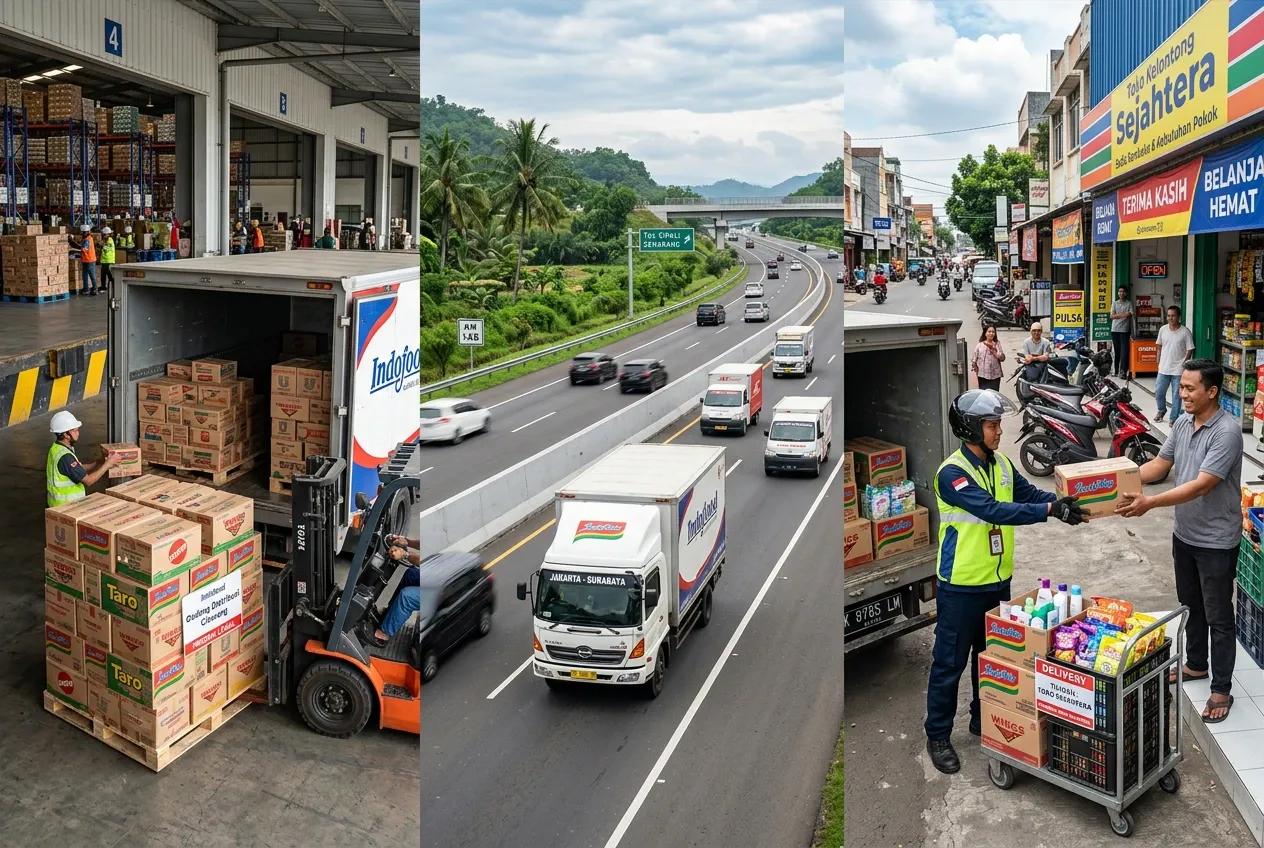
First mile delivery is the foundation of every distribution process. When products are not transported from manufacturers or suppliers on time, the impact can spread across the entire supply chain. Delays during the first mile often affect inventory availability, warehouse operations, transportation schedules, and downstream distribution activities.
Many businesses focus on the final delivery stage, but supply chain performance depends on every movement of goods from the point of origin to the final destination. Each stage has a different role and presents different operational challenges. Understanding the differences between first mile, middle mile, and last mile helps businesses identify opportunities to improve delivery performance across the distribution network.
Definition of First Mile, Middle Mile, and Last Mile
- First Mile
The first mile is the movement of goods from manufacturers or suppliers to a warehouse or distribution center. Products may originate from various sources, including manufacturers, suppliers, wholesalers, or retailers, before entering the distribution network. - Middle Mile
The middle mile is the movement of goods from a warehouse or distribution center to a fulfillment facility or another distribution point. During this stage, products are stored, sorted, consolidated, and prepared for outbound delivery. Fulfillment facilities handle order preparation before products continue to the final stage of delivery. - Last Mile
The last mile is the final stage of the supply chain, where goods move from a fulfillment facility, distribution center, or local hub to the end consumer. At this stage, products are delivered directly to the final recipient, completing the delivery journey.
Difference Between First, Middle, and Last Mile
- Location
The first mile begins at manufacturing facilities, suppliers, or other product origins, where goods are collected before entering the distribution network.
The middle mile covers the movement of goods between warehouses, distribution centers, fulfillment facilities, regional hubs, or other intermediate locations. At this stage, products are transferred, consolidated, sorted, and allocated across the distribution network.
The last mile starts from the final distribution point and continues to the end consumer, where the delivery journey is completed. - Delivery Process
The first mile focuses on collecting, consolidating, and preparing goods for their initial movement into the distribution network.
The middle mile focuses on transporting products between distribution facilities while managing inventory, product allocation, and replenishment to support downstream operations
The last mile focuses on delivering products from the final distribution point directly to the end consumer. - Distance
The first mile usually involves relatively short distances between product origins and the first warehouse or distribution center.
The middle mile generally covers medium to long-distance transportation between warehouses, fulfillment facilities, regional hubs, or distribution centers across the distribution network.
The last mile typically involves shorter delivery routes from the final distribution point to the end consumer. - Challenges
The first mile requires coordination across multiple product sources, shipment consolidation, and inbound transportation planning.
The middle mile requires coordination across transportation, warehouse operations, inventory availability, product allocation, and distribution capacity across multiple facilities.
The last mile focuses on route planning, delivery scheduling, vehicle utilization, and on-time delivery across multiple destinations.
Biggest Challenges in First Mile Delivery Operations
Many delivery delays can be traced back to the first mile. When data is managed across separate systems, coordination becomes difficult, leading to delays that can impact every stage of the supply chain.
- Lack of Real-Time Visibility
Limited visibility into vehicle locations and shipment status makes planning difficult. Without real-time tracking, logistics teams cannot accurately estimate arrival times, respond to unexpected delays, or adjust receiving schedules. As a result, warehouse activities and transportation planning may fall out of sync, impacting the next stages of distribution. - Inefficient Putaway, Picking, and Packing
Warehouse operations can slow down when putaway, picking, and packing rely on manual processes or inconsistent procedures. Delays during these activities postpone outbound shipments and reduce warehouse productivity. An integrated Warehouse Management System (WMS) helps manage inventory movements while improving putaway, picking, and packing processes with greater accuracy and visibility. - Demand Fluctuations
Seasonal demand spikes and unexpected order increases can place significant pressure on warehouse operations and inventory availability. Without accurate demand forecasting and timely replenishment, inventory levels may not keep pace with demand, increasing the risk of stockouts and delayed shipments. Demand planning combined with replenishment planning helps maintain product availability and supports consistent distribution.
BOSNET Solution For First Mile Delivery
BOSNET provides an integrated suite of solutions that helps improve productivity, increase operational visibility, and manage distribution activities across the business. The following solutions are designed to support first mile delivery.
- Distribution Management System
Distribution Management System (DMS) is designed to manage and automate distribution processes from order management to sales execution. Built for businesses with high transaction volumes and complex operational requirements, DMS centralizes key distribution activities within a single platform. - Replenishment
BOSNET replenishment helps businesses automate stock replenishment processes to maintain product availability across distribution channels.
150+ Renowned Brands Trust BOSNET for Their Distribution
Over 150 brands rely on BOSNET to manage their distribution and sales processes efficiently. BOSNET provides an end-to-end solution for distributors to track operations, performance, and sales in real time.
Contact us to see how BOSNET can streamline your operations and deliver real-time visibility across your distribution network.
#BOSNET #BestFMCGRunsBOSNET #Distribution #SupplyChain #IncreaseRevenue #ReduceCost