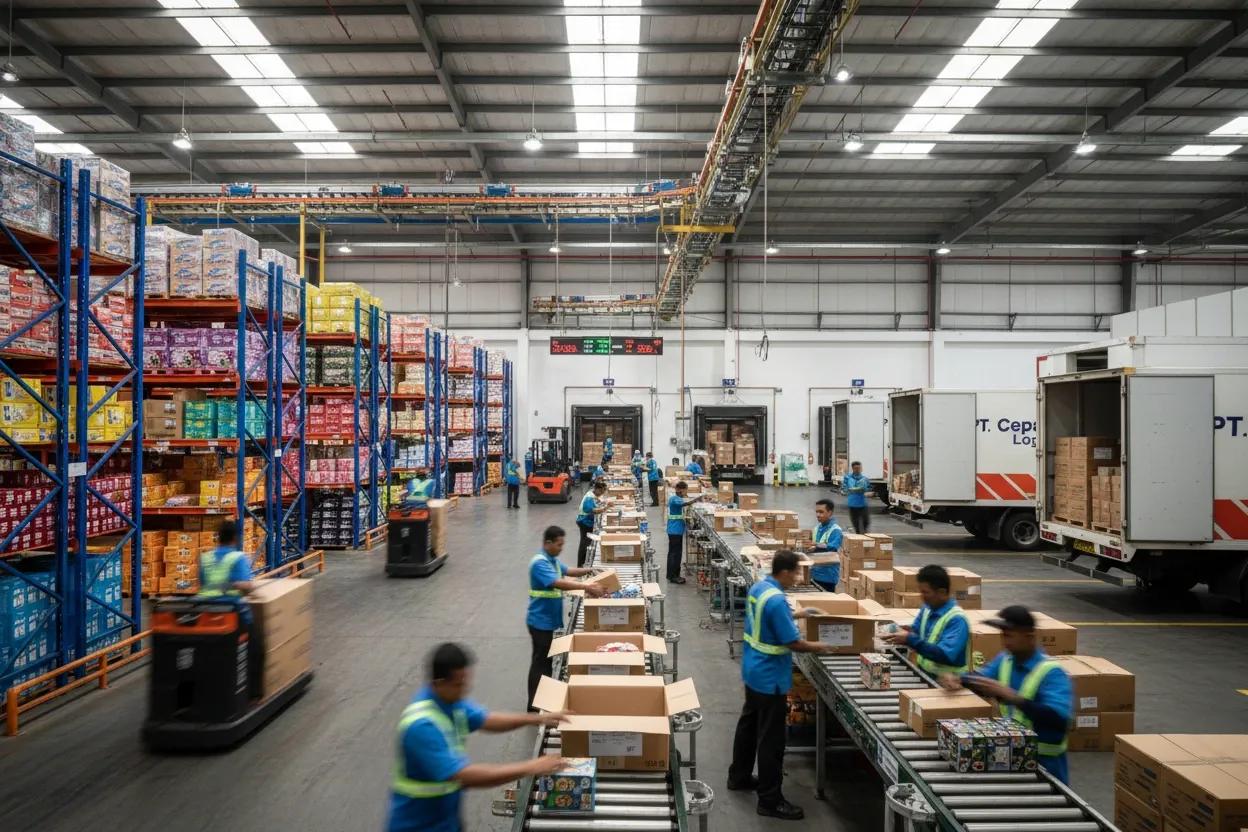
Fulfillment is the process of managing and allocating sales orders based on each customer's specific needs. Since every customer may have different expectations regarding quantities, delivery schedules, and service quality, distributors must ensure that each order is handled accurately. Even small errors in order processing can lead to customer dissatisfaction and operational challenges.
As customer demands continue to evolve, distributors often face increasing pressure to process orders quickly while maintaining accuracy across inventory, warehousing, and shipping. Delays, incorrect shipments, and inefficient order management can negatively impact customer experience and business performance. For that reason, an efficient fulfillment process has become a critical factor for distributors.
Definition of Fulfillment
Fulfillment is the process of receiving, processing, and delivering customer orders. It covers every activity required to ensure products reach customers after a purchase is made.
In simple terms, order fulfillment is the process of completing sales orders according to customer requirements. It involves preparing products, managing inventory, and coordinating delivery to ensure orders are fulfilled accurately.
How the Fulfillment Process Works
Order fulfillment is an important part of completing a sales transaction. It covers the activities required to receive, process, and deliver products to customers. To ensure orders are completed accurately and delivered on time, businesses typically follow several key stages.
- Order Receiving
The fulfillment process usually begins at a distribution center or warehouse. When a customer places an order, the information is automatically recorded in the company's system, such as a Distribution Management System (DMS).
After the order is received, the system verifies product availability, pricing, and shipping details before the order moves to the next stage. - Order Processing
Once the order has been verified, it enters the processing stage. At this point, warehouse teams prepare the products for shipment through two main activities:
• Picking involves retrieving the ordered items from storage locations within the warehouse. Many distributors use a Warehouse Management System (WMS) to help determine efficient picking routes and improve productivity.
• Packing takes place after the products have been collected. Items are checked, packed according to order requirements, and prepared for transportation. - Order Delivery
After packing is completed, the products are ready for delivery. Before shipments leave the warehouse, businesses often plan delivery routes to improve transportation efficiency.
Many companies use route optimization software to determine suitable routes based on distance, delivery schedules, traffic conditions, and other operational factors. - Order Tracking and Updates
After products are dispatched, businesses need visibility into delivery activities to ensure orders reach their destinations as planned.
Many distributors use delivery management software that provides real-time tracking to monitor vehicle locations, delivery status, and driver activities. Access to real-time information helps businesses protect their assets, reduce the risk of lost shipments, and respond quickly to delivery issues as they arise.
Types of Order Fulfillment
Every business has different operational needs and order volumes. As a result, companies can choose from several order fulfillment types based on their business goals, available resources, and growth plans.
- In-House
Companies that want full visibility over inventory and warehouse operations often choose to manage fulfillment internally.
Under this model, the business operates its own warehouse, employs warehouse staff, and handles activities such as picking, packing, and delivery. Many companies also use integrated warehouse management systems to support inventory tracking and warehouse operations.
For businesses with high order volumes, managing fulfillment internally can provide cost advantages over time. - Outsourced
Many businesses partner with third-party logistics providers to reduce operational complexity and avoid large infrastructure investments.
A 3PL typically provides warehouse facilities, workforce, and technology platforms to manage inventory storage, order processing, and distribution activities. Since the required resources are already available, businesses can begin operations without investing heavily in warehouses, equipment, and logistics assets. - Dropshipping
For businesses with limited capital, keeping inventory on hand may not always be practical.
Under a dropshipping model, products are stored and shipped by suppliers. When an order is placed, the seller forwards the order information to the supplier, who prepares and delivers the products directly to the customer. - Hybrid
Some businesses prefer a combination of internal operations and external logistics support.
A hybrid approach allows companies to manage selected fulfillment activities in-house while outsourcing others to logistics partners. For example, inventory may be stored in a company-owned warehouse while transportation and delivery are handled by a third-party provider.
Benefits of Efficient Fulfillment
Implementing an efficient fulfillment system can bring significant advantages to a business, from improving customer experience to supporting long-term growth.
- Increase Customer Satisfaction
Customers appreciate receiving their orders quickly and in excellent condition. Fast and reliable delivery creates a positive shopping experience, which can lead to higher satisfaction levels. Consistent service quality also contributes to a positive brand reputation and helps businesses stand out in a competitive market. - Reduce Costs
By utilizing fulfillment software, companies and distributors can optimize inventory management and warehouse operations. As a result, expenses related to storage, picking, packing, and shipping can be reduced. Better operational visibility also helps minimize errors and unnecessary spending. - Scalability
An efficient fulfillment system provides the flexibility needed to support business growth. As order volumes increase, companies can expand storage capacity and workforce requirements without disrupting daily operations. As a result, businesses can respond to growing demand while maintaining service quality. - Customer Loyalty
A positive ordering experience encourages customers to return for future purchases. When businesses consistently provide fast and reliable fulfillment services, customers are more likely to develop trust in the brand. Over time, that trust can translate into long-term customer loyalty and repeat business.
BOSNET Solutions for Faster Order Fulfillment
BOSNET provides an integrated suite of solutions that helps improve productivity, increase visibility, and manage distribution activities across the business. The following solutions are designed to support fulfillment:
- Distribution Management System (DMS)
Distribution Management System (DMS) is a core solution designed to manage and automate distribution processes end-to-end. Built for distributors with high transaction volumes and complex operational requirements, DMS centralizes key distribution activities into a single platform. - Warehouse Management System (WMS)
Warehouse Management System (WMS) helps distributors manage warehouse operations and inventory movement with greater accuracy.
The solution supports stock management, product tracking, inbound and outbound processes, and order fulfillment activities. - Smart Route
By analyzing delivery schedules, customer locations, and route data, the system generates efficient route plans that help reduce travel time, improve delivery performance, and increase field team productivity. - Mobile Delivery
Mobile Delivery enables drivers and delivery teams to manage distribution activities directly from their mobile devices. The solution provides real-time delivery tracking, digital proof of delivery, and delivery confirmation.
150+ Renowned Brands Trust BOSNET for Their Distribution
Over 150 brands rely on BOSNET to manage their distribution and sales processes efficiently. BOSNET provides an end-to-end solution for distributors to track operations, performance, and sales in real time.
Contact us to see how BOSNET can streamline your operations and deliver real-time visibility across your distribution network.
#BOSNET #BestFMCGRunsBOSNET #Distribution #SupplyChain #IncreaseRevenue #ReduceCost