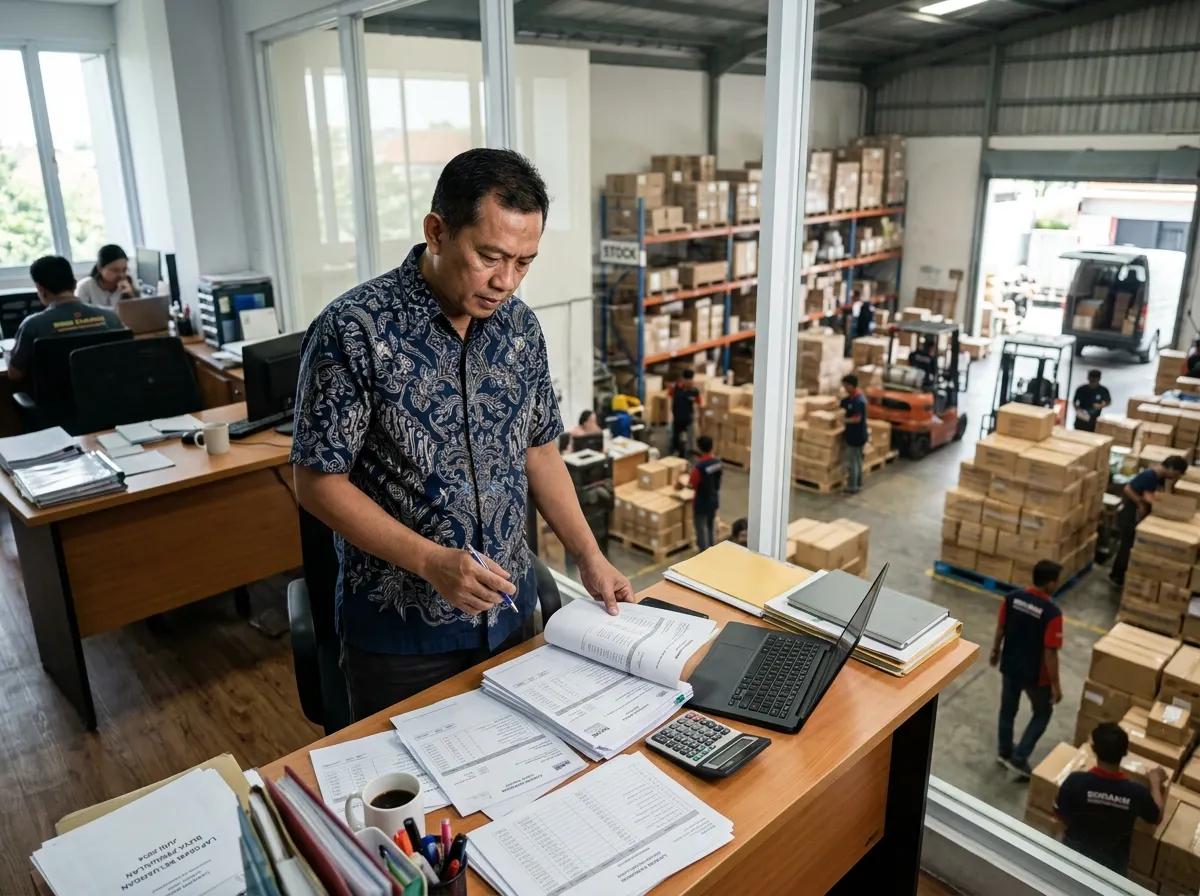
A business can look busy from the outside. Sales are increasing, customer numbers are growing, and the team continues to expand. On paper, the business appears to be moving in the right direction. Yet when the financial results are reviewed, profit may not increase at the same rate as revenue.
This situation is common across distribution, retail, logistics, and B2B businesses, where higher transaction volumes bring greater operational demands. More orders, customers, employees, and daily activities can also increase the cost of running the business.
The root of the problem often lies in day-to-day operations. Manual processes, disconnected data, inefficient workflows, and rising operational costs can gradually reduce margins as the business grows.
Reasons Why Your Business is Growing but Struggle to Make a Profit
Business growth does not always lead to higher profit. As order volume, customers, and daily activities increase, the business also takes on additional costs and operational demands.
Here are some common reasons why businesses grow but struggle to make a profit.
- Relying on Manual Processes
Many businesses still depend heavily on manual work to manage daily operations. As order volumes increase, manual processes can create delays, input errors, and repeated work.
Small issues can occur more frequently as business activity grows. Over time, the resulting time loss and extra costs can reduce profit margins. - Rising Operational Costs
Higher sales can come with higher operating expenses. Inefficient deliveries, inaccurate inventory records, repeated work, and time spent on manual coordination can all reduce profit margins.
When these costs are not tracked clearly, the business may not see where money is being lost or which activities are driving expenses. - Data Utilization
Many businesses already have data from sales, inventory, customers, and daily operations. However, the information may remain scattered across spreadsheets, separate applications, or individual records.
Without a complete view of the data, management may struggle to see how different parts of the business affect one another. - Growing Workforce
When profit does not increase alongside business volume, adding more employees can seem like the easiest solution. However, increasing field teams without improving the underlying processes can create additional problems.
More people can mean more coordination, more handovers, and higher fixed costs. If the workflow itself remains inefficient, the business may simply be adding resources to manage problems that could be addressed through better processes and systems. - Limited Visibility Into Business Performance
Another challenge is the lack of visibility into where revenue and costs are coming from. Management may see sales figures at the end of the month, but still have limited insight into which customers, products, channels, or operational activities are affecting profitability.
What Should You Do as Your Business Grows
Business growth requires more than increasing sales volume. As operations become larger and more complex, businesses need processes and systems that can handle higher transaction.
- Automate Repetitive Processes
Routine tasks can take up a significant amount of employee time as business activity grows. Automating repetitive processes can reduce manual data entry and limit time spent on administrative work. - Connect Business Data
Sales, inventory, customer, warehouse, and delivery information can provide a broader view of business operations when they are connected. Managers can then see how activity in one area relates to another. - Monitor Operating Costs
Tracking operating expenses by activity can help businesses understand where costs are increasing. Delivery, warehouse, inventory, and administrative expenses can then be reviewed based on actual data. - Manage Workforce Productivity
Higher business volume does not always require a larger workforce. Companies can also review how employee time is spent and identify tasks that can be handled through digital systems.
How BOSNET Solutions Supports Business Growth
BOSNET connects key distribution processes across every touchpoint, covering sales, inventory, warehouse, delivery, and field operations through an integrated digital ecosystem.
Each solution supports a specific touchpoint within the distribution process, while connected data gives businesses visibility across daily operations.
- Mobile Distribution
Mobile Distribution is a mobile application designed to help field sales teams manage customer visits and sales activities.
The application provides visibility into field operations, standardizes sales reporting, and enables sales representatives to record activities directly on their mobile devices. - Distribution Management System (DMS)
A Distribution Management System (DMS) serves as the foundation of distribution automation by managing and automating key operational processes.
The system centralizes sales activities, order management, inventory information, and distribution operations in a single platform. With real-time visibility across the business, companies can reduce manual work, minimize input errors, and improve operational accuracy. - Warehouse Management System (WMS)
A Warehouse Management System helps businesses manage warehouse activities more efficiently.
The system automates processes including receiving, storage, picking, and shipping activities. As a result, businesses can improve inventory management, reduce labor costs, and maintain accurate inventory records across warehouse operations. - Smart Route
Route optimization solutions help businesses identify the most efficient delivery routes for field teams and drivers. - Mobile Delivery
Mobile Delivery enables drivers and delivery teams to manage distribution activities directly from their mobile devices. The solution provides real-time delivery tracking, digital proof of delivery, and delivery confirmation.
From sales execution and order management to warehouse operations and delivery processes, BOSNET helps businesses gain better visibility across the entire distribution cycle.
It's time to move beyond manual processes and adopt a distribution system designed to support future business growth.
Contact us today to learn how BOSNET can help automate your distribution business.
#BOSNET #BestFMCGRunsBOSNET #Distribution #SupplyChain #IncreaseRevenue #ReduceCost