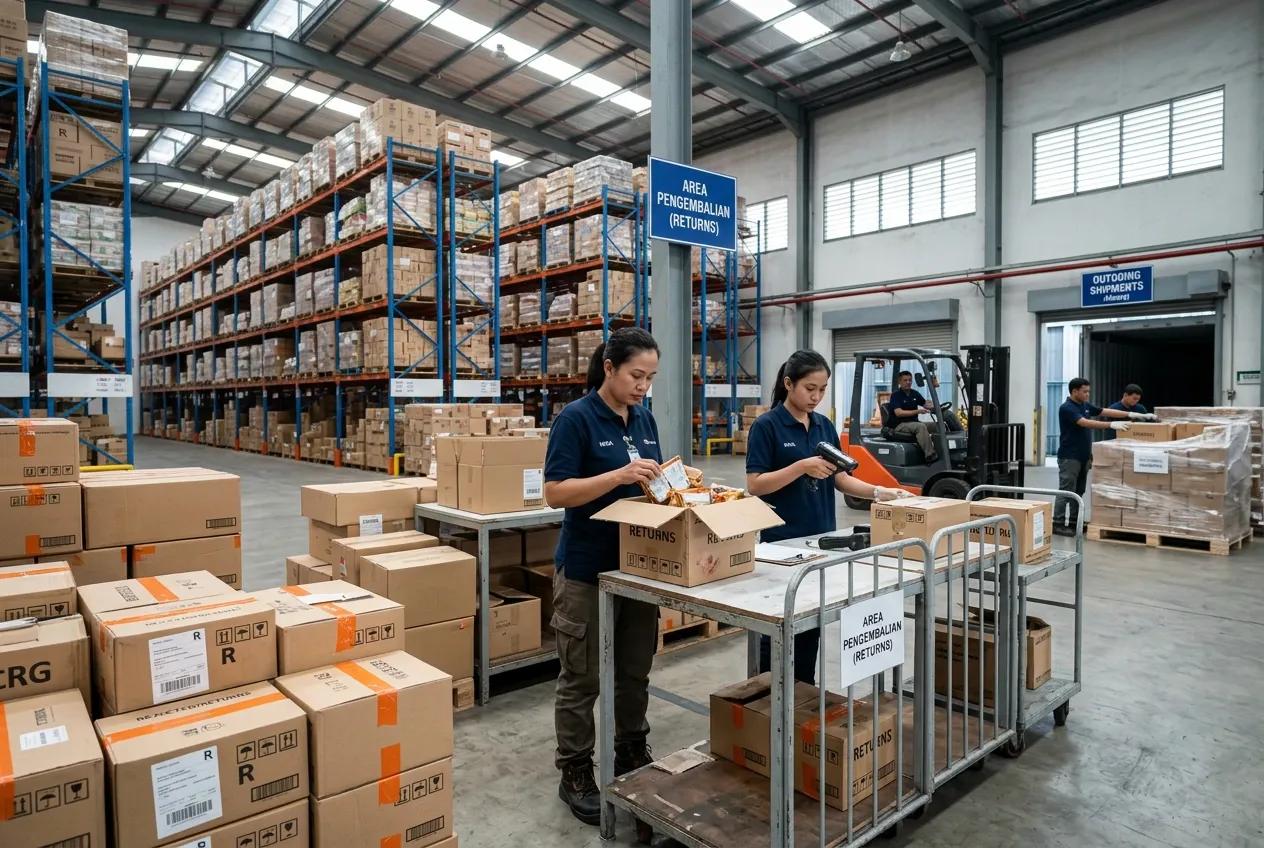
Product returns are part of daily distribution activities, especially for businesses handling large volumes of FMCG products across multiple outlets and warehouses. Returned products need to be received, checked, and recorded before their next status is decided.
When returns are not recorded properly, businesses may lose track of product quantities, conditions, and locations. The issue can affect inventory accuracy and make it harder for warehouse teams to manage goods.
What Is Product Return Management?
Product return management refers to the process of handling goods sent back from customers, outlets, or other locations. The process starts when returned products arrive at the warehouse and continues until their final status is decided.
Returned goods need to go through several checks, including quantity, product condition, batch information, and expiry date when applicable. The results determine whether the products can return to inventory, need to be separated, or require further action.
Why Is Product Return Management Important?
Returned products affect both inventory records and warehouse activities. Proper handling helps businesses keep track of goods after they leave the sales channel and return to the warehouse.
- Maintain Inventory Accuracy
Returned products need to be recorded when they arrive at the warehouse. Recording the quantity and status helps keep inventory data aligned with the physical stock. - Identify Return Reasons
Return records provide information about why products are sent back. Common reasons include damaged goods, expired products, incorrect items, excess stock, or customer rejection.
Reviewing return reasons can help businesses identify recurring issues across products, outlets, or distribution areas. - Separate Products Based on Condition
Not every returned product can go directly back into saleable inventory. Products need to be checked and separated based on their condition.
Good products may return to available stock, while damaged or expired products require a different handling process. - Control Warehouse Space
Returned products that are waiting for inspection or further action still occupy warehouse space. Processing them promptly helps prevent return stock from accumulating in storage areas.
Challenges in Managing Product Returns
Product returns become harder to manage when businesses operate across multiple warehouses and distribution areas.
- Managing Returns Across Multiple Warehouses
Returned goods may arrive at different warehouses depending on the outlet or delivery route. Teams need to know where each return is received and which warehouse is responsible for processing it. - Tracking Different Product Conditions
Returned goods do not always have the same status. Mixing saleable, damaged, and expired products can create problems during inventory checks and warehouse handling. - Handling Manual Return Records
Manual records require warehouse teams to update product information at different stages of the return process. Missing or incorrect entries may cause differences between physical stock and inventory records. - Maintaining Return Visibility
Teams need access to information about returned products, including quantity, location, condition, and processing status. Limited visibility can make it harder to follow up on pending returns.
How WMS Helps Manage Product Returns
A Warehouse Management System (WMS) helps warehouse teams manage returned products as part of their inventory activities.
- Track Returned Goods
WMS records returned products when they arrive at the warehouse, giving teams information about the quantity and movement of return stock. - Manage Product Status
Product status can be recorded based on inspection results. Teams can distinguish between saleable, damaged, expired, and other returned goods. - Manage Storage Locations
Returned products can be assigned to suitable storage locations based on their condition and status. The process helps keep return stock separate from regular inventory. - Update Inventory Records
Inventory records can be updated according to the result of the return process. The information gives teams a better view of available stock and returned goods. - Monitor Return History
Return records provide information about product movement and return activity. Businesses can review the history to identify recurring return issues and make decisions based on actual inventory data.
Manage Product Returns with BOSNET Warehouse Management System
BOSNET Warehouse Management System (WMS) helps businesses manage warehouse activities, including inventory movement and delivery returns. Teams can record returned goods, monitor inventory status, and manage stock across warehouse locations.
BOSNET WMS also provides visibility into inventory movement, helping warehouse teams track returned products and maintain accurate stock records across distribution operations.
Contact us to learn how BOSNET WMS can help manage product returns across your distribution network.
#BOSNET #BestFMCGRunsBOSNET #Distribution #SupplyChain #IncreaseRevenue #ReduceCost