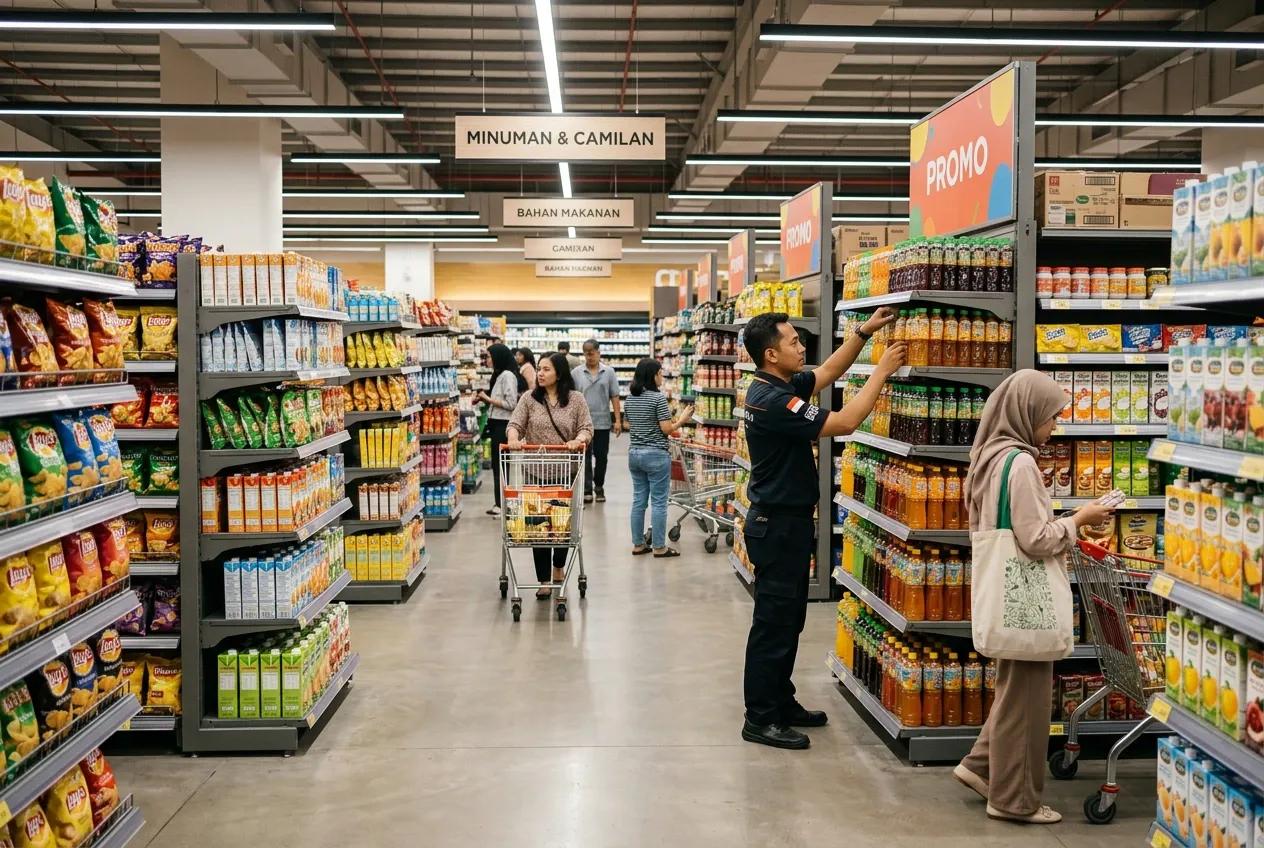
Modern trade has become an important sales channel for FMCG businesses. Supermarkets, minimarkets, hypermarkets, and convenience stores give brands access to a large number of customers through organized retail networks.
Managing this channel also requires a different way of handling sales and distribution. Multiple outlets, centralized purchasing, promotional activities, and product availability need to be monitored so daily operations stay aligned with sales targets.
What Is Modern Trade?
Modern trade refers to retail businesses that operate through organized store networks and follow defined purchasing and sales processes. Examples include supermarkets, hypermarkets, minimarkets, and convenience stores.
Unlike traditional trade, purchasing decisions in modern trade are often handled through centralized teams or specific procurement departments. Products are then distributed across multiple outlets based on agreed sales plans and inventory requirements.
The model gives businesses access to a wider customer base, but it also requires accurate coordination between sales, inventory, warehouse, and distribution activities.
Why Is Modern Trade Important for FMCG Distribution?
Modern trade gives FMCG brands access to a large number of outlets under organized retail networks. A product can reach customers across different locations through a coordinated distribution process.
The channel also provides sales data that businesses can use to review product performance. Order volume, outlet sales, product movement, and promotion results give businesses information about how products perform across different locations.
For distributors, managing these activities properly helps maintain product availability while keeping sales and distribution activities aligned.
Strategies to Improve Modern Trade Sales and Distribution
Modern trade requires coordination across sales and distribution activities. Several strategies can help businesses manage the channel based on actual sales and inventory conditions.
- Use Sales Data to Plan Activities
Sales history provides information about product demand, order frequency, and outlet performance. Teams can use the data to determine which products to offer and which outlets require greater attention.
Sales data also helps businesses compare performance between locations and adjust sales activities based on actual results. - Improve Outlet Coverage
Not every outlet needs the same visit frequency. High-volume outlets may require regular visits, while outlets with lower sales activity can follow a different schedule.
Sales teams can prioritize visits based on sales volume, order history, product availability, and current outlet needs. - Monitor Product Availability
Keeping track of inventory at outlet and warehouse level helps distributors identify where products need replenishment.
Stock information also helps sales teams avoid offering products that are unavailable and gives them a better view of product movement across different locations. - Manage Promotions Based on Sales Data
Promotion planning should consider sales history, product demand, and available inventory. Teams can monitor sales during and after a promotion to see whether the activity generates the expected product movement.
The results can then be used when planning future promotions and stock requirements. - Digitalize Sales Activities
Modern trade involves frequent orders, outlet visits, follow-ups, and sales reporting. Digital sales tools help teams record these activities and access information during field operations.
Salesmen can use mobile applications to manage orders, visit schedules, and customer follow-ups. Supervisors can also review team activities and sales performance through digital records. - Connect Sales and Inventory Data
Sales activity and inventory data need to work together. Sales teams need information about available stock, while inventory teams need visibility into sales demand and product movement.
Connecting the two gives businesses a better basis for managing orders, replenishment, and distribution across modern trade outlets.
Manage Modern Trade Distribution with BOSNET
BOSNET provides end-to-end solutions for distributors to monitor operations, sales performance, inventory movement, and distribution activities in real time from a single platform.
From sales execution and order management to warehouse operations and delivery processes, BOSNET helps businesses gain better visibility across the entire distribution cycle.
It's time to move beyond manual processes and adopt a distribution system designed to support future business growth.
Contact us today to learn how BOSNET can help maximize your distribution business.
#BOSNET #BestFMCGRunsBOSNET #Distribution #SupplyChain #IncreaseRevenue #ReduceCost