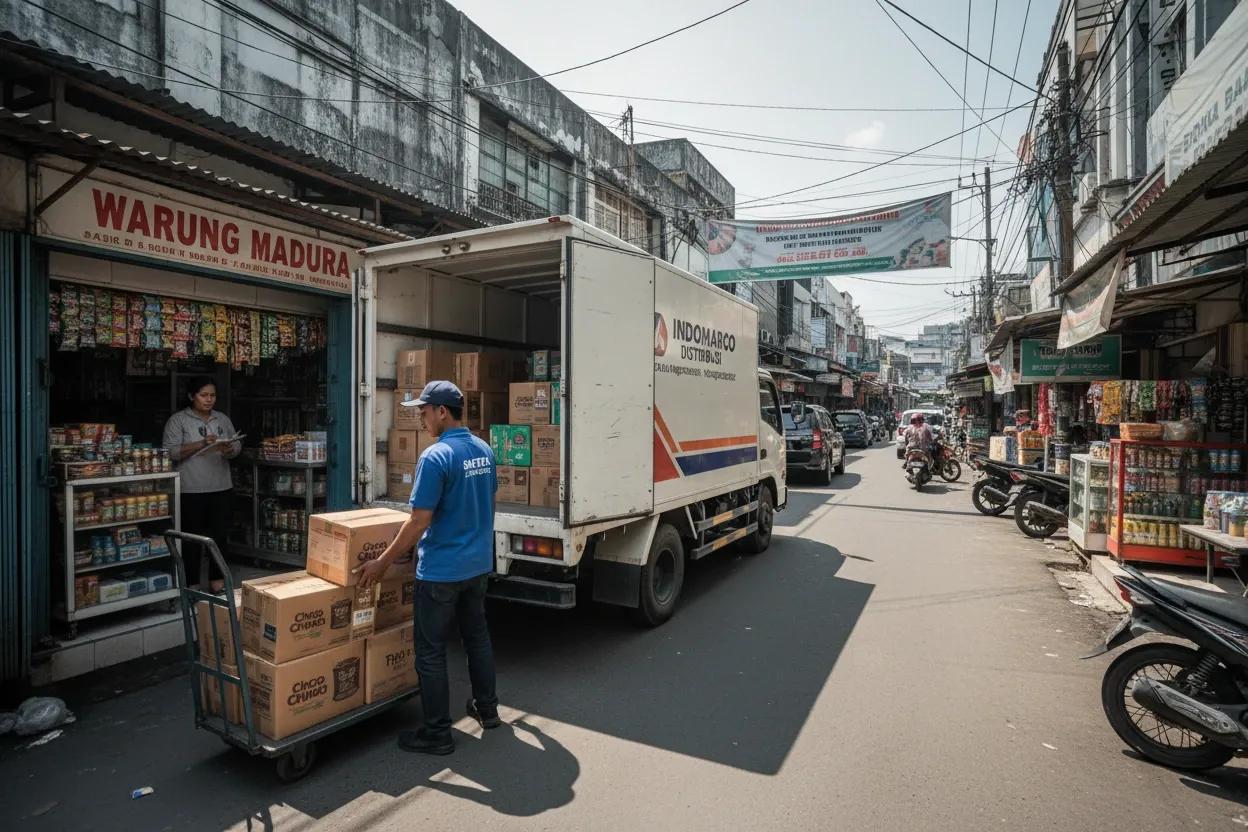
Shipping plays an important role in maintaining the flow of goods across the supply chain. To improve delivery, many companies implement a multi-trip delivery strategy. The approach allows a single vehicle to deliver goods to multiple destinations in a single journey.
As distribution networks continue to expand, multi-trip deliveries have become a widely adopted method for serving distributors, warehouses, retail outlets, and end customers.
What Are Multi-Trip Deliveries?
Multi-trip deliveries are the distribution of goods to multiple destinations within a single journey. The method is commonly used to deliver products to distributors, warehouses, retail outlets, and end customers based on a pre-planned route.
By serving several delivery points in one trip, companies can maximize vehicle capacity utilization while reducing transportation costs, delivery time, and fuel consumption. As a result, businesses can improve efficiency and support distribution performance.
Functions of Multi-Trip Deliveries
Implementing multi-trip deliveries provides several advantages that help companies improve shipping performance and distribution operations, they are:
- Cost Efficient
One of the primary functions of multi-trip deliveries is reducing transportation costs. By delivering goods to multiple destinations within a single journey, distributors can lower various operational expenses, including fuel usage, vehicle deployment, and driver utilization.
In fast-moving industries such as FMCG, where products need to reach the market quickly, efficient delivery planning plays an important role in maintaining availability. - Maximize Fleet Capacity
Multi-trip deliveries help companies utilize fleet capacity to its full potential. Instead of sending vehicles with partial loads to a single destination, each trip can carry goods for several locations. As a result, fleet utilization improves, and transportation resources can be allocated more efficiently. - Efficient Deliveries
Delivery routes are planned in advance to support timely and reliable distribution. Shipping schedules are arranged based on priorities, locations, and available vehicle capacity. With proper route planning, companies can improve delivery performance while reducing unnecessary travel distances. - Streamline Supply Chain Management
Multi-trip deliveries contribute to a well-connected distribution process across the supply chain. Deliveries can be aligned with production schedules, inventory availability, and customer demand. As a result, goods move through the supply chain with better coordination, helping companies maintain product availability and support business operations.
Challenges of Implementing Multi-Trip Deliveries
Although multi-trip deliveries offer various operational advantages, companies may face several challenges during implementation.
- Route Planning
As the number of delivery destinations increases, route planning becomes more complex. Companies need to consider multiple factors, including travel distance, road conditions, vehicle capacity, and delivery schedules. Without careful planning, delivery routes can become inefficient and lead to higher shipping costs. - Delivery Delays
A delay at one delivery location can impact the entire delivery schedule. Longer unloading times, traffic congestion, or unexpected issues at a destination may affect subsequent deliveries. As a result, maintaining delivery timelines becomes increasingly challenging when multiple stops are involved. - Tracking Deliveries
Multi-trip deliveries require continuous monitoring of shipments throughout the distribution process. Without proper visibility, companies may face issues related to delayed deliveries, misplaced goods, or limited information about shipment conditions. - Managing Delivery Orders
Handling delivery orders becomes increasingly complex as the number of destinations grows. Each shipment requires accurate documentation and coordination to ensure goods arrive at the correct locations. When managed manually, the risk of administrative errors, missing documents, and delivery mistakes can increase significantly.
Tips for Efficient Multi-Trip Delivery
To improve the efficiency of multi-trip deliveries, companies can apply several best practices throughout the shipping process.
- Use Optimal Route Planning
Companies should design delivery routes based on destination locations, delivery priorities, vehicle capacity, and estimated travel time. Proper route planning helps reduce unnecessary travel distances and supports timely deliveries across multiple destinations. - Group Deliveries by Area
Grouping deliveries within the same geographic area can help reduce travel time and improve delivery performance. By assigning shipments to nearby locations within a single trip, companies can utilize transportation resources efficiently and manage delivery schedules with greater accuracy. - Monitor Fleet in Real Time
Real-time fleet monitoring provides visibility into vehicle locations, delivery progress, and potential disruptions during transportation. With access to up-to-date information, companies can respond quickly to operational issues and make adjustments when necessary to keep deliveries on schedule. - Utilize Route Optimization Software
Route optimization software helps companies plan delivery schedules and sales visit routes with greater accuracy. By analyzing delivery destinations and travel conditions, businesses can reduce travel time, improve delivery scheduling, and increase the productivity of field teams.
Optimize Multi-Trip Deliveries with BOSNET Smart Route
BOSNET Smart Route analyzes distance, traffic, delivery priorities, and fleet capacity to generate an efficient, executable route plan. This helps businesses save time, cut costs, and make the most of their resources.
With BOSNET solutions, businesses can ensure product availability, improve delivery performance, and maintain smooth, reliable logistics across their fleet.
Contact us to learn how BOSNET Smart Route streamlines your distribution operations.
#BOSNET #BestFMCGRunsBOSNET #Distribution #SupplyChain #IncreaseRevenue #ReduceCost