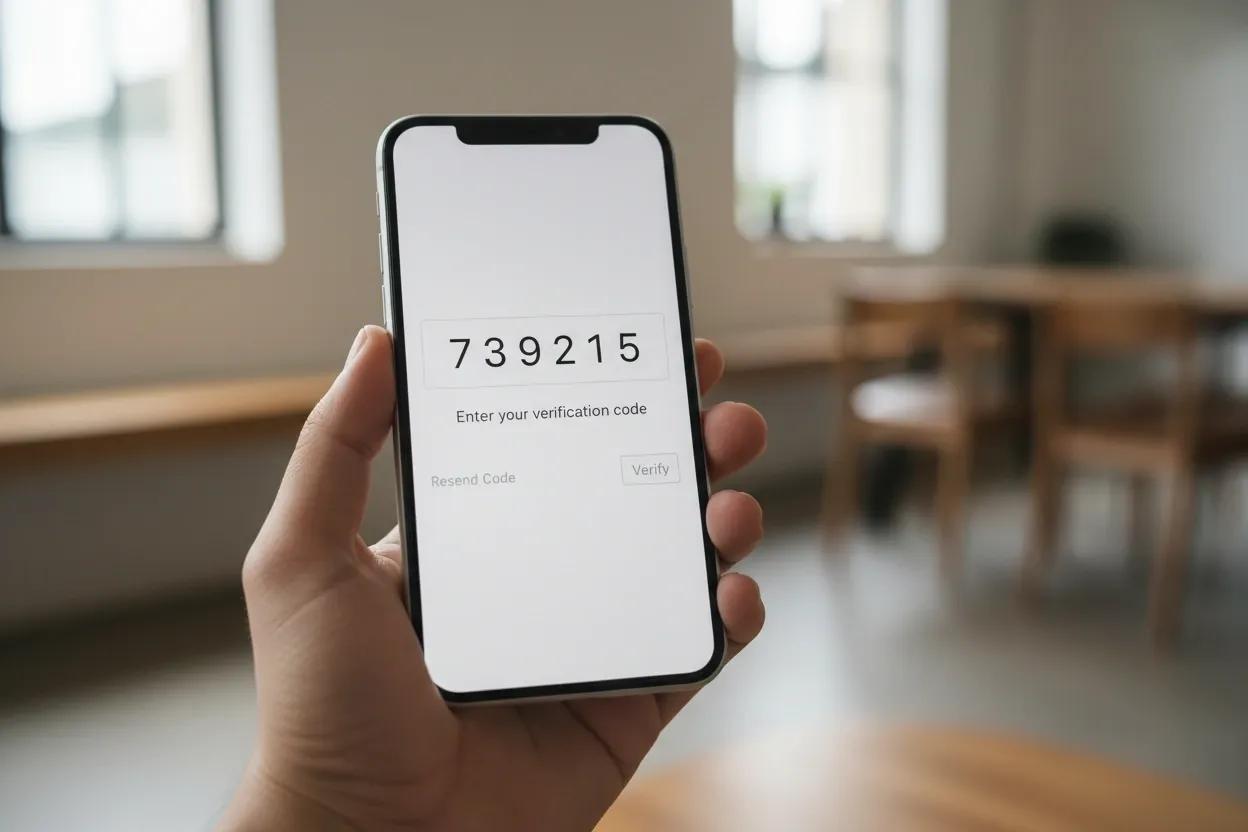
In today’s digital world, OTPs are widely used across various applications and services, including online banking, e-commerce, and social media. With the rise of online transactions and account logins, a secure verification method is essential.
Despite their convenience, many users don’t know how OTPs work or what role they play in protecting accounts from unauthorized access and fraud. Understanding these aspects is important for both individuals and businesses to maintain security and trust in digital services.
What is OTP?
OTP (One-Time Password) is a temporary, unique code, usually 4 to 8 digits long. The code is delivered via SMS, email, or mobile applications and is valid only for a few minutes. Once this time expires, the code becomes invalid and cannot be used.
The purpose of OTP verification is to add an extra layer of security during login or transactions. It ensures that only the legitimate owner of the device or account can complete the process. For this reason, authentication codes should never be shared and are designed with a limited lifespan for maximum security.
Types of Authentication Codes
Authentication codes, commonly known as OTPs (One-Time Passwords), come in three main types: On-Demand Token, Soft Token, and Hard Token.
- On-Demand Token
On-demand tokens are delivered upon request, usually via SMS, phone call, or email. This type is convenient and widely used but offers a lower security level than other tokens. - Soft Token
Soft tokens offer better security than on-demand tokens. They are supported by a secure key system that generates codes locally on a device. A popular example is Google Authenticator. - Hard Token
Hard tokens provide the highest level of security. These are physical devices that generate access codes and do not rely on SMS, email, or phone calls. Because of their isolated and controlled environment, hard tokens are extremely difficult to hack.
Function of OTP Notification
- Account Security
Authentication code adds an extra layer of protection to your accounts. Even after entering your password, a one-time code is required to complete the login or a transaction. - Prevent Misuse
OTP helps prevent unauthorized use of your accounts. Even if someone knows your password, they cannot access your account without the code, making it much harder for other people to misuse your credentials. - Reduce the Risk of Fraud
Authentication is an effective tool against online fraud, such as phishing and smishing. Cybercriminals may try to trick users into providing personal information through fake emails or messages. - Protect User Privacy
Requiring an OTP for sensitive operations keeps personal information secure and confidential, minimizing the chance of data leaks or unauthorized access.
How OTP Works
The process of using a One-Time Password (OTP) is designed to be quick, secure, and time-sensitive. When a user requests an authentication code, the system generates a unique number consisting of 4 to 8 digits. The code is sent via SMS, email, or a mobile app and is valid for a short time, usually under 5 minutes.
Upon receiving the code, users should immediately enter it into the designated field to complete verification. If the code expires before use, the user can request a new one. Once submitted, the authentication server checks the code. If it matches and is within the valid time frame, the system confirms the user’s identity and allows access or the transaction to proceed.
Difference Between OTP with Password
A password is generally permanent until the user changes it and can be reused multiple times. Meanwhile, one-time code is temporary, valid for only a few minutes, and becomes invalid once expired.
Passwords usually consist of 8-16 characters, including letters, numbers, and symbols. OTP are shorter, typically 4-8 digits or alphanumeric characters, designed for quick input.
In terms of usage, passwords are used repeatedly to log in to or access accounts. One-time codes are used during a single login session or transaction.
Secure Your Operations with BOSNET OTP Notification
BOSNET OTP Notification helps confirm operational activities, including logins, orders, payments, returns, and deliveries. Our solutions deliver fast OTP notifications via WhatsApp, SMS, or email, ensuring secure account verification and payment updates.
With BOSNET OTP Notification, businesses can enhance security, reduce fraud, and protect users' data.
Contact us today to see how BOSNET can secure your operations and simplify verification processes.
#BOSNET #BestFMCGRunsBOSNET #Distribution #SupplyChain #IncreaseRevenue #ReduceCost