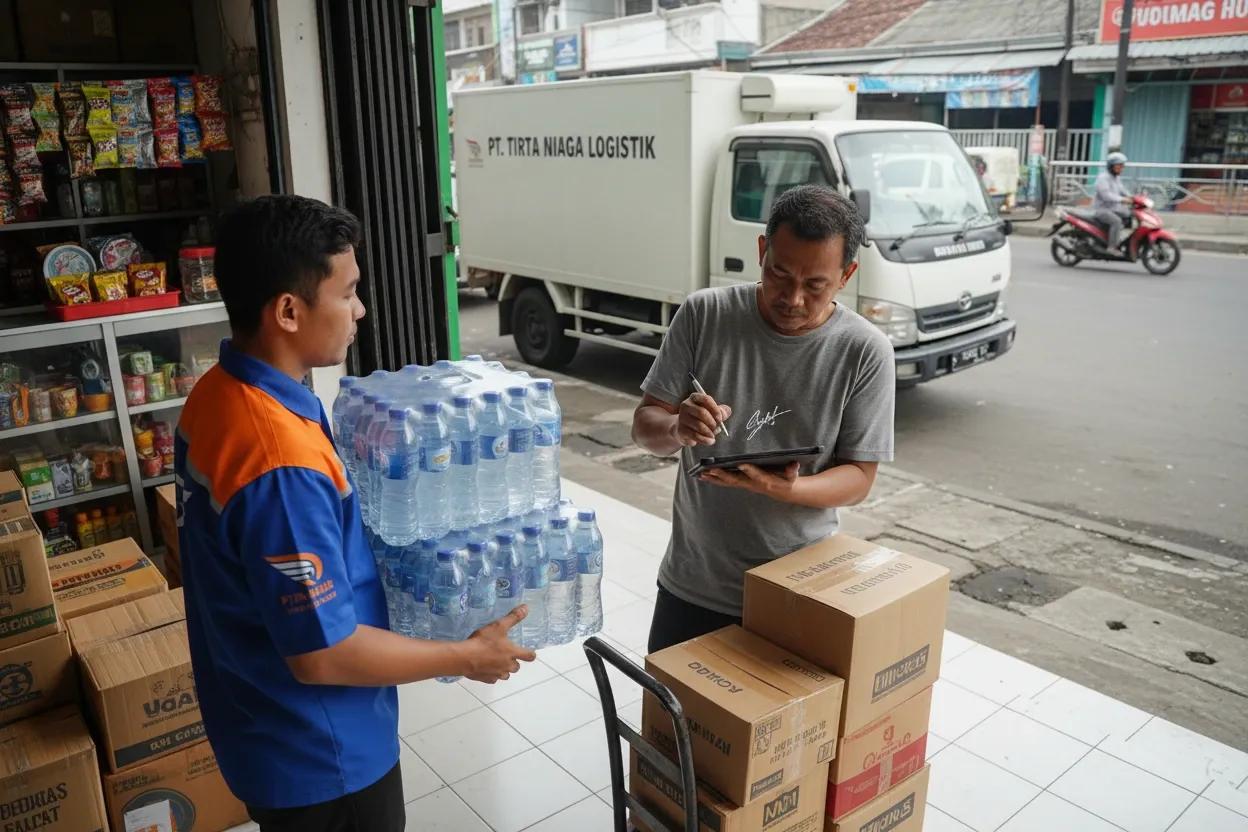
Distributors manage large shipment volumes across multiple locations. Each shipment requires proof of delivery to avoid disputes, invoicing delays, and data inconsistencies.
Proof-of-delivery records contain more than just a signature. Information such as handover time, recipient details, shipment condition, and supporting notes creates a complete transaction record.
What is Proof of Delivery?
Proof of Delivery (POD) is a document used as formal confirmation that goods have been received by the intended party. The document records key details of the handover process, including recipient information, time of receipt, and condition of the goods.
Businesses can request returns or submit claims when supported by valid documentation, including the transaction record and the related invoice, ensuring each process is properly verified and traceable.
Process of Proof of Delivery in FMCG
- Order Delivery
The process starts when a retail store places an order with a distributor. The order is recorded in the system and prepared for dispatch. Once ready, goods are delivered to the destination based on the agreed schedule and route plan. - Documentation
After the goods are delivered, a confirmation document is created. The document can be in physical form or digital format, depending on the company’s system.
Key information recorded includes:
• Date and time.
• Recipient name and signature.
• Quantity and description of goods received
A signed note confirms that the goods have been received in acceptable condition. FMCG operations commonly use digital systems, where field teams capture data using smartphones or tablets to ensure faster and more accurate documentation. - Input and Validation
Once the note is signed, the data is submitted to the system. The system validates the information against the original order and shipment details to ensure accuracy.
Benefits of Proof of Delivery for FMCG Business
- Minimize Loss and Damage
Delivery proof provides written confirmation that goods have been received by the designated party. Each record captures the condition and quantity at the point of handover. - Improve Operational Efficiency
Electronic proof of delivery enables faster and more structured processes. Data is captured in real time and stored automatically in the system. Manual data entry is reduced, which helps lower errors, shorten processing time, and improve visibility across operations. - Legal Proof
The document functions as formal documentation in disputes. The record serves as supporting evidence when handling cases involving lost, damaged, or incomplete shipments during distribution.
Common Challenges in Managing Delivery Proof
- Manual Entry
Many distributors still rely on paper-based notes to record shipment confirmation. Paper documents can be lost, damaged, or submitted late, which increases the risk of missing records and potential disputes between distributors and customers. - Delayed Confirmation
Confirmation may only become available after drivers return to the warehouse and submit the documents. Warehouse staff or supervisors must wait for the paperwork before verifying that shipments are complete. - Limited Visibility
Managers may not have clear information on which shipments are completed, pending, or failed. The lack of real-time updates creates gaps in monitoring field activities and in responding quickly when issues occur.
What Is the Difference Between Physical and Digital Proof of Delivery?
- Physical Proof of Delivery
Physical pod refers to a delivery confirmation recorded on paper. Drivers typically ask the recipient to sign a printed note or invoice as evidence of receipt. The signed document is later returned to the office for record-keeping.
Paper-based documentation is simple to implement but requires additional time to collect, store, and review the paperwork before the information can be used for reporting or billing. - Digital Proof of Delivery
Digital proof of delivery records shipment confirmation through a mobile application. Drivers can capture recipient signatures, photos of the goods, timestamps, and geotags directly from their mobile devices.
Digital records enable real-time shipment confirmation. Managers and supervisors can track completed deliveries more easily, review shipment details faster, and maintain organized documentation across distribution operations.
Manage Proof of Delivery with BOSNET Mobile Delivery
BOSNET Mobile Delivery helps distributors record and manage proof of delivery through a single mobile platform. Field drivers can capture recipient signatures, photos, geotag, and shipment notes directly from their mobile devices during the handover process.
BOSNET solutions provide centralized monitoring and real-time reporting, giving your team full visibility of all shipments, preventing delays or loss, and ensuring every delivery reaches its destination efficiently.
Contact us to learn how BOSNET Mobile Delivery can help track and protect your deliveries.
#BOSNET #BestFMCGRunsBOSNET #Distribution #SupplyChain #IncreaseRevenue #ReduceCost