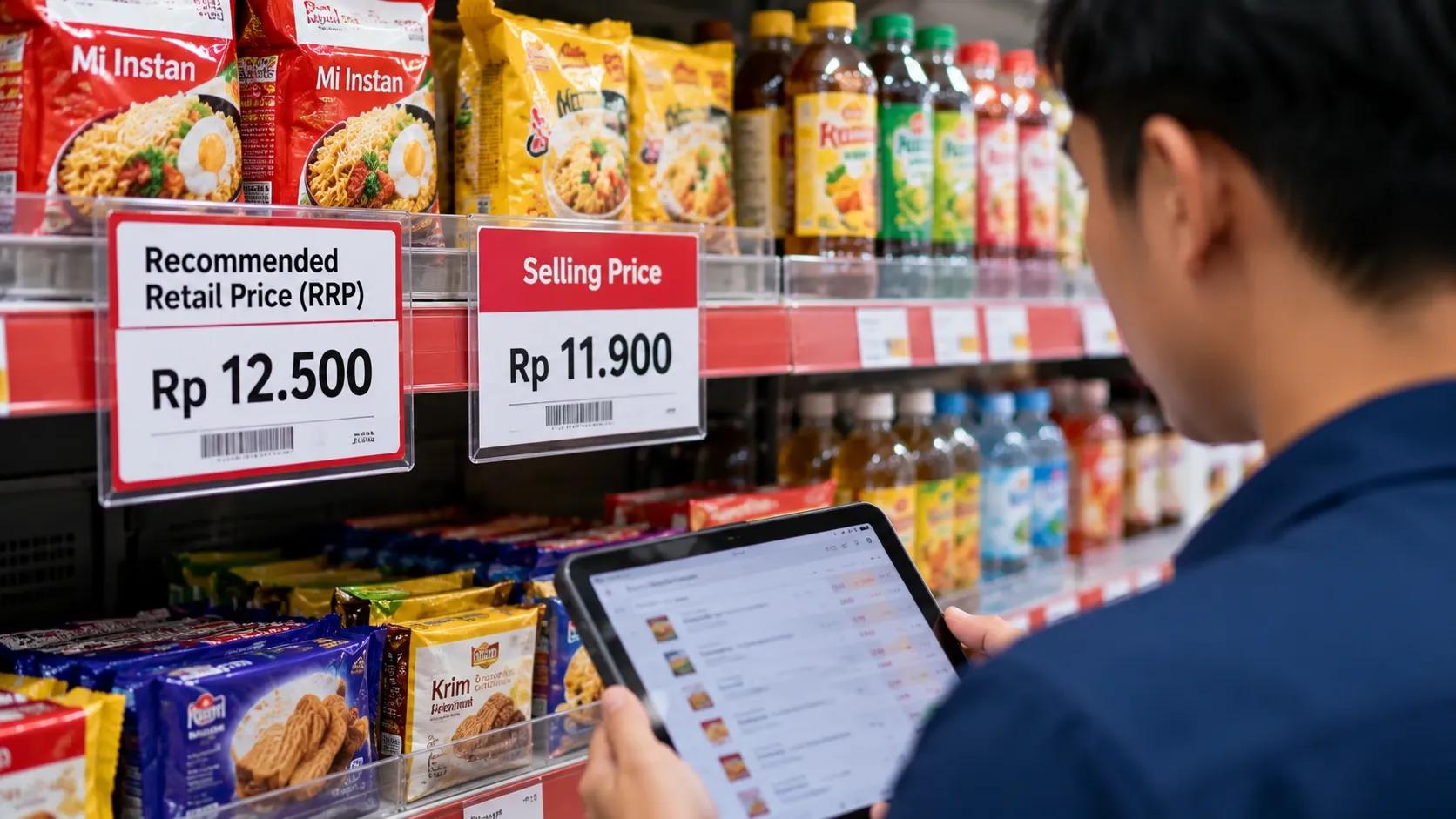
Product prices can vary between retailers, even when they sell the same item. A product may have a recommended price set by the brand owner, while each retailer charges a different amount based on its operating costs, pricing decisions, and promotional activities. Understanding the difference between recommended retail price vs selling price helps businesses evaluate pricing decisions, monitor retail performance, and assess profit margins.
For FMCG companies, price differences across retail channels can affect sales volume, revenue, and relationships with distributors and retailers. Tracking how products are priced and sold across the market helps businesses evaluate whether their pricing plans align with actual retail conditions.
What Is Recommended Retail Price (RRP)?
Recommended Retail Price (RRP) is the price suggested by a manufacturer, brand owner, or supplier for retailers to charge customers. It provides a reference point for retail pricing across different stores and sales channels.
For example, an FMCG company may recommend an RRP of Rp20,000 for a bottle of cooking oil. Retailers can use this figure as a guide when setting their own prices, depending on their costs, market conditions, and pricing policies.
An RRP provides a common pricing reference for a product across the market. However, the actual retail price can differ from the recommendation, depending on the retailer's decisions and applicable regulations.
What Is Selling Price?
Selling price is the actual amount charged to a customer when a product is sold. The price can be equal to, above, or below the recommended retail price, depending on the retailer's pricing decisions and sales conditions.
For example, a retailer may sell a bottle of cooking oil for Rp18,000 during a promotion, even though the recommended retail price is Rp20,000. Another store may charge Rp21,000 due to differences in operating costs or local market conditions.
For businesses, the selling price provides insight into actual market transactions. Comparing selling prices across stores and channels helps brand owners assess price variations and evaluate how promotions or retailer pricing decisions affect product sales.
Recommended Retail Price vs Selling Price: Key Differences
The main difference between recommended retail price and selling price lies in their purpose. RRP serves as a pricing reference, while the selling price represents the amount customers actually pay.
The key differences include:
- Purpose: RRP provides a suggested price for retailers, while the selling price determines how much customers pay for a product.
- Price setting: The manufacturer, brand owner, or supplier typically recommends the RRP. Retailers determine their selling prices, subject to applicable regulations and agreements.
- Price variation: RRP serves as a reference across retail channels, while selling prices can vary between stores, locations, and promotional periods.
Business use: RRP helps businesses assess retail prices against the recommended reference, while selling price data helps evaluate actual market conditions and sales performance.
Example of RRP vs Selling Price
Consider a packaged beverage with an RRP of Rp10,000. Three retailers sell the product at different prices:
Store A: Sells the product for Rp10,000, matching the RRP.
Store B: Charges Rp9,000 during a promotion, which is Rp1,000 below the RRP.
Store C: Charges Rp11,000, which is Rp1,000 above the RRP.
The example shows how the same product can have different selling prices across retail outlets. Brand owners can use such information to identify pricing variations and investigate the factors behind them.
Factors That Affect Selling Price
Selling prices can vary across retail outlets due to several operational and commercial factors.
- Operating Costs
Retailers consider expenses such as rent, employee wages, storage, transportation, and utilities when setting prices. Stores with different cost structures can charge different prices for the same product. - Promotional Activities
Discounts, bundle offers, and other sales campaigns affect the final price paid by customers. A retailer may temporarily sell a product below its RRP to attract customers, increase sales volume, or reduce excess inventory. - Market Competition
Retailers consider the prices charged by nearby competitors when making pricing decisions. A store may reduce its selling price to remain competitive, particularly for products that customers frequently compare across outlets. - Distribution and Supply Costs
Transportation expenses, distributor margins, and other supply chain costs can affect the price at which products reach retail outlets. Differences in distribution costs between locations can contribute to variations in retail prices. - Local Demand and Product Availability
Demand levels and product availability can also influence retail pricing. High demand, limited stock, and differences in local purchasing patterns can affect the prices retailers choose to charge.
Why Does the Difference Between RRP and Selling Price Matter?
Monitoring the gap between recommended retail price and selling price helps FMCG businesses evaluate retail conditions and understand how pricing decisions affect commercial performance.
- Monitor Retail Price Variations
Comparing selling prices across retail outlets helps businesses identify locations where prices differ from the recommended reference. The findings can guide further investigation into local competition, promotional activity, and retailer pricing decisions. - Evaluate Promotional Performance
A lower selling price does not always indicate a successful promotion. Businesses need to compare price changes with sales volume, revenue, and profit margins to assess whether a campaign delivers the intended results. - Assess Revenue and Profit Margins
Selling prices influence the revenue generated from each transaction. However, businesses also need to account for product costs, discounts, and distribution expenses when evaluating profitability. Reviewing pricing and sales data together helps management assess the financial impact of different pricing decisions. - Improve Distribution Planning
Price differences across retail channels can reveal variations in market conditions and retailer behavior. Combined with outlet sales and inventory data, pricing information helps businesses identify areas that require further attention when planning distribution activities.
How Can Businesses Monitor RRP and Selling Price?
Managing retail prices across multiple outlets requires accurate information from different sales channels. Manual reporting and disconnected records can make it harder to compare prices, identify variations, and evaluate their impact on sales performance.
Businesses can improve price monitoring through the following practices:
- Collect retail price data: Record actual selling prices across outlets and channels to establish a view of market conditions.
- Compare prices against RRP: Identify differences between recommended prices and actual retail prices.
- Review sales and promotion data: Examine price changes alongside sales volume, revenue, and promotional activity.
- Connect pricing with distribution data: Review prices alongside outlet coverage, stock availability, and sales performance to identify patterns across the market.
- Review results regularly: Use updated information to assess pricing trends and determine which areas require further investigation.
Combining pricing information with sales and distribution data gives businesses a broader view of retail performance. Management can then evaluate pricing decisions using actual market conditions rather than relying only on recommended prices.
Monitor Pricing and Distribution Performance with BOSNET Distribution Management System (DMS)
Managing recommended retail prices and actual selling prices across a wide distribution network requires visibility into retail activities, sales results, and outlet performance. When this information is spread across separate reports, identifying price variations and evaluating their commercial impact can take additional time.
BOSNET Distribution Management System (DMS) helps FMCG businesses manage distribution operations and monitor sales activities across their networks. Access to sales and distribution information helps businesses review outlet performance, track sales results, and evaluate market conditions to inform operational decisions.
Contact us to learn how BOSNET can help your business manage operations, increase revenue, and reduce costs.
#BOSNET #BestFMCGRunsBOSNET #Distribution #SupplyChain #IncreaseRevenue #ReduceCost