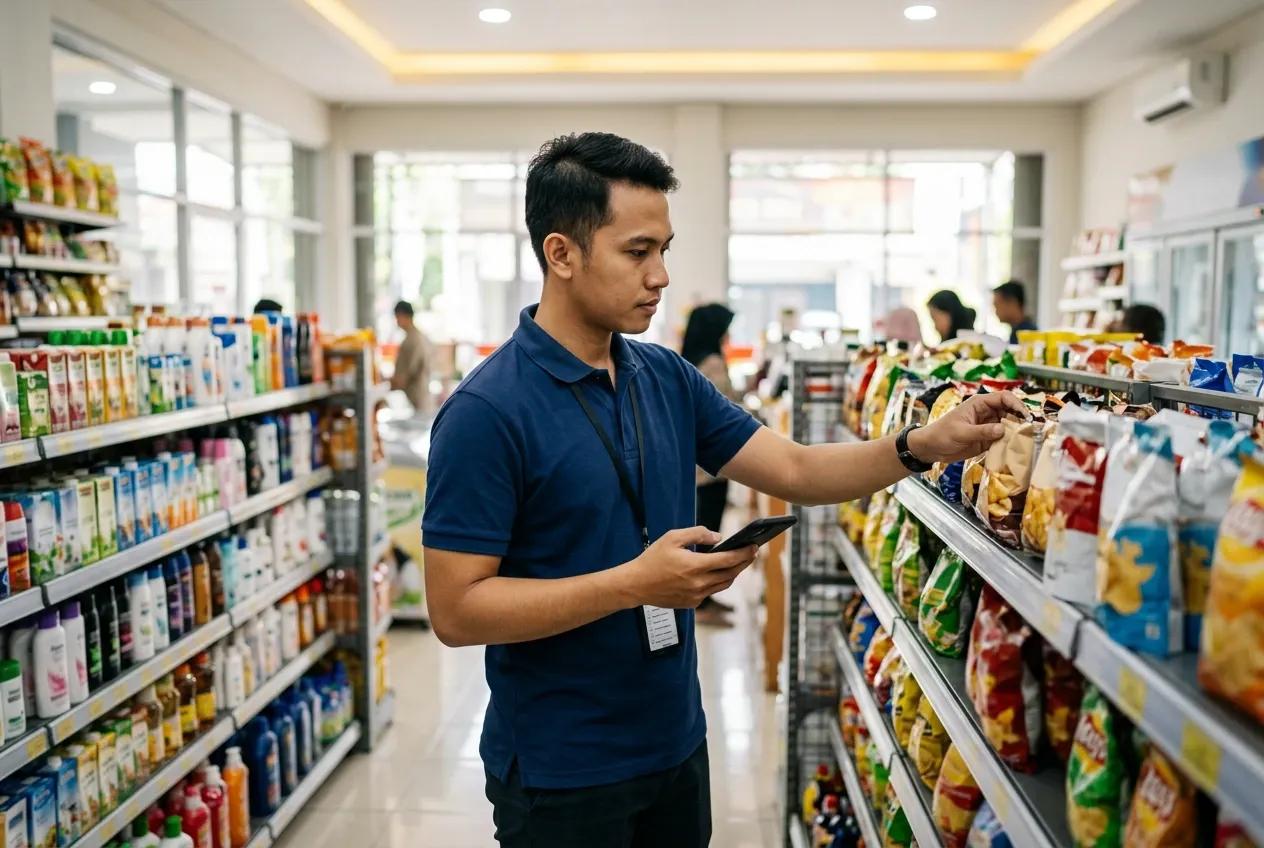
Every outlet has its own conditions and priorities. A merchandiser may focus on stock at one outlet, while another may require closer attention to display, pricing, or promotional activities. Without a clear checklist, important points can easily be missed during the visit.
A retail execution checklist helps set the key points that merchandisers need to check at each outlet. It also gives them a reference for what information to record and what action to take when they find an issue.
What Is a Retail Execution Checklist?
A retail execution checklist is a practical guide used by merchandisers during outlet visits. It helps them know what needs to be checked, what activities need to be completed, and what information should be recorded during each visit.
The checklist can cover several aspects of retail execution, including:
- Required products: Confirming that priority or mandatory products are available at the outlet.
- Recommended pricing: Checking whether products are sold according to the recommended price.
- Display standards: Reviewing product placement, shelf visibility, arrangement, and promotional displays.
- Promotion activities: Verifying whether current promotions are running according to the planned mechanism.
- Marketing materials: Checking the availability and placement of materials such as posters, wobblers, banners, or other promotional assets.
Essential Data to Track During Every Retail Visit
Not every outlet needs the same approach. Traditional stores, minimarkets, supermarkets, and high-potential outlets may have different priorities during a visit. However, a retail execution checklist should still capture several key data points, including:
- Outlet Code, Visit Time, and Location
Every checklist should begin with basic visit information. Data may include the outlet code and name, channel, address or coordinates, merchandiser name, visit date, check-in time, and check-out time.
The information provides a record of field activity and helps supervisors review visit patterns, time spent at each outlet, and opportunities to improve sales team productivity. - Visit Objective
The checklist should also state the purpose of the merchandiser's visit. The objective may include checking stock, installing promotional materials, collecting payment, reviewing product displays, or completing a specific campaign activity.
A defined objective gives the merchandiser a reference for the activities that need to be completed during the visit. It also gives supervisors a basis for checking whether the visit achieved its intended result. - Product Availability
Product availability should not be recorded only as "available" or "unavailable." The checklist should capture the required SKUs, visible stock quantity, and stock kept in the outlet's storage area.
For fast-moving products, merchandisers can also record the estimated quantity needed until the next planned visit. Visit data can then help the sales team identify potential replenishment needs. - Out-of-Stock Reason
When a product is unavailable, the checklist should also record the reason. Possible causes include the outlet has not placed an order, delivery has been delayed, distributor stock is unavailable, or shelf space is limited. - Assortment Compliance
Assortment refers to whether the expected range of products is available at an outlet. A small store may only need to carry core SKUs, while a supermarket or high-potential outlet may be expected to offer a wider product range. - Price Compliance
The checklist should capture the actual selling price and the reference price for each relevant product. Merchandisers can also record whether a price label is displayed and note any price variance found during the visit. - Display, Facing, and Shelf Position
Retail execution also depends on how products are presented inside the outlet. Relevant data can include shelf location, number of facings, vertical position, display condition, packaging condition, and whether competitor products affect product visibility.
Companies may use planogram software to compare the actual shelf arrangement with the planned layout. The checklist can then record whether the display meets the expected placement. - Promotion and Marketing Materials
The checklist should verify whether the planned promotion is present and being implemented according to the campaign guidelines.
Merchandisers can record the promotion type, implementation status, promotional price or mechanic, and the condition of marketing materials. Materials may include posters, wobblers, shelf talkers, banners, or other promotional assets.
A checklist can also capture issues such as missing, damaged, expired, or incorrectly placed materials. - Challenges, Required Actions, and Follow-Up
A useful retail execution checklist should not stop at identifying problems. Each issue should lead to a defined follow-up.
Relevant fields can include:
- Challenge: What issue was found?
- Urgency: How quickly does it need attention?
- Required action: What needs to be done?
- Responsible team: Who should handle it?
- Deadline: When should the issue be resolved?
- Follow-up status: Has the action been completed?
For example, if a product is out of stock because of a delayed delivery, the checklist can tell the merchandiser to record the affected SKU and report the issue to the distribution team. If a promotional material is damaged, the merchandiser can be instructed to record the issue and notify the trade marketing team. If an outlet has not placed its expected order, the checklist can indicate that the merchandiser needs to follow up with the outlet and report the result to the sales team.
Manage Retail Execution with BOSNET Mobile Merchandiser
Improve retail execution across every outlet with BOSNET Mobile Merchandiser.
BOSNET Mobile Merchandiser helps sales teams and merchandisers manage outlet visits with digital checklists, capture field findings, and monitor retail execution in real time. Teams can standardize key checks across outlets while gaining visibility into product availability, pricing, displays, promotions, and other retail activities.
Contact us to see how BOSNET can help your team manage retail execution and gain real-time visibility across every outlet.
#BOSNET #BestFMCGRunsBOSNET #Distribution #SupplyChain #IncreaseRevenue #ReduceCost