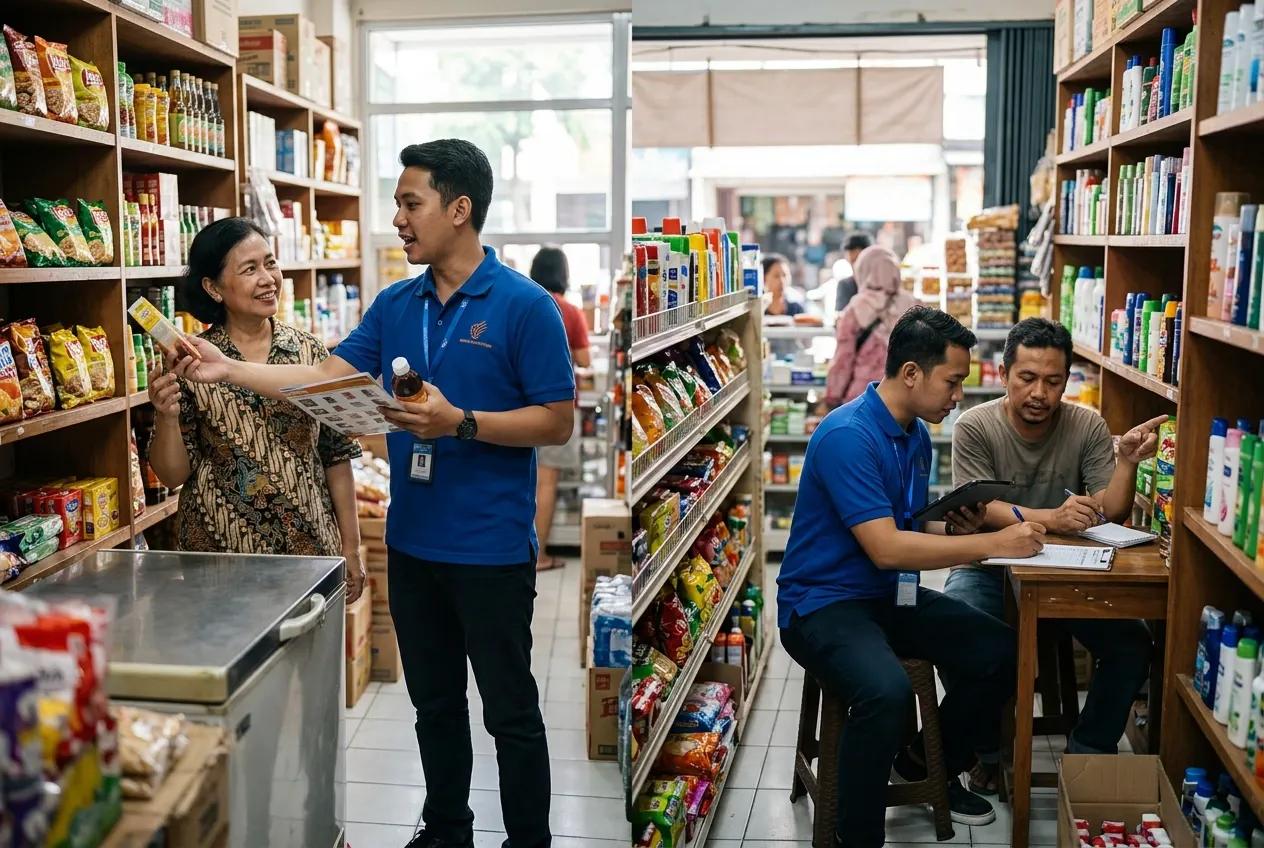
Sales teams play an important role in driving sales, especially in distribution and retail businesses. Their role is not limited to selling products, as they also interact directly with customers and represent the company during each visit.
Depending on how sales activities are carried out, businesses may use different types of sales teams. Two common roles are Sales Canvass and Sales Taking Order, each with a different role and way of serving customers.
What Are Sales Canvass and Sales Taking Order?
Sales Canvass and Sales Taking Order both involve offering products to customers and generating sales. The main difference lies in the purpose of each sales activity during customer visits.
- Sales Canvass
Sales Canvass focuses on introducing products to customers and creating new sales opportunities. Sales representatives visit outlets or potential customers to present products, explain their benefits, and encourage customers to try products they may not have purchased before. - Sales Taking Order
Sales Taking Order handles customer orders and increases sales from existing customers. Sales representatives visit outlets to check product needs, offer available products, and take orders based on customer demand. The visit can also be used to recommend additional products that match the customer’s needs.
Differences Between Sales Canvass and Sales Taking Order (TO)
- Sales Canvass
- Main Role: Introduces new products and offers them directly to customers.
- Products: Carries products during customer visits. When a customer places an order, the products can be handed over directly during the same visit.
- Target Customers: Retail and semi-wholesale outlets that are not yet covered by Sales Taking Order.
- Pricing: Prices can vary and may be higher than Sales Taking Order prices.
- Payment: Usually paid in cash when the purchase is made, with the products handed over at the same time.
- Visit Duration: Visits can take longer because products need to be unloaded and handed over to the customer. - Sales Taking Order
- Main Role: Collects customer orders and aims to increase sales from existing customers.
- Products: Does not carry products during customer visits.
- Target Customers: Mainly existing customers within assigned sales areas, including modern retail, traditional markets, retail outlets, wholesalers, and semi-wholesalers.
- Pricing: Prices are generally lower for repeat customers and established accounts.
- Payment: Can be made in cash or on credit, depending on the company’s payment terms.
- Visit Duration: Customer visits are generally faster because there is no need to unload products during the visit.
Challenges in Managing Sales Canvass and Sales Taking Order
- Manual Order and Visit Records
Customer orders and visit results may still be recorded on paper forms, in spreadsheets, or through chat messages. Sales teams then need to organize the information again for reporting, which can lead to missing or incorrect data. - Limited Customer Purchase History
Sales representatives may not have quick access to a customer’s previous orders, product preferences, or purchase frequency during a visit. The lack of available history can make it harder to know which products to offer. - Missed Outlets and Scheduled Visits
Managing outlet visits manually can lead to missed customers or visits not completed as scheduled. Sales teams may also have limited information about which outlets still need to be visited. - Limited Visibility into Sales Activities
Managers may not have up-to-date information about where sales representatives have visited, which outlets placed orders, or how much sales each visit generated. As a result, reviewing sales activities and performance can take additional time.
Manage Sales Canvass and Taking Order with BOSNET Mobile Distribution
A successful sales closing requires more than customer visits and order taking. Businesses need a connected system that helps sales teams manage customer interactions, monitor field activities, and execute sales plans with better visibility across distribution channels.
BOSNET Mobile Distribution helps businesses manage sales canvassing activities, plan customer visits, take orders directly from the field, and monitor sales performance. With real-time data, sales teams can track field activities, access customer information, and manage daily sales operations.
Contact us to learn how BOSNET Mobile Distribution helps field sales manage daily field activities and improve sales performance.
#BOSNET #BestFMCGRunsBOSNET #Distribution #SupplyChain #IncreaseRevenue #ReduceCost