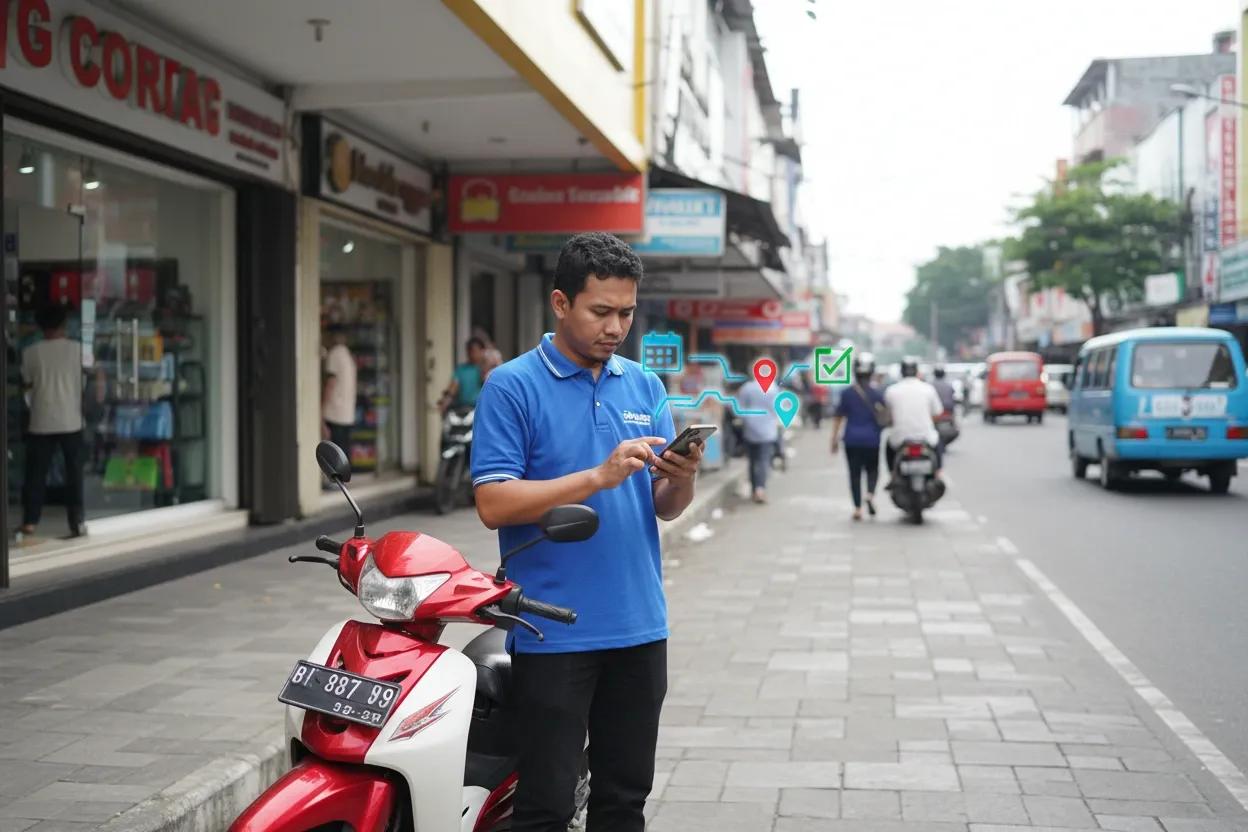
Managing store visits across multiple outlets is not always easy. Without a clear visit schedule, sales teams may spend too much time traveling. As a result, customer coverage becomes inconsistent and productivity starts to decline.
A well-planned store visit schedule helps businesses allocate sales resources according to customer potential, location, and visit frequency. With better planning, sales teams can spend less time on the road, serve additional customers each day, and maintain regular customer engagement across their territories.
Why Distributors Need a Store Visit Schedule
A store visit schedule helps sales teams manage customer visits with better consistency and coverage. Without a clear plan, salesmen may spend too much time traveling, miss priority customers, or visit outlets with limited sales potential.
A well-planned schedule allows businesses to allocate sales resources according to customer potential, outlet location, and visit frequency. As a result, sales teams can spend additional time engaging with customers and generating orders.
- Improve Coverage
A visit schedule helps ensure every customer receives attention according to their sales potential and business needs.
High-value customers may require frequent visits, while smaller accounts can follow different schedules. Balanced coverage helps businesses maintain customer relationships and reduce missed sales opportunities. - Increase Field Productivity
Field productivity often declines when sales representatives spend too much time traveling between locations.
Planning visits based on customer location and travel distance helps reduce unnecessary trips and allows teams to visit additional outlets within the same day. - Support Better Route Planning
Visit schedules and route planning work closely together. Grouping nearby outlets into the same route helps reduce travel time and allows sales teams to manage their daily activities more efficiently. - Improve Sales Visibility
A visit schedule gives managers better visibility into field activities and customer coverage. Sales managers can monitor completed visits, review sales activities, and identify areas that may require additional attention.
Tips To Create a Store Visit Schedule for Your Salesman
A well-planned visit schedule helps sales teams spend less time on the road and spend additional time serving customers. It also helps improve coverage, reduce missed visits, and keep customer interactions consistent across territories.
- Identify and Prioritize Customers
The first step in planning store visits is understanding which customers should receive attention first.
Purchase history, outlet size, and product demand can help sales managers determine visit priorities. Customers with higher transaction volumes or greater sales potential may require visits more frequently than smaller accounts. - Consider Travel Time and Distance
Travel time and distance have a significant impact on field productivity.
Grouping nearby outlets into the same route helps reduce travel time and allows sales teams to visit additional customers in a single day. Outlet operating hours should also be considered to avoid arriving when stores are closed or unavailable for visits. - Set Store Visit Durations
Every customer visit requires enough time for discussions, order taking, and product reviews.
First meetings often take between 30 minutes and one hour, while regular visits may require less time depending on customer needs and visit objectives. Realistic schedules help reduce delays that can affect the remaining visits during the day. - Use Technology to Support Field Activities
Salesman software can simplify daily task management and help teams manage visit schedules more efficiently.
Features including route optimization, digital order taking, GPS tracking, and real-time updates help sales teams follow visit plans and improve visibility across field activities.
BOSNET Solutions for Efficient Store Visits
Managing store visits across multiple locations can be challenging without visibility into field activities and visit execution. BOSNET provides integrated solutions that help businesses manage sales activities, monitor field operations, and improve coordination between teams.
- Mobile Supervisor
BOSNET Mobile Supervisor helps managers coordinate daily activities and monitor field execution across operational areas.
Managers can conduct joint visit calls, manage salesman routes, monitor visit performance, and review field activities directly from their mobile devices. Access to real-time information helps supervisors respond faster and improve execution across the sales team. - Mobile Distribution
BOSNET Mobile Distribution supports sales representatives during daily store visits and customer interactions in the field.
The application allows sales teams to manage visits, record transactions, and update sales activities directly from mobile devices. Features including Check In Check Out (CICO) and geotagging help verify visit activities and provide visibility into field execution in real time.
150+ Renowned Brands Trust BOSNET for Their Distribution
Over 150 brands rely on BOSNET to manage their distribution and sales processes efficiently. BOSNET provides an end-to-end solution for distributors to track operations, performance, and sales in real time.
Contact us to see how BOSNET can streamline your operations and deliver real-time visibility across your distribution network.
#BOSNET #BestFMCGRunsBOSNET #Distribution #SupplyChain #IncreaseRevenue #ReduceCost