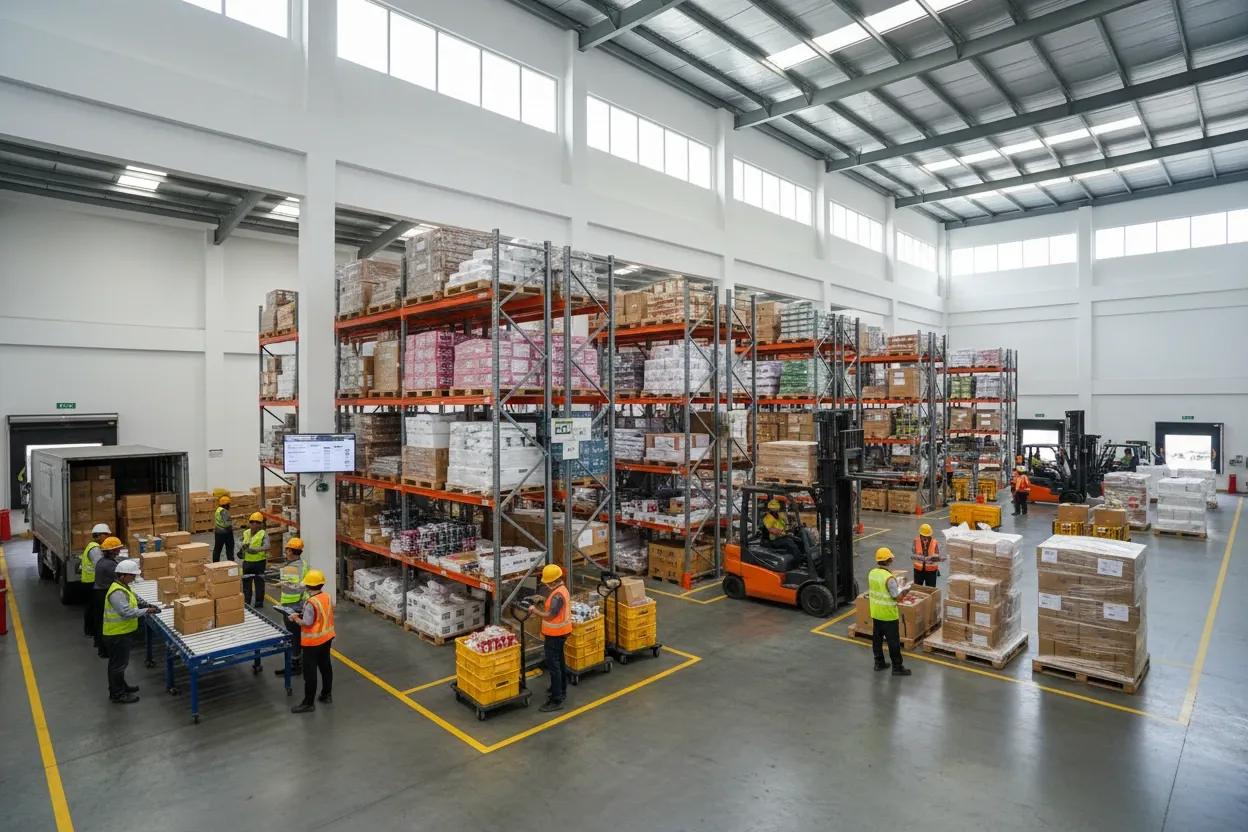
For distribution companies, warehouse management is an essential part of the supply chain. As the number of products increases, companies need a system to keep track of inventory and ensure product availability.
To manage inventory, every warehouse follows a series of processes, from storing incoming goods to preparing and shipping orders. Each stage must be carried out accurately to avoid inventory discrepancies, delivery delays, and fulfillment issues.
Definition of Warehouse Management
Warehouse management is the process of organizing, controlling, and optimizing daily warehouse operations. It covers every activity from the moment goods arrive at a facility, including receiving and put-away, to inventory tracking, order fulfillment, and shipping.
The primary goal of warehouse management is to ensure that products are stored accurately, inventory information remains up to date, and customer orders are processed efficiently. By managing the movement of goods throughout the warehouse, businesses can improve inventory visibility and reduce delays.
Importance of Efficient Warehouse Management
As a critical component of the distribution process, warehouse management is important. Well-managed warehouses help businesses maintain product availability, improve order fulfillment, and support distribution.
- Inventory Control
Accurate inventory management begins with visibility into stock levels. A well-managed warehouse provides real-time inventory information, allowing businesses to monitor product availability and movement throughout the facility. With accurate inventory data, companies can reduce the risk of overstocking and stockouts. - Improved Customer Service
Warehouse management also has a direct impact on the customer experience. Orders that are prepared accurately, shipped on schedule, and delivered on time contribute to higher customer satisfaction. Consistent fulfillment helps build customer confidence and supports long-term business relationships.
Warehouse Management Process Flow
To achieve optimal warehouse management, businesses need a clear understanding of each process. In general, warehouse management consists of four key stages: putaway, picking, packing, and shipping.
- Putaway
After goods arrive, warehouse staff register each product and assign a barcode. Once the registration process is completed, the items are placed in designated storage locations or racks. - Picking
When an order is received, staff first verify inventory availability to ensure the requested quantities can be fulfilled. After the stock check is complete, staff perform picking by retrieving the required items from their storage locations. The selected products are then prepared for the next stage of order processing. - Packing
Products that have completed the picking stage are prepared for packing. During this process, items are packaged, labeled, and accompanied by the required shipping documents based on customer or operational requirements. Packaging follows established standards and is adjusted according to the transportation method being used. - Shipping
Shipping is the final stage of warehouse management. At this point, the packaged goods and supporting documents are dispatched to their destination. To keep warehouse operations running efficiently, every stage, including shipping, should be monitored via a warehouse management system that provides visibility into inventory movement and order fulfillment.
Warehouse Management Strategies
Implementing the right warehouse management strategies can help FMCG businesses improve operational performance, maintain inventory accuracy, and support faster order fulfillment.
The following are common strategies used by business:
- Implement a Warehouse Management System (WMS)
A Warehouse Management System (WMS) helps automate and optimize warehouse operations from inbound receiving to outbound shipping. The system provides real-time inventory visibility and assists warehouse staff in accurately locating and picking products. - Optimize Warehouse Layout
Warehouse layout plays an important role in daily operations. A well-planned layout can reduce travel time during picking activities and help warehouse staff work more efficiently. Frequently picked items should be placed in easily accessible locations, while rack arrangements should be designed to support faster inventory movement and better space utilization. - Automate Replenishment
When stock is low, businesses risk delays in order fulfillment and potential lost sales. For that reason, many distributors use replenishment software to monitor stock levels. When inventory reaches a predefined threshold, the system can generate replenishment recommendations or purchase requests to help businesses maintain product availability and avoid stockout.
Manage Warehouse with BOSNET Warehouse Management System (WMS)
BOSNET Warehouse Management System helps businesses manage stock across the warehouse. By automating inventory processes and providing real-time visibility, businesses can identify products faster, track stock movement accurately, and maintain records across multiple warehouse locations.
With its self-correcting system, BOSNET Warehouse Management System automatically updates inventory records based on the latest physical activity, delivering precise data for smarter decision-making and helping FMCG businesses increase revenue, reduce costs, and protect assets.
Contact us to see how BOSNET can efficiently manage your warehouse.
#BOSNET #BestFMCGRunsBOSNET #Distribution #SupplyChain #IncreaseRevenue #ReduceCost