Artificial Intelligence has become one of the biggest topics in business over the past few years, and retail distribution is no exception. What started as a technology for automation has evolved into a practical solution that helps companies improve decision-making, accelerate execution, and gain valuable insights from field activities.
For years, sales execution relied heavily on experience, personal judgment, and fragmented information. Salesmen often made decisions without complete visibility, while principals had limited insight into what was actually happening at the store level.
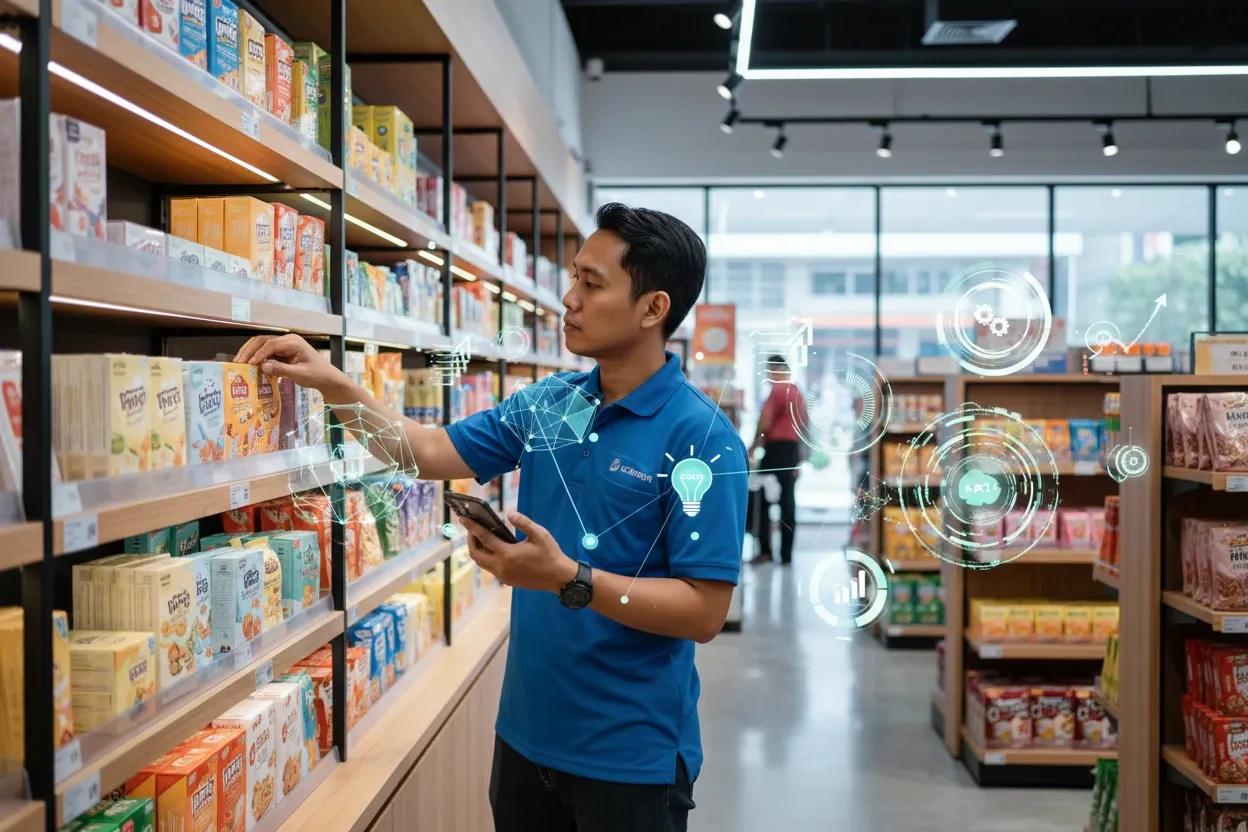
Today, AI is bringing greater visibility into retail execution. Using shelf images captured during store visits, AI can evaluate planogram compliance, identify out-of-stock products, verify promotional displays, assess product placement, and provide recommendations that help sales teams respond faster and improve in-store execution.
The Key Challenges in Retail Distribution
- Visit Planning
One of the biggest challenges in retail distribution is deciding which outlets should be visited each day. Without clear guidance, salesmen often rely on experience or personal judgment, which can result in missed opportunities and uneven outlet coverage.
The challenge is especially common in industries like building materials, pharmaceuticals, and automotive, where sales teams do not follow fixed visit schedules. Even in FMCG, where outlet visits happen frequently, sales still need to decide which stores deserve immediate attention based on business priorities, sales potential, and current outlet performance. - Inconsistent In-Store Execution
Every store visit includes multiple activities, from checking product availability and shelf displays to verifying promotional materials and engaging with store owners. Without timely insights, salesmen may spend time on tasks that have less impact while overlooking issues that need immediate attention.
As a result, store execution varies between outlets, important sales opportunities can be missed, and daily productivity becomes difficult to maximize. - Lack of Real-Time Insights
Sales supervisors need accurate and up-to-date information to support field operations. Without real-time visibility, they cannot easily identify which outlets need stock replenishment, which stores are not following merchandising guidelines, or which locations are delivering below-expected performance. - Planogram and Promotion Compliance
Retail execution depends on products being displayed according to planograms and promotional guidelines. However, manual store audits are time-consuming and often produce inconsistent results, especially when hundreds or thousands of outlets are involved.
Today, many distributors are adopting AI-powered shelf recognition to analyze store images captured during outlet visits. The technology can verify product placement, measure planogram compliance, detect out-of-stock items, confirm promotional materials, and check whether promotional campaigns are displayed according to schedule. These insights help principals and distributors identify issues faster and improve retail execution across the market.
Traditional vs AI Retail Distribution
Traditional sales execution relies on manual observations, experience, and historical reports. AI enhances retail distribution with real time analysis and automated shelf intelligence, helping sales teams respond faster and make informed decisions during store visits.
- Data Analysis
• Traditional: Relies on historical reports and manual analysis, making insights available after store visits.
• AI: Delivers real-time AI-powered insights from retail data and shelf images, allowing faster decision-making. - Compliance Verification
• Traditional: Planogram and promotional compliance are checked manually, making large-scale monitoring time-consuming.
• AI: Automatically verifies planogram compliance, product placement, and promotional displays using AI-powered image analysis.
Impact of AI for Retail Distribution
The following are some of the impacts of AI in retail distribution:
- Improve Planogram Compliance
Shelf images are analyzed against planogram guidelines to verify product placement and shelf arrangement. Sales teams can quickly identify compliance issues and take corrective action during store visits. - Verify Promotional Execution
Promotional displays and campaign messages can be automatically checked to ensure they align with merchandising guidelines and campaign objectives across outlets.
Bring AI into Retail Distribution with BOSNET Vision
BOSNET Vision helps distributors and principals analyze shelves using AI to verify planogram compliance, promotional execution, product placement, and campaign visibility. The platform also delivers AI-powered insights that help teams identify issues quickly and improve retail distribution across every outlet.
Contact us to learn how BOSNET Vision can help you improve your retail distribution.
#BOSNET #BestFMCGRunsBOSNET #Distribution #SupplyChain #IncreaseRevenue #ReduceCost