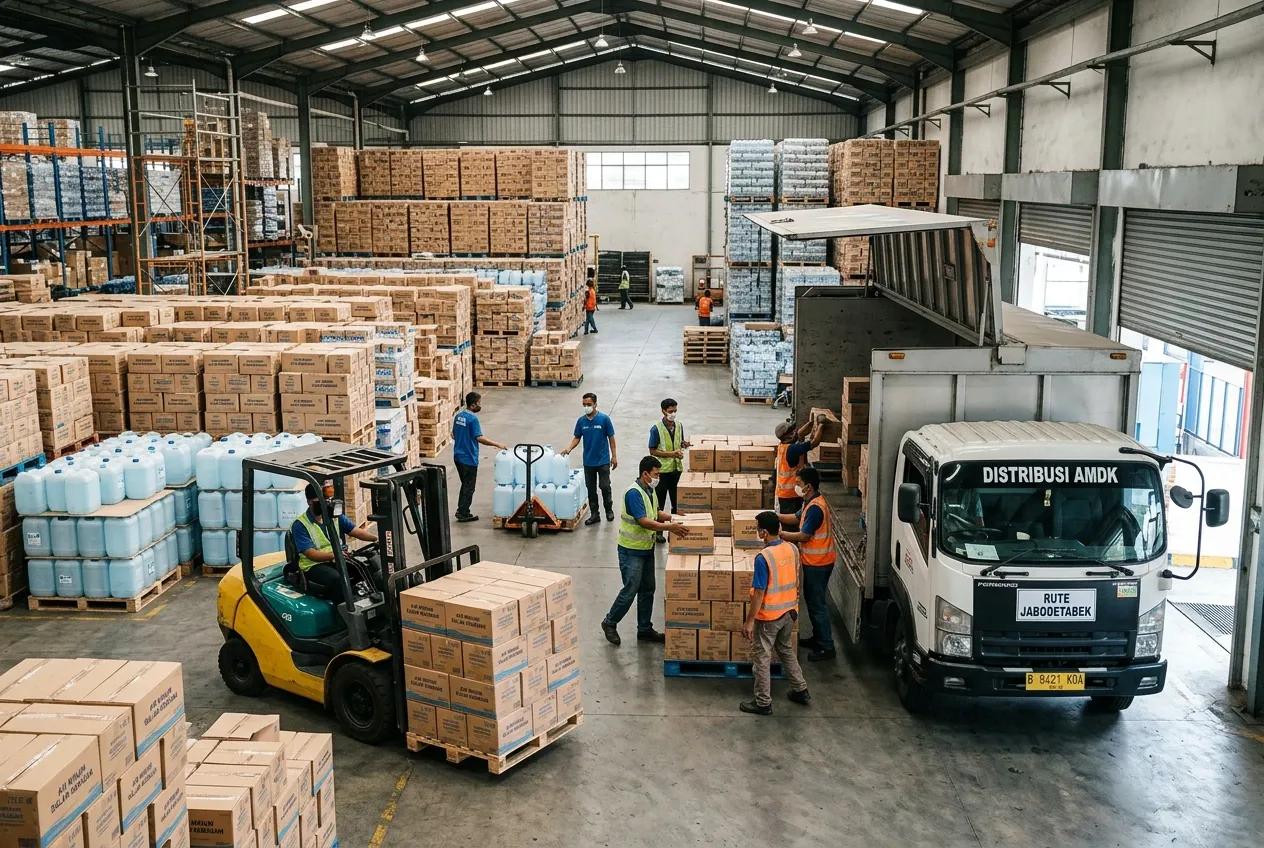
The AMDK industry continues to play an important role in meeting daily drinking water needs across Indonesia. Supported by growing demand and changing consumer habits, the industry remains one of the most stable sectors within the FMCG market.
As competition continues to increase, businesses need to understand market trends, customer segments, distribution opportunities, and operational challenges. Understanding these factors can help companies identify growth opportunities and make better business decisions.
What Drives Growth in the AMDK Industry?
The AMDK industry is one of the most stable sectors in Indonesia's FMCG market. Even during periods of economic uncertainty, demand for drinking water remains consistently high because it is a daily consumer need.
Several factors continue to support growth in the AMDK industry, including increasing urbanization, growing public awareness of health and wellness, and limited access to safe drinking water. As populations grow and urban areas expand, demand for convenient, accessible drinking water products continues to rise.
Consumer preferences are also evolving. Buyers are becoming more selective and are paying closer attention not only to price but also to product quality, safety, and hygiene standards. As a result, the AMDK industry needs to maintain high-quality standards throughout the production, storage, and distribution processes.
Packaging also influences purchasing decisions. Consumers tend to prefer products that are practical and easy to use in their daily activities. Small bottles of water remain popular because they are convenient to carry and consume on the go. Refillable containers also continue to see high demand, especially among households and offices. Understanding these preferences helps businesses plan production, inventory, and distribution according to market demand.
Target Market of the AMDK Industry in Indonesia
Without clear market segmentation, businesses may find it difficult to develop marketing, sales, and distribution strategies that align with customer needs.
- Households
Households are among the largest consumer segments in the AMDK market. Since drinking water is a daily necessity, demand remains consistent throughout the year.
Refillable gallon products are particularly popular in this segment because they provide a practical and economical source of drinking water for families. - Offices and Industrial Facilities
Businesses and industrial facilities require a continuous supply of drinking water for employees and visitors. Many organizations purchase refillable gallons in large quantities to support daily consumption.
This segment can create opportunities for recurring orders and long-term business relationships. - SMEs and Retail Stores
Traditional stores, minimarkets, and other retail outlets play an important role in distributing bottled drinking water products to consumers.
Small bottled water and cup packaging is widely sold through these channels because it is convenient for individual consumption and impulse purchases.
Changing Market Trends in the AMDK Industry
Market trends in the AMDK industry continue to evolve alongside changes in consumer behavior. Many consumers now prefer the convenience of ordering drinking water through digital platforms rather than visiting physical stores.
Home delivery services for refillable gallons are also becoming increasingly popular, creating new opportunities for businesses to expand their customer reach.
As a result, AMDK companies need to adapt to digital sales channels, delivery services, and logistics operations to meet changing customer expectations and purchasing habits.
Business Opportunities in the AMDK Industry
One of the key insights shaping the AMDK industry is the growing opportunity in regional markets. As demand for bottled drinking water continues to increase, many areas across Indonesia still offer significant growth potential for businesses.
Why Regional Markets Offer Growth Opportunities
Several factors contribute to the growing opportunity outside major cities.
First, distribution coverage from large AMDK brands is not always evenly spread across every region. In some areas, product availability remains limited because distribution networks have not fully reached the market.
Second, transporting products from major cities can increase logistics costs. As a result, local businesses often have an opportunity to serve nearby markets more efficiently.
At the same time, demand for drinking water continues to grow. Population growth, rising health awareness, and daily consumption needs continue to support market demand across many regions.
Market Potential in Non-Urban Areas
Rural areas, districts, and smaller cities continue to represent attractive opportunities for AMDK businesses. Many of these markets have a growing need for bottled water.
Competition is also often lower than in major cities. This gives businesses an opportunity to build customer relationships, expand market coverage, and increase sales within their local area.
With the right distribution strategy, software, and market coverage, regional markets can become an important source of long-term business growth.
AMDK Industry Opportunities in 2026
The growing demand for bottled drinking water continues to create opportunities for distributors and agents across Indonesia. To take advantage of AMDK industry trends in 2026, businesses need to choose a distribution model and technology that match their operational scale and market coverage.
- Local Distribution Business
Small and medium-sized businesses can focus on serving local markets within specific cities, districts, or regions.
A local distribution model allows businesses to build relationships with nearby retailers, restaurants, offices, and households. - Distributor and Agent
Many businesses enter the AMDK industry as distributors or agents. Under this model, products are purchased in bulk from manufacturers and distributed to retail stores, traditional markets, minimarkets, restaurants, offices, and other sales channels.
The business opportunity lies in building a broad customer base, maintaining product availability, and ensuring products consistently reach customers.
As customer numbers, outlets, and transactions increase, managing operations manually becomes increasingly difficult.
Distribution software helps businesses manage sales orders, inventory, deliveries, outlet visits, and operational activities through a centralized platform. Better visibility into daily operations allows distributors to support business growth while maintaining service quality and product availability.
Challenges in the AMDK Industry
Despite its growth potential, the AMDK industry also faces several challenges. From regulatory compliance to distribution management, each area requires careful attention to ensure product availability.
- Licensing and Regulatory Compliance
AMDK businesses must comply with various regulations related to production, packaging, product safety, and distribution. Obtaining and maintaining the necessary licenses is an important part of operating within the industry. - Water Quality Standards
Maintaining water quality is a critical responsibility for every AMDK business. Consumers expect drinking water products to meet safety and hygiene standards throughout the production and distribution process. - Price Competition
The AMDK market is highly competitive, with products available across multiple price ranges and packaging. Businesses often compete not only on price but also on product quality, brand reputation, service levels, and product availability. - Distribution Challenges
Distribution plays an important role in ensuring products remain available across different regions. Delivering products to urban and non-urban areas requires careful planning, inventory management, and delivery.
Strategies for Success in the AMDK Industry
- Improve Distribution Efficiency
Distribution is one of the most important factors in the AMDK industry. Timely deliveries, accurate inventory planning, and reliable distribution networks help businesses maintain product availability and improve customer satisfaction. Efficient distribution also helps reduce operational costs and support market expansion. - Maintain Product Quality
Consumers expect drinking water products to meet high-quality and safety standards. Regular quality monitoring and adherence to industry standards help ensure products remain safe and suitable for consumption. - Expand Market Coverage
Reaching new customers is an important part of business growth. Companies can increase sales by expanding distribution coverage, entering new regions, and developing relationships with additional retail outlets, wholesalers, and commercial accounts. - Utilize Software
Digital solutions can help businesses improve visibility across sales, inventory, and distribution activities.
Tools such as distribution software, warehouse management systems, sales applications, and demand forecasting solutions help businesses monitor operations, improve decision-making, and support business growth as transaction volumes increase.
The continued growth of the AMDK industry presents significant opportunities for manufacturers, distributors, and agents to expand their market reach. As competition increases and distribution networks become more complex, businesses need greater visibility across sales, inventory, warehousing, and delivery operations to maintain product availability.
BOSNET provides integrated distribution solutions to help AMDK businesses improve operational efficiency, optimize inventory levels, increase sales productivity, gain real-time visibility across operations, increase revenue, and reduce operational costs.
Contact us to learn how BOSNET can help streamline your distribution.
#BOSNET #BestFMCGRunsBOSNET #Distribution #SupplyChain #IncreaseRevenue #ReduceCost