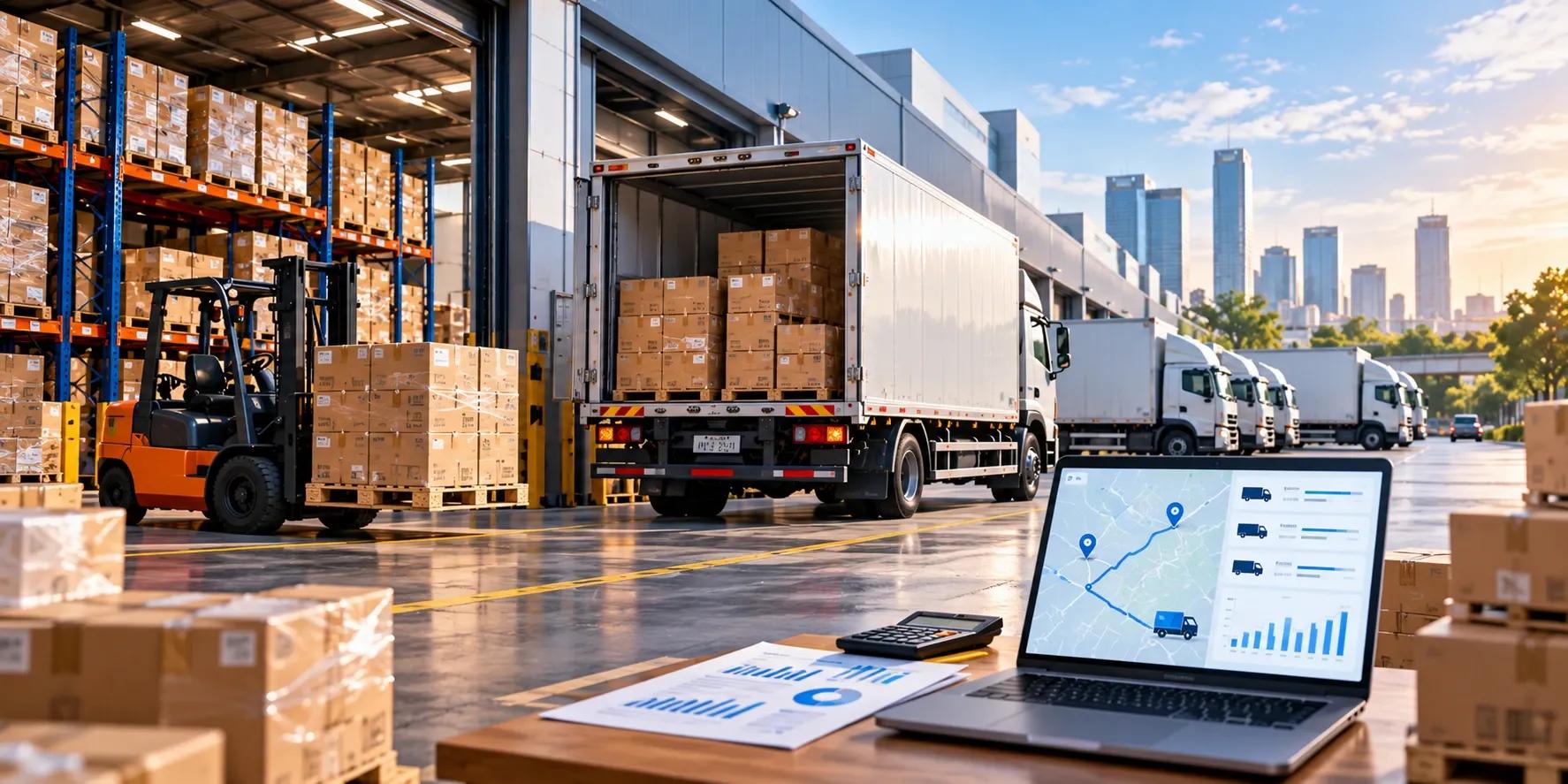
Transportation costs can take up a significant part of logistics and delivery expenses. Knowing how much a vehicle costs to operate over a given distance helps companies review their spending and see which areas may be driving up transportation costs.
One common measurement is cost per mile, which shows the average expense incurred for every mile a vehicle travels. The calculation can be applied to delivery trips as well as other operational journeys, helping companies identify spending patterns and assess where transportation costs can be reduced.
How Businesses Calculate Cost per Mile
- Determine the Distance Traveled
Start by selecting the period you want to measure. A shorter period, such as one day or one week, can be useful when calculating cost per mile for the first time because the amount of data is easier to collect and review.
Once the calculation process is familiar, companies can use a longer period that matches their regular business reporting, such as a month or a year. Odometer readings can provide the distance covered by a vehicle during the selected period.
Use the following formula:
Ending Odometer Reading - Starting Odometer Reading = Total Miles Traveled - Record All Expense Variables
The next step is to calculate the total cost of operating the vehicle during the same period used for measuring mileage. These expenses can be grouped into three categories: fixed costs, variable costs, and driver wages.
Fixed costs remain the same regardless of how far the vehicle travels. Examples include vehicle payments or lease costs, insurance, registration fees, and permits. Variable costs change based on vehicle usage and can include fuel, maintenance, tires, and other trip-related expenses.
Record each expense according to the same period used for the mileage calculation. Add the costs within each category first, then combine the totals to get the total operating cost for the period.
Fixed Costs + Variable Costs + Driver Wages = Total Operating Cost
Using the same calculation period for both mileage and expenses ensures that the figures can be compared when calculating cost per mile in the next step. - Calculate Cost per Mile
After determining the total distance traveled and the expenses incurred during the same period, you can calculate the cost per mile. The calculation shows the average amount spent for every mile covered by the vehicle.
Use the following formula:
Total Expenses ÷ Total Miles Traveled = Cost per Mile
For example, a delivery vehicle travels 8,250 miles during one month and records total operating expenses of Rp165,000,000. The cost per mile can be calculated as follows:
Rp165,000,000 ÷ 8,250 = Rp20,000 per mile
The result means the company spends an average of Rp20,000 for every mile traveled during the measured period. The figure can then be compared across different months or vehicles to monitor transportation costs.
What Causes a High Cost per Mile?
Cost per mile is influenced by both transportation expenses and the distance required to complete deliveries. When vehicles travel further to serve the same number of delivery points, fuel consumption, driver hours, and vehicle operating costs can increase. Several factors can contribute to a higher cost per mile.
- Long Travel Distances
Longer delivery distances require additional fuel, driver time, and vehicle usage. When delivery points are spread across different locations, vehicles may need to cover a large distance before completing all scheduled stops. - Inefficient Routes
Route sequence has a direct impact on the distance traveled. Poorly planned routes can result in unnecessary backtracking between delivery points, increasing mileage and transportation costs. - Empty Miles
Empty miles occur when vehicles travel without carrying goods for delivery. Returning to the warehouse after completing deliveries or making unnecessary movements between delivery points adds mileage without generating additional delivery output. - Scattered Delivery Points
Delivery points spread across different areas can increase the distance required to complete a delivery trip. Without grouping destinations based on location, vehicles may need to cover longer routes, resulting in higher mileage and transportation costs.
How Route Optimization Can Reduce Transportation Costs
Route optimization enables distributors to plan delivery routes based on delivery locations, distance, vehicle capacity, and other operational parameters. Instead of arranging delivery stops manually, the system can determine an efficient sequence for each trip.
Optimized routes can reduce unnecessary mileage and the distance required to complete scheduled deliveries. Lower mileage can help reduce fuel consumption, driver travel time, and vehicle operating costs.
Route optimization can also support the grouping of delivery points based on location. By assigning nearby destinations to the same route, distributors can organize delivery trips more efficiently and make better use of available vehicles.
Reduce Delivery Costs with BOSNET Smart Route
BOSNET Smart Route analyzes distance, traffic, delivery priorities, and fleet capacity to generate an efficient, executable route plan. This helps businesses save time, cut costs, and make the most of their resources.
With BOSNET solutions, businesses can maintain product availability, improve delivery performance, and manage distribution costs across their fleet.
Contact us to learn how BOSNET Smart Route can optimize your distribution operations.
#BOSNET #BestFMCGRunsBOSNET #Distribution #SupplyChain #IncreaseRevenue #ReduceCost