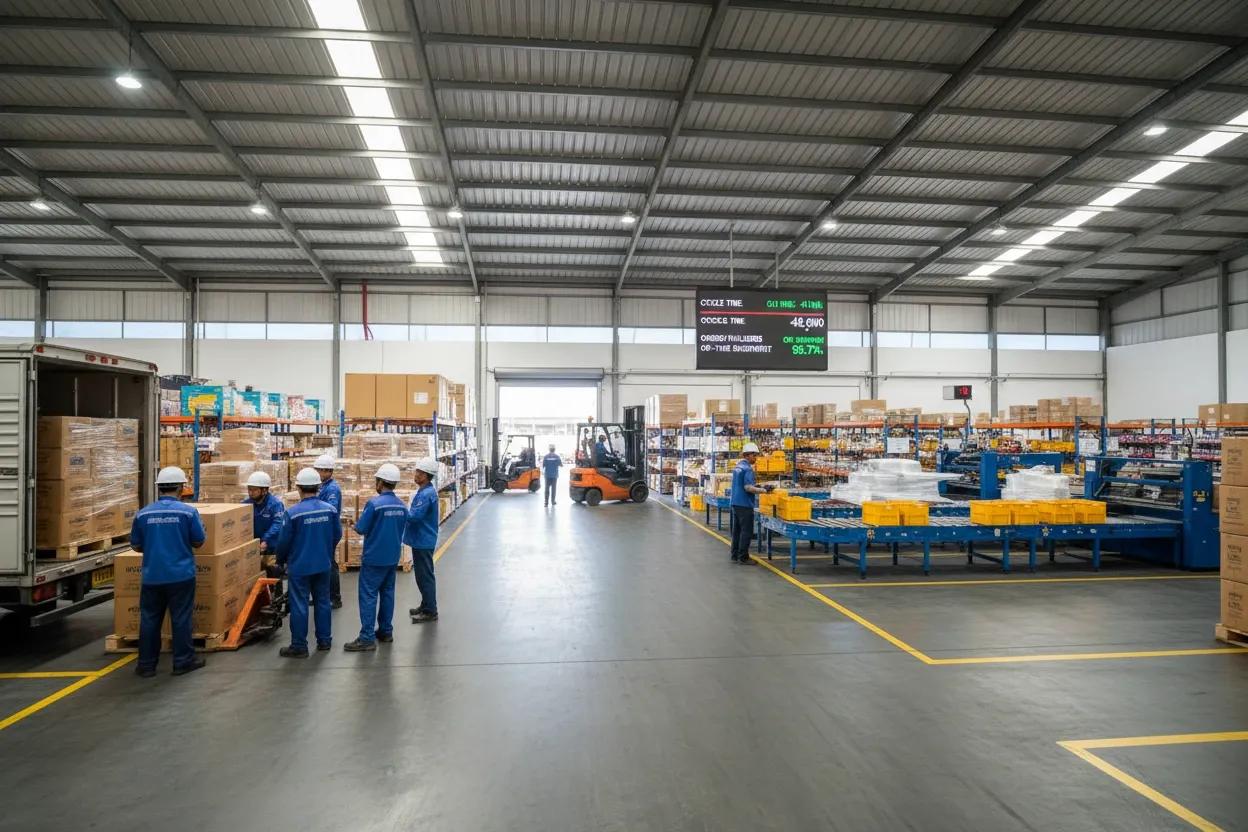
Cycle time is one of the key indicators used to measure warehouse performance. It shows how long it takes to complete operational activities, from receiving goods and putaway to picking, packing, and shipment. The longer the cycle time, the slower inventory moves through the warehouse.
In this era, delays can significantly impact productivity, operational cost, and order fulfillment. For that reason, businesses need to consistently monitor and measure process durations.
Definition of Cycle Time
Cycle time is the total time required to complete one full operational cycle, such as a picking or packing process in warehouse operations. It is measured from the start of the first activity until the task is fully completed.
As a key logistics metric, cycle time helps businesses evaluate how quickly operational activities are performed. A shorter cycle generally indicates faster process execution and better use of resources.
Measuring cycle time provides valuable insight. It helps companies assess efficiency, track process speed, and spot areas that slow the flow of goods.
Functions of Cycle Time Tracking
Cycle time tracking serves several important functions that help companies optimize inventory management and warehouse operations. Key functions include:
- Improves Productivity
A shorter time often reflects faster product movement within the warehouse. It also enables businesses to handle larger inventory volumes, process orders faster, and increase warehouse productivity. - Planning and Evaluation
Cycle time data serves as a valuable reference for warehouse performance reviews, employee training programs, inventory planning, and procurement decisions. It also helps businesses make informed operational improvements based on measurable results. - Measuring Efficiency
Cycle time provides visibility into how long each inventory-related activity takes to complete. With accurate data, companies can assess process performance and monitor operational productivity across warehouse activities. - Identifying Operational Challenges
Cycle time data can be used as part of a performance evaluation. A longer cycle may indicate operational issues, workflow delays, or inventory management processes that require improvement. - Increasing Customer Satisfaction
Efficient inventory management supports faster order fulfillment and better product availability. As a result, companies can provide a better customer experience and improve customer satisfaction.
Tips for Accurate and Efficient Cycle Time Tracking
To gain meaningful insights from cycle time tracking, businesses need a clear measurement approach and continuous monitoring across warehouse operations. The following practices can help improve tracking accuracy and support better inventory management.
- Establish Standards
Before measuring cycle time, businesses should define target cycle times for each warehouse activity. These standards serve as reference points for evaluating operational performance and determining whether a process meets expectations.
With clear targets in place, managers can compare actual performance against planned timelines and identify areas that require attention. - Identify the Causes of Long Cycle Times
When cycle times exceed expected targets, it is important to identify the factors contributing to the delay. Common causes may include inefficient warehouse layouts, labor shortages, excessive travel distances, or reliance on manual processes.
Understanding the root causes helps businesses focus improvement initiatives on the areas that have the greatest impact on operational performance. - Conduct Regular Audit
Data should be reviewed regularly to ensure warehouse activities remain aligned with operational targets.
Routine monitoring and performance analysis help businesses identify trends, measure progress, and evaluate whether process improvements are delivering the expected results. Continuous evaluation also enables managers to respond quickly when performance begins to decline. - Automate Inventory Management Processes
A Warehouse Management System (WMS) can help improve cycle time tracking while reducing reliance on manual data entry. The software allows businesses to automate inventory transactions, stock updates, and warehouse workflows.
With automated data collection and real-time visibility, businesses can reduce errors, improve tracking accuracy, and gain faster access to operational information needed for decision-making.
Role of Warehouse Management System in Streamlining Cycle Time
A Warehouse Management System (WMS) helps businesses improve warehouse productivity and reduce delays across inventory processes. With real-time visibility and automated workflows, warehouse teams can complete daily activities faster and track performance with greater accuracy.
- Track Inventory in Real-Time
A WMS provides real-time visibility into inventory movement throughout the warehouse. From goods receiving and putaway to picking, packing, and shipment, every transaction is recorded automatically within the system.
With access to up-to-date inventory information, businesses can monitor warehouse activities more accurately and identify areas that may slow down operational performance. - Reduce Manual Processes
Many warehouse activities involve repetitive administrative tasks that can consume valuable time and increase the risk of errors. A WMS automates inventory management processes, including inventory updates, transaction recording, and cycle time tracking.
By reducing reliance on manual data entry, businesses can improve process accuracy, minimize delays, and accelerate warehouse operations. - Improve Accuracy with Barcode System
Barcode technology plays an important role in supporting warehouse efficiency. Integrated with a WMS, barcode scanning helps warehouse teams identify products quickly and record inventory movements accurately.
During picking and packing activities, barcode scanning reduces the risk of selecting incorrect items while improving transaction accuracy. As a result, products move through warehouse processes faster, helping businesses maintain shorter cycle times across daily operations.
Manage Warehouse with BOSNET Warehouse Management System (WMS)
BOSNET Warehouse Management System helps businesses manage stock across the warehouse. By automating inventory processes and providing real-time visibility, businesses can identify products faster, track stock movement accurately, and maintain records across multiple warehouse locations.
With its self-correcting system, BOSNET Warehouse Management System automatically updates inventory records based on the latest physical activity, delivering precise data for smarter decision-making and helping FMCG businesses increase revenue, reduce costs, and protect assets.
Contact us to see how BOSNET can efficiently manage your warehouse.
#BOSNET #BestFMCGRunsBOSNET #Distribution #SupplyChain #IncreaseRevenue #ReduceCost