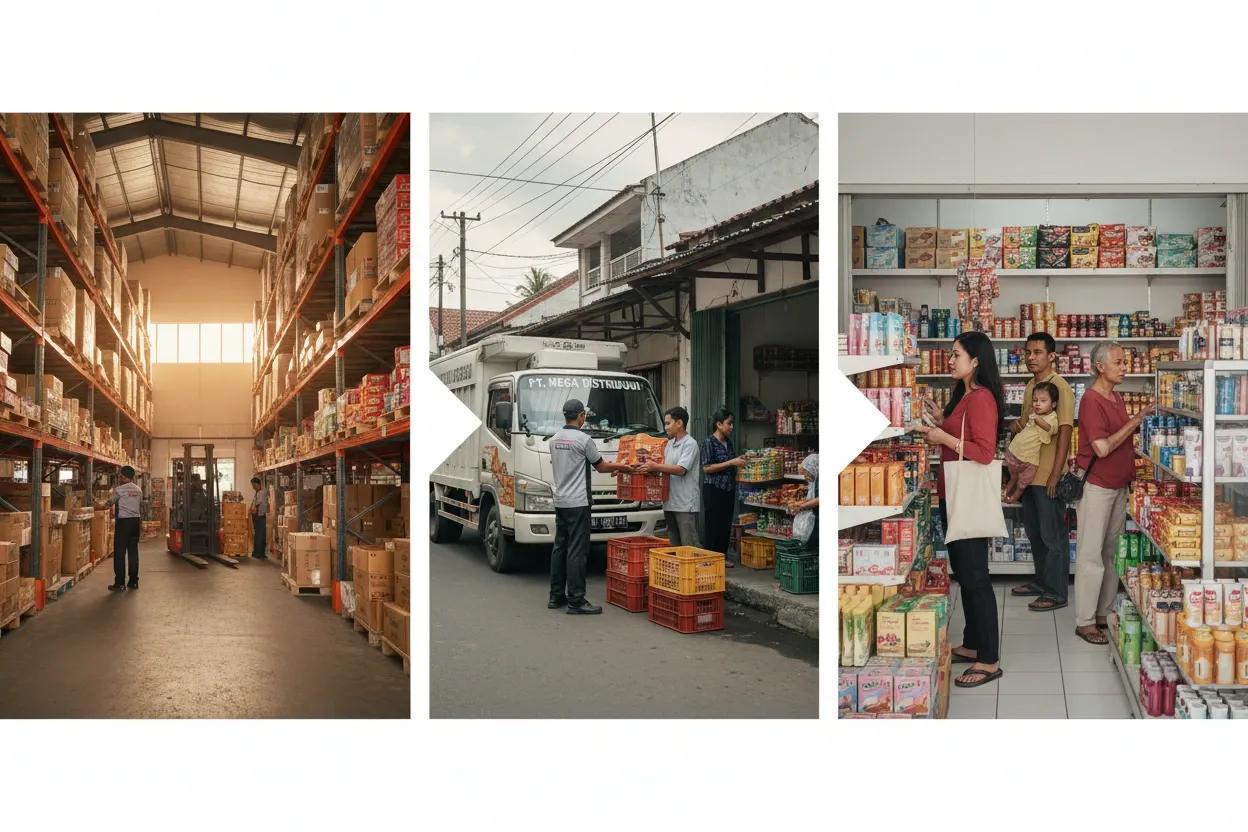
In today's competitive business environment, distribution plays an important role in supporting business growth and maintaining daily operations. As companies expand into new markets and serve customers across wider geographic areas, managing distribution becomes increasingly challenging.
To address these challenges, many businesses adopt indirect distribution. By working with distributors, wholesalers, retailers, and other distribution partners, companies can expand market coverage and reach a larger customer base. As a result, indirect distribution has become a popular approach for businesses seeking greater flexibility and broader access to customers across different regions.
What Is Indirect Distribution?
Indirect distribution is a distribution method that involves one or more third parties to help distribute products to customers. Instead of selling directly to end consumers, businesses rely on distribution partners to make products available in the market.
These third parties typically include exporters, importers, wholesalers, distributors, and retailers. Each party plays a role in moving products through the distribution channel before they reach the final customer.
Indirect distribution is commonly used by businesses that sell products across large geographic areas or handle high sales volumes. By working with distribution partners, companies can expand market coverage and distribute products to a larger number of customers without building their own sales and distribution network.
Benefits of Indirect Distribution
Indirect distribution offers several advantages for businesses looking to expand market reach and manage distribution activities efficiently. Below are some of the key benefits:
- Reduce Costs
Building and operating a distribution network requires significant investment in infrastructure, workforce, transportation, and technology.
By working with existing distribution partners, businesses can reduce these costs and take advantage of resources that are already in place. This allows companies to focus on their core operations while distribution partners handle product movement and market coverage. - Diversify Distribution Channels
Indirect distribution helps businesses reach customers across different markets and geographic areas through multiple sales channels.
By partnering with distributors, wholesalers, and retailers, companies can make their products available in a wider range of locations without managing every sales channel directly. - Scalability
As a business grows, it can expand its distribution network by adding new partners or entering new regions.
This approach offers greater flexibility compared to building and managing a direct distribution network, which often requires substantial investment and operational resources. - Improve Logistics Efficiency
Distribution partners often have established logistics networks, warehousing facilities, transportation resources, and operational processes.
Many distributors also use integrated logistics and distribution software to manage inventory, deliveries, and route planning. As a result, businesses can optimize product movement and support distribution activities across larger markets.
Examples of Indirect Distribution
Indirect distribution involves third parties that help move products from manufacturers to end customers. Below are some common examples that support business growth and market expansion.
- Retailers
Retailers sell products directly to end customers through physical stores or online channels. They provide customers with access to a wide range of products while offering a convenient shopping experience.
Retailers play an important role in helping products reach consumers without requiring manufacturers to manage direct sales activities. - Wholesalers
Wholesalers purchase products from manufacturers in large quantities and resell them to retailers at lower per-unit prices.
By buying and distributing products in bulk, wholesalers help manufacturers distribute larger volumes of goods while supporting product availability across different markets. - Agents
Agents act as independent representatives for manufacturers or distributors. Their role is to promote products and services to potential customers and identify sales opportunities. In many cases, agents earn commissions based on the sales they generate. - Distributors
The most common example of indirect distribution is distributors. They purchase products from manufacturers or wholesalers and sell them to retailers, dealers, or other businesses.
They are responsible for supplying products to multiple points of sale and helping maintain product availability across different geographic areas. Distributors often manage warehousing, inventory, transportation, and sales activities as part of the distribution process.
Many distributors specialize in specific industries, including FMCG, food and beverage, pharmaceutical, automotive, and consumer goods.
Common Indirect Distribution Methods
Businesses can apply different indirect distribution methods depending on their products, target markets, and business objectives. Each method offers its own advantages and limitations, making it suitable for different distribution strategies.
- Intensive
This type of indirect distribution focuses on making products available through as many sales outlets as possible.
This method is commonly used for fast-moving consumer goods (FMCG), including food, beverages, personal care products, and other everyday items. The goal is to maximize product availability and increase market coverage across a wide geographic area. - Selective
Selective distribution limits product availability to a selected group of distributors, retailers, or sales outlets.
Businesses typically choose partners that meet specific requirements and align with their brand positioning. This method is often used for products targeting middle- to upper-market segments, where customers may have specific preferences for certain brands and shopping experiences. - Exclusive
Exclusive distribution grants distribution rights to a single distributor or authorized partner within a specific territory.
This method is commonly used by luxury brands and premium products. By limiting product availability, businesses can maintain brand image, preserve product value, and create a sense of exclusivity
In many cases, a product or brand will have only one authorized distributor in each region.
BOSNET Solutions For Streamlining Distribution
BOSNET provides an integrated suite of solutions designed to streamline distribution, improve productivity, increase operational visibility, and manage activities across the business. The following solutions support key processes throughout the distribution cycle:
- Distribution Management System (DMS)
Distribution Management System (DMS) is a core solution designed to manage and automate distribution processes end-to-end. Built for FMCG distributors with high transaction volumes and complex operational requirements, DMS centralizes key distribution activities into a single platform. - Mobile Distribution
Mobile Distribution is a mobile application designed to help field sales teams manage customer visits and sales activities.
The application provides visibility into field operations, standardizes sales reporting, and enables sales representatives to record activities directly on their mobile devices. As a result, businesses can monitor performance, improve execution, and identify sales opportunities more effectively. - Warehouse Management System (WMS)
Warehouse Management System (WMS) helps distributors manage warehouse operations and inventory movement with greater accuracy.
The solution supports stock management, product tracking, inbound and outbound processes, and order fulfillment activities. - Smart Route
By analyzing delivery schedules, customer locations, and route data, the system generates efficient route plans that help reduce travel time, improve delivery performance, and increase field team productivity. - Mobile Delivery
Mobile Delivery enables drivers and delivery teams to manage distribution activities directly from their mobile devices. The solution provides real-time delivery tracking, digital proof of delivery, and delivery confirmation.
150+ Renowned Brands Trust BOSNET for Their Distribution
Over 150 brands rely on BOSNET to manage their distribution and sales processes efficiently. BOSNET provides an end-to-end solution for distributors to track operations, performance, and sales in real time.
Contact us to see how BOSNET can streamline your operations and deliver real-time visibility across your distribution network.
#BOSNET #BestFMCGRunsBOSNET #Distribution #SupplyChain #IncreaseRevenue #ReduceCost