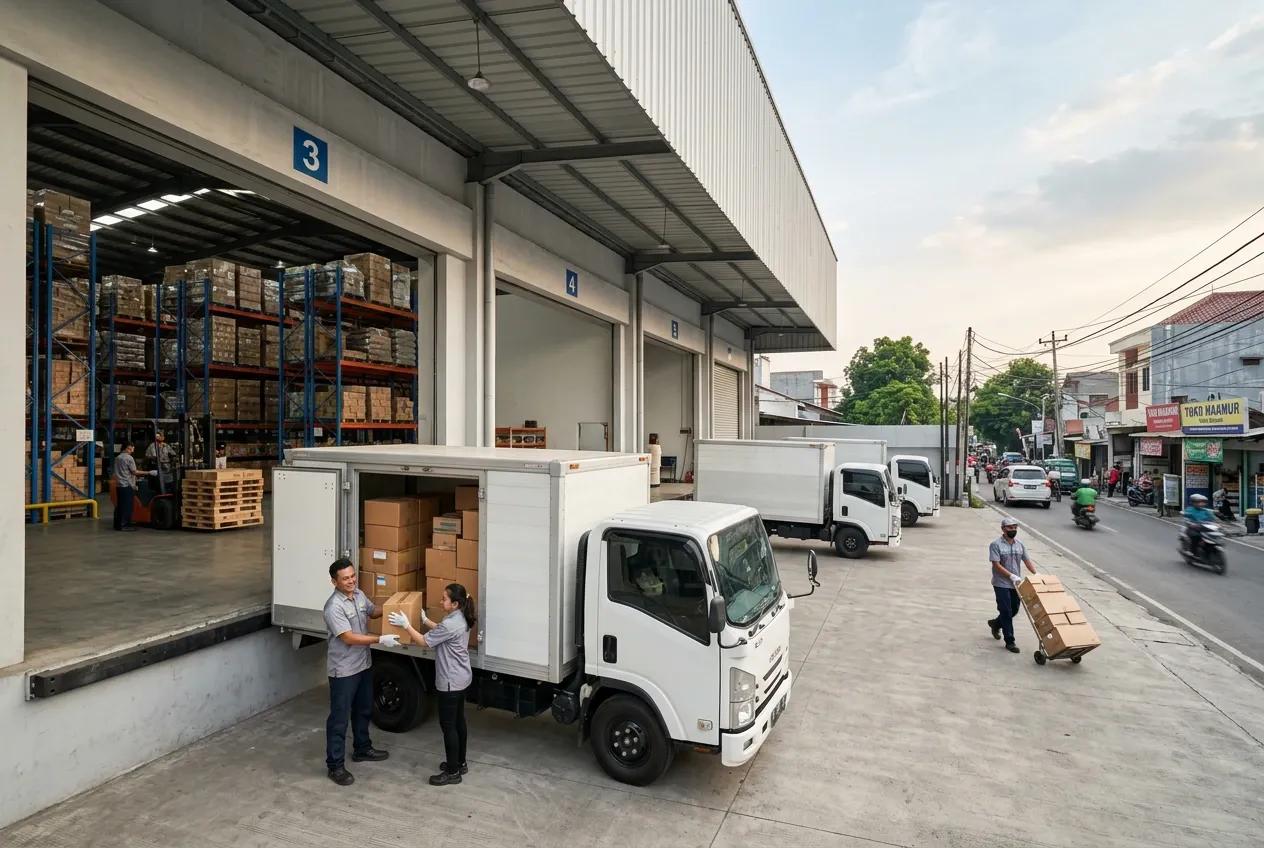
Effective product distribution is an important part of business success. The process involves moving products from warehouses to different markets and outlets while managing delivery time, transportation costs, and product availability.
Good product distribution involves planning, inventory management, transportation, and delivery coordination. Each stage needs to be managed carefully to keep products moving according to demand and delivery schedules. To improve this, companies often focus on optimizing routes, maintaining accurate stock levels, and streamlining delivery processes to ensure products reach customers efficiently.
Strategies to Optimize Product Distribution
Product distribution directly affects how efficiently goods reach customers. For FMCG companies, managing distribution means handling high order volumes, frequent deliveries, and tight delivery schedules every day. Poor route planning, inefficient transport management, limited visibility, and inventory issues can increase costs and disrupt distribution.
Several strategies can help distributors manage these challenges, reduce operational costs, and keep deliveries on schedule.
- Plan Delivery Routes
Route planning is a key part of successful product distribution. In the FMCG industry, products need to move quickly from warehouses to outlets, making route selection an important factor in delivery performance.
An efficient route can reduce travel time and transportation costs. By considering traffic, distance, road conditions, delivery schedules, and vehicle capacity, companies can select routes that fit each delivery plan.
Route planning also helps delivery teams avoid congested roads, optimize each trip, and arrive at customer locations on schedule. - Use Real-Time Tracking
Real-time tracking gives distribution teams instant visibility into the location and status of goods during delivery. Teams can monitor shipment movements from departure to arrival and identify any changes during the journey.
Accurate tracking data also helps managers monitor delivery progress, coordinate with drivers, and respond to shipment issues promptly. - Consolidate Shipments
Combines multiple orders into a single delivery to maximize vehicle capacity and reduce unnecessary trips. For distributors handling frequent deliveries, combining shipments can improve the use of available space and resources.
Consolidated shipments can lower delivery costs while reducing the number of trips required to serve customers. Fewer delivery trips also help reduce road congestion and limit delays across the distribution process. - Select the Right Transportation Mode
Product distribution involves different transportation factors, including product characteristics, delivery distance, cost, and required delivery time. Companies need to select a transportation mode that fits the needs of each shipment.
Whether goods are transported by land, air, or sea, the right choice can help manage transportation costs and delivery time. Selecting the suitable mode also helps avoid unnecessary expenses and allocate transportation resources efficiently. - Partner with Third-Party Logistics Providers
Working with third-party logistics providers can help distributors manage transportation and delivery activities. Logistics providers typically have established infrastructure, transportation networks, and operational expertise.
A suitable logistics partner can help manage delivery capacity, transportation planning, and shipment handling. It also allows distributors to focus on core distribution activities while a specialized provider handles logistics operations. - Inventory Management
Accurate inventory management helps companies maintain product availability while keeping stock levels aligned with demand. Companies need clear visibility into stock levels, product movement, and demand across warehouses and distribution areas.
Regular inventory monitoring helps prevent excess stock and stockouts, while accurate stock data supports better replenishment and distribution planning. With the right inventory levels in each location, companies can fulfill orders on time and avoid unnecessary storage and handling costs. - Leverage Data
Data can provide valuable insights into distribution activities. Delivery records, customer demand, inventory movement, sales performance, and transportation data can reveal patterns that support better decision-making.
These insights can support better route planning, inventory allocation, and delivery scheduling. Data also helps companies respond to changes in customer demand and market conditions with timely adjustments to their distribution activities. - Digitalization
Digitalization has become an important part of modern distribution. Many distributors now use software and automation to manage sales, inventory, warehouse activities, delivery, and other operational processes.
Technology can help automate routine processes, improve access to operational data, and reduce manual work. For distributors operating in a competitive and constantly changing market, digital tools can also help manage costs and improve distribution performance. - Train Employees
Technology alone is not enough to improve distribution performance. Employees also need the knowledge and skills required to manage distribution processes and use digital tools correctly.
Well-trained employees understand distribution procedures, technology, and supply chain practices. They can respond to operational challenges, identify opportunities to improve processes, and provide better service to customers. - Measure Performance
The final strategy is to measure distribution performance using relevant KPIs. Distribution teams need clear metrics to understand whether delivery activities are meeting company targets.
Key metrics can include delivery time, transportation costs, order fulfillment, on-time delivery, vehicle utilization, and inventory turnover. Regular performance measurement helps identify areas that need attention and gives management a basis for making better distribution decisions.
Improve Product Distribution with BOSNET Solutions
BOSNET provides end-to-end solutions for distributors to monitor operations, sales performance, inventory movement, and distribution activities in real time. The following solutions are designed to support product distribution:
- Distribution Management System (DMS)
A Distribution Management System (DMS) serves as the foundation of distribution automation by managing and automating key operational processes.
The system centralizes sales activities, order management, inventory information, and distribution operations in a single platform. With real-time visibility across the business, companies can reduce manual work, minimize input errors, and improve operational accuracy. - Mobile Distribution
Mobile Distribution is a mobile application designed to help field sales teams manage customer visits and sales activities.
The application provides visibility into field operations, standardizes sales reporting, and enables sales representatives to record activities directly on their mobile devices. - Warehouse Management System (WMS)
A Warehouse Management System helps businesses manage warehouse activities more efficiently.
The system automates processes including receiving, storage, picking, and shipping activities. As a result, businesses can improve inventory management, reduce labor costs, and maintain accurate inventory records across warehouse operations. - Smart Route
Route optimization solutions help businesses identify the most efficient delivery routes for field teams and drivers. - Mobile Delivery
Mobile Delivery enables drivers and delivery teams to manage distribution activities directly from their mobile devices. The solution provides real-time delivery tracking, digital proof of delivery, and delivery confirmation.
From sales execution and order management to warehouse operations and delivery processes, BOSNET helps businesses gain better visibility across the entire distribution cycle.
It's time to move beyond manual processes and adopt a distribution system designed to support future business growth.
Contact us to learn how BOSNET can improve your product distribution.
#BOSNET #BestFMCGRunsBOSNET #Distribution #SupplyChain #IncreaseRevenue #ReduceCost