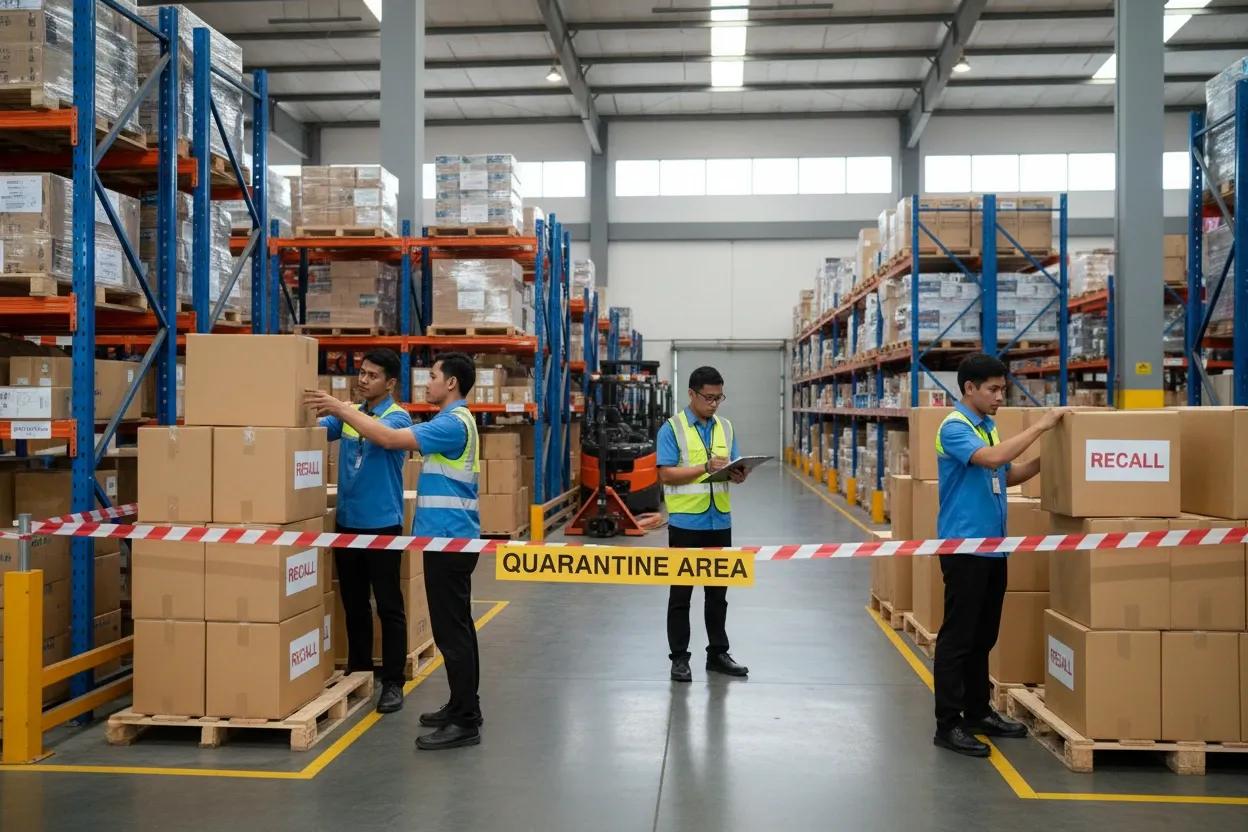
Product quality issues can happen at any stage, even after products have been shipped or distributed. In these situations, a product recall helps businesses identify affected products, remove them from circulation, and prevent further distribution.
Managing product recalls can become challenging without accurate inventory records and product traceability. Businesses need complete visibility into product movement to locate affected inventory quickly, minimize operational disruption, and keep distribution activities running as planned.
Definition of Product Recall
Product recall is the process of withdrawing products from warehouses or the market after issues are identified, such as production defects, quality issues, labeling errors, or safety risks. The goal is to prevent products that do not meet company or regulatory standards from remaining in circulation.
The process also includes tracking and managing affected products, whether they are still stored in the warehouse or have already been distributed to retailers or customers. Accurate product traceability helps identify affected inventory and recover products faster.
Why Do Product Recalls Happen?
Recalls can occur for several reasons, ranging from manufacturing issues to regulatory compliance issues. Understanding the cause helps businesses respond quickly, identify affected inventory, and prevent products from remaining in circulation.
- Production Errors
One of the most common reasons for a product recall is a production error. Products may be recalled if they do not meet manufacturing specifications or contain design defects that could create safety risks. - Hazardous Materials
Recalls may also occur when products contain hazardous materials or contaminants. Examples include food contaminated with harmful pathogens or cosmetic products containing ingredients that may cause serious allergic reactions. - Regulatory Compliance
Products may be recalled when they fail to meet regulatory standards. Government agencies, including the FDA and BPOM, enforce regulations related to product quality, labeling, and safety. If a product does not comply with those regulations, it may need to be removed from the market. - Labeling Issues
Incorrect or incomplete product labels are another common reason for a recall. Missing ingredient information, inaccurate usage instructions, incorrect expiration dates, or undeclared allergens can lead to product recalls to prevent customer confusion and safety risks.
Functions of Product Recall in Warehouse Management
Product recall helps businesses identify, isolate, and recover affected products before they continue moving through the supply chain. A well-managed recall process also keeps inventory records accurate and makes recalled products easier to track from the warehouse to delivery.
- Maintain Inventory Accuracy
Product recall helps identify affected products and separate them from available inventory. As recalled items are removed, inventory records remain accurate, reducing the risk of shipping the wrong products. - Improve Product Traceability
Every recalled product can be traced by its batch, serial, or lot number. Complete traceability helps locate affected inventory quickly, whether it is still in the warehouse or already in the distribution process. - Reduce Operational Losses
An organized recall process reduces the time needed to locate, collect, and record affected products. It also helps prevent duplicate handling, unnecessary inventory movement, and additional operational costs. - Support Regulatory Compliance
Industries including food and beverage, pharmaceuticals, cosmetics, and consumer goods must comply with product safety and quality regulations. A documented product recall process helps maintain complete records, simplifies inspections and audits, and ensures that recalled products are removed from circulation in accordance with regulatory standards.
Tips for Managing Product Recalls
A fast and well-organized product recall depends on accurate product tracking and complete inventory visibility. Here are several practices that can help improve the recall process.
- Use Barcodes
Assign a barcode, batch number, or serial number to every product. Product identification becomes much faster, making it easier to locate affected inventory and separate recalled items from available stock. - Conduct Regular Audits
Regular warehouse audits help identify inventory discrepancies before they become larger issues. Reviewing inventory records, product locations, and stock accuracy on a routine basis also reduces the risk of product recalls caused by inventory errors. - Use Distribution Management Software
Distribution software provides visibility into product movement from the warehouse to delivery. With real-time inventory and transaction records, businesses can identify affected products faster and monitor the progress of product recalls across the distribution process. - Implement a Warehouse Management System (WMS)
A Warehouse Management System (WMS) helps manage inventory movements, product locations, and stock records inside the warehouse. When a product recall occurs, warehouse teams can quickly locate affected inventory, isolate recalled products, and update inventory records without disrupting daily warehouse operations.
BOSNET Solutions for Product Recalls
Managing product recalls requires accurate product tracking and complete visibility across warehouse and distribution activities. BOSNET provides an integrated suite of solutions that helps businesses improve productivity, increase visibility throughout the supply chain, and manage product recalls with greater accuracy.
- Distribution Management System (DMS)
Distribution Management System (DMS) manages and automates distribution processes from order management to product delivery. The solution provides visibility throughout the supply chain, making it easier to trace affected products, monitor inventory movement, and identify products that need to be recalled. - Warehouse Management System (WMS)
A Warehouse Management System (WMS) helps manage warehouse operations and inventory movement by maintaining accurate stock records. The solution supports product tracking, batch and location management, inbound and outbound activities, and warehouse inventory visibility, enabling recalled products to be quickly identified, isolated, and recorded. - Mobile Delivery
Mobile Delivery enables drivers and delivery teams to manage delivery activities from their mobile devices. With real-time delivery tracking, digital proof of delivery, and delivery confirmation, businesses can identify delivered products, verify shipment records, and support product recall activities with complete delivery information.
150+ Renowned Brands Trust BOSNET for Their Distribution
Over 150 brands rely on BOSNET to manage their distribution and sales processes efficiently. BOSNET provides an end-to-end solution for distributors to track operations, performance, and sales in real time.
Contact us to see how BOSNET can streamline your operations and deliver real-time visibility across your distribution network.
#BOSNET #BestFMCGRunsBOSNET #Distribution #SupplyChain #IncreaseRevenue #ReduceCost