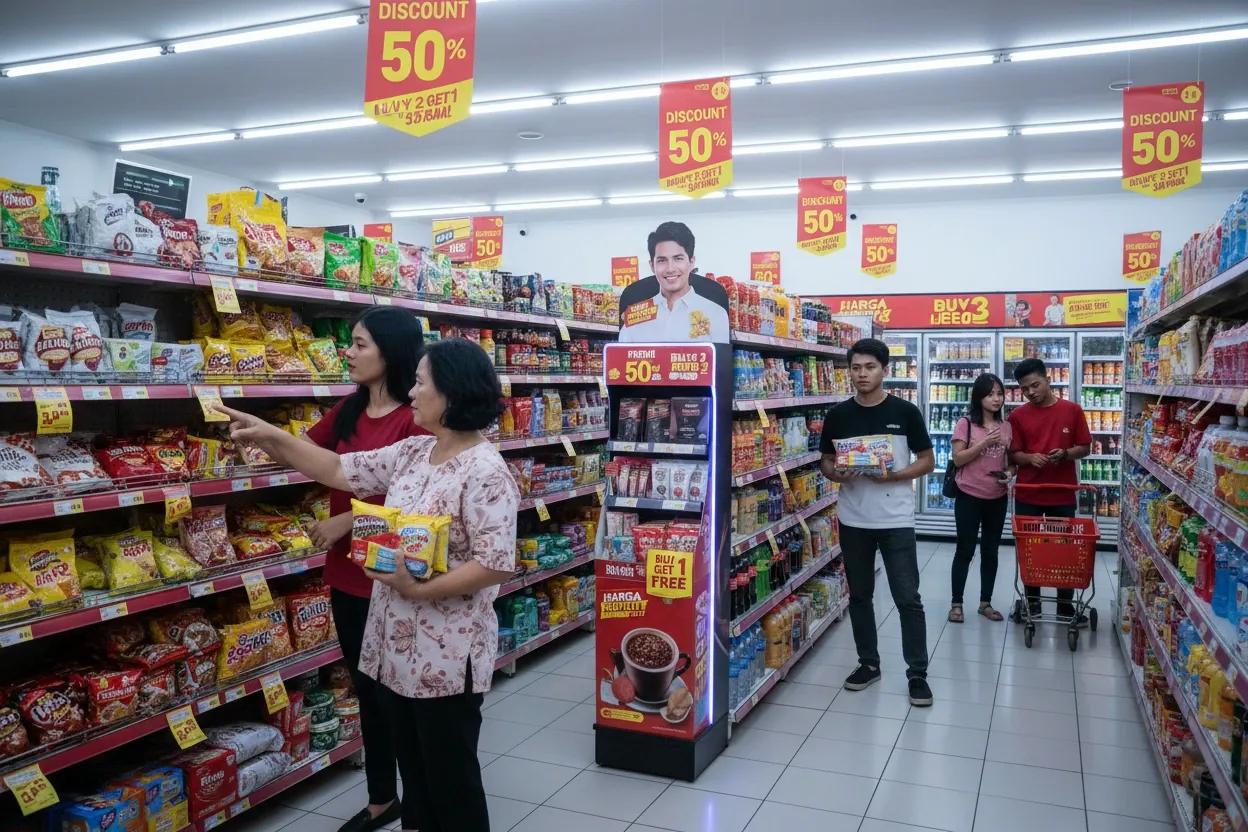
Discounts can attract customers and encourage them to make a purchase. However, lowering the price also affects the revenue earned from each transaction. A discount that brings in more orders does not always result in higher profit, especially when the discount is not aligned with the product margin or sales target.
Before offering a discount, businesses need to consider the product margin, sales target, purchase value, and promotion period. The discount should give customers a clear reason to purchase while keeping the financial impact within the planned target.
Types of Discounts That Can Drive Sales
Discounts are one of the most common promotional strategies to increase sales. A well-planned discount can encourage customers to buy sooner, increase transaction value per visit, and introduce products to new customers.
Different discount types serve different sales objectives. Some focus on customer loyalty, while others encourage larger purchases or attract first-time buyers. Here are several discount types that can help drive sales.
- Member Discount
Member discounts offer special prices or discounts to customers who join a loyalty program. These discounts are commonly provided through a membership app, allowing customers to receive a discount on eligible purchases.
Member discounts can encourage repeat purchases and help maintain customer loyalty. The data collected from this type of discount can also provide insights into customer buying patterns. - Cashback
Cashback gives customers a portion of their purchase value back after completing a transaction. Principals and brands often use cashback programs to encourage customers to place larger orders or reach a specific purchase value.
For example, customers may receive Rp50,000 in cashback after reaching a minimum purchase of Rp500,000. The offer can encourage customers to increase their order value to qualify for the cashback. - Buy One Get One
Offers customers an additional product when they purchase a specific item. The promotion can attract new customers, introduce new products, or encourage purchases of selected items.
For example, a brand launching a new product can offer a Buy One Get One promotion to encourage customers to try it. The same promotion can also be applied to selected products that the company wants to sell at a higher volume. - Product Bundle
Combine several products into one package at a discounted price. Companies use this type of discount to encourage customers to try products that are less popular or have lower sales.
For example, a brand can combine a best-selling product with a less popular item in one bundle. Customers can try several products in a single purchase while receiving a lower combined price. - First Transaction
Offered to customers who have never made a purchase before. The offer gives new customers an incentive to complete their first transaction.
For example, a business can offer 10% off the first order or provide Rp25,000 off after reaching a minimum purchase value.
First transaction discounts can help attract new customers and turn initial interest into an actual purchase. - Volume Discount
Volume discounts give customers a lower price when they purchase products in larger quantities. The discount usually increases once customers reach a specific purchase volume.
For example:
- Buy 10 units: Regular price
- Buy 20 units: 5% discount
- Buy 50 units: 10% discount
Volume discounts are commonly used in the FMCG industry to encourage customers to purchase more units in a single transaction. - Seasonal Discount
Seasonal discounts are offered during specific periods, holidays, or seasonal campaigns to encourage customers to purchase selected products. FMCG brands can use these promotions to increase sales during periods when customer demand is expected to change.
For example, a brand can offer a 15% discount on selected products during Ramadan, the year-end holiday period, or a back-to-school campaign.
Managing Discounts Across Outlets
A promotion may look good on paper, but its implementation can vary across outlets. Some outlets may run out of promotional products, display the wrong price, miss the promotional display, or use a different shelf arrangement from the planned planogram. When these issues go unnoticed, customers may not receive the intended offer even though the promotion is still running.
For that reason, companies need to monitor their discount programs throughout the promotion period. Merchandisers need to visit outlets regularly to check product availability, promotional displays, pricing, and planogram compliance. Each visit can also be recorded in a report, including the findings and activities completed at the outlet.
Sales teams and management can review these reports to see how the promotion is being implemented across outlets and identify issues that need to be addressed while the promotion is still running.
Optimize Promotions Across Outlets with BOSNET Mobile Merchandiser
BOSNET Mobile Merchandiser helps your team monitor every promotional activity across the field. From product availability and promotional displays to planogram compliance, merchandisers can record outlet visits, capture photo evidence, and report activities directly from their mobile devices.
BOSNET Mobile Merchandiser provides centralized monitoring and real-time reporting, giving sales teams clear visibility into promotion activities across outlets, helping identify issues during the campaign, and ensuring promotions are implemented as planned.
Contact us to discover how BOSNET can help businesses monitor and manage promotional activities across outlets.
#BOSNET #BestFMCGRunsBOSNET #Distribution #SupplyChain #IncreaseRevenue #ReduceCost