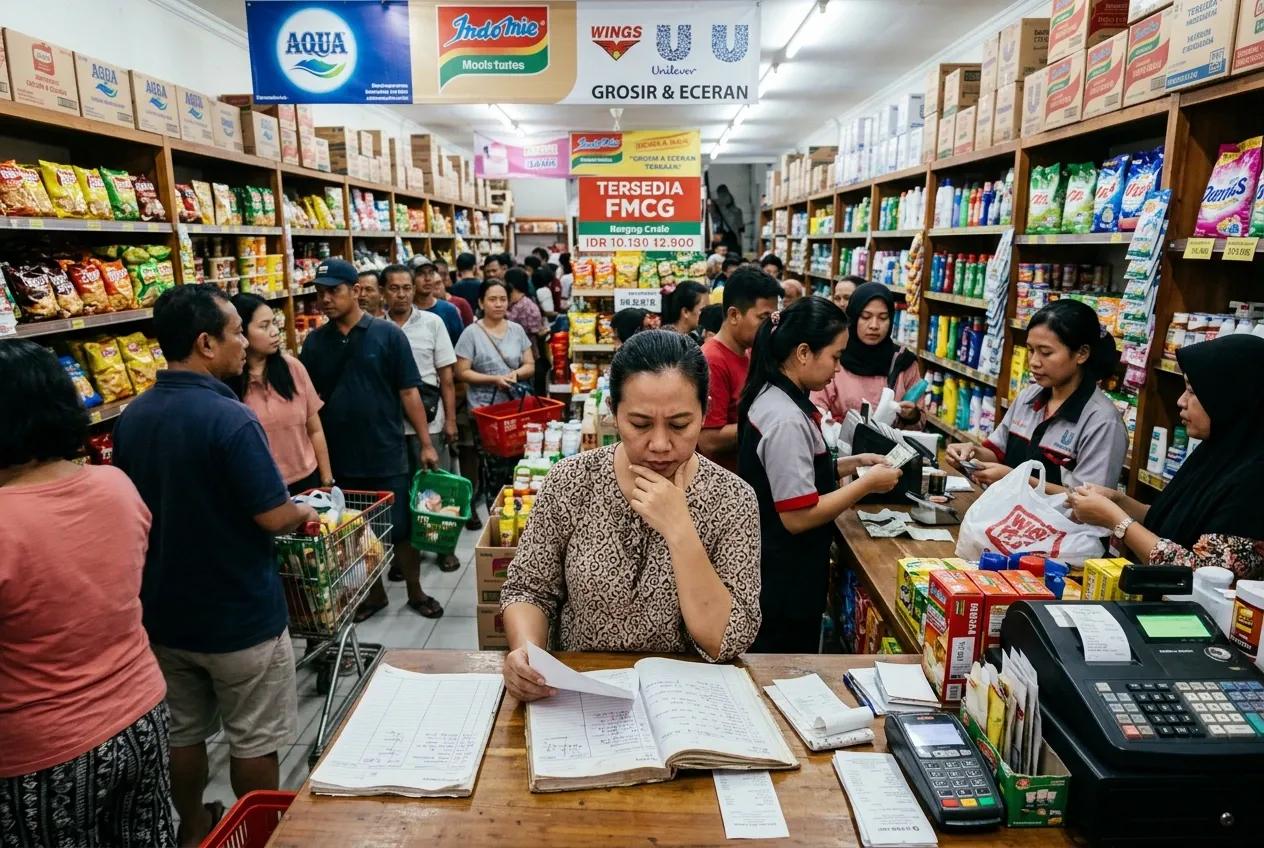
Higher sales are often seen as a sign of business growth. As revenue increases, it is easy to assume that profit will naturally follow. However, higher sales do not always translate into higher profit.
For distributors, sales growth often comes with additional costs. Discounts can reduce margins, larger order volumes can increase delivery expenses, and higher inventory levels may lead to higher storage costs and greater product loss risks.
That is why it is important to look beyond sales volume. Understanding product margins, operating costs, inventory, and customer profitability helps businesses determine whether sales growth is truly driving profitability.
Understanding the Difference Between Sales and Profit
Sales and profit measure two different aspects of business performance. Sales represent the revenue generated from selling products, while profit is the amount that remains after all costs associated with generating that revenue have been deducted.
For example, a distributor may increase monthly sales from Rp1 billion to Rp1.2 billion, generating an additional Rp200 million in revenue. However, if product costs, discounts, delivery expenses, warehouse costs, and other operating expenses also increase, the additional revenue may contribute only a small increase in profit.
Factors That Affect Sales and Profit
- Higher Sales Can Come With Lower Margins
Product mix plays a significant role in profitability because not every product delivers the same margin.
A distributor may achieve higher sales by selling more low-margin products. While revenue increases, the profit earned from each sale may be significantly lower.
For example, Product A may generate a 20% margin, while Product B generates only 8%. If most sales growth comes from Product B, total revenue may increase without a meaningful improvement in gross profit.
By monitoring sales performance across products, categories, brands, and customers, distributors can identify which products, categories, brands, or customers generate the most profit. - Discounts and Promotions
Discounts and promotions can help increase sales volume and attract more customers. However, they also reduce the margin earned from each sale.
For example, a product that normally generates a 15% margin may deliver significantly lower profit once a large discount is applied. To justify the promotion, the additional sales generated must be enough to offset the reduced margin and promotional costs.
To measure whether a promotion is truly profitable, distributors should evaluate key metrics such as:
- Sales before and after the promotion
- Discount value
- Gross margin
- Promotional cost
- Incremental sales
- Profit - Distribution Costs
Sales growth often leads to more deliveries, warehouse activities, picking, packing, and transportation. While expanding into new areas can increase revenue, it can also drive up operating costs if distribution is not managed efficiently.
For example, inefficient delivery routes can result in higher fuel consumption, lower vehicle utilization, and increased driver hours. - Inventory
Supporting sales growth requires sufficient inventory to meet customer demand. However, carrying excess inventory can increase both costs and risk.
- High inventory levels can lead to:
- Higher warehouse costs
- Slow-moving inventory
- Expired products
- Damaged stock
- Lower inventory turnover
- Working capital tied up in inventory - Business Inefficiency
Manual processes, inefficient sales routes, duplicate administrative work, and delivery delays can reduce profits.
When sales representatives spend too much time on administrative tasks, they have less time to visit customers and generate new sales. Likewise, inefficient delivery planning can increase travel distance and fuel consumption.
Strategies To Increase Sales and Profits
Here are several strategies that can help increase sales and profits:
- Monitor Promotions
Promotions can increase sales volume and encourage customers to purchase specific products. However, their performance should be monitored both during and after the campaign.
During the promotion, distributors can track sales volume, discount value, product performance, and customer response. Once the promotion ends, the results should be evaluated to determine whether the additional sales generated were sufficient to offset the discounts and promotional costs.
By comparing sales performance, product margins, and overall profitability, distributors can identify which promotions deliver the highest return and which ones reduce margins. - Reduce Distribution Costs
Distribution costs refer to the total expenses a business incurs to move products from the warehouse to the end consumer. These expenses can include transportation, fuel, vehicle maintenance, warehousing activities, delivery labor, and order fulfillment.
Depending on the industry, delivery model, and business scale, distribution costs can account for around 15% to 30% of total revenue.
Distribution software can help businesses monitor delivery schedules, routes, vehicle utilization, and delivery costs. With real-time visibility, distributors can identify high-cost routes and reduce unnecessary travel. - Optimize Inventory Management
Excess inventory increases storage costs and the risk of product loss, while insufficient inventory can lead to missed sales opportunities.
Distributors can apply inventory management methods that match their product characteristics and demand patterns. For products with expiration dates, FEFO (First Expired, First Out) can help ensure products with the earliest expiration dates are dispatched first. Other inventory methods, including FIFO, can also be applied based on product and warehouse requirements. - Increase Average Order Value
Increasing profitability is not always about generating more orders. Another effective strategy is maximizing the value of each transaction.
This can be achieved by recommending complementary products based on the customer's purchase history. For example, a customer purchasing a beverage product may also be offered related products that are commonly bought together.
BOSNET Solutions To Increase Revenue and Reduce Costs
BOSNET provides an integrated suite of solutions that helps improve productivity, increase visibility, and manage distribution activities across the business. The following solutions are designed to increase revenue and reduce costs:
- Distribution Management System (DMS)
Distribution Management System (DMS) is a core solution designed to manage and automate distribution processes end-to-end. Built for distributors with high transaction volumes and complex operational requirements, DMS centralizes key distribution activities into a single platform. - Warehouse Management System (WMS)
Warehouse Management System (WMS) helps distributors manage warehouse operations with greater accuracy and efficiency. From inventory management and product tracking to inbound, outbound, and order fulfillment processes, WMS improves inventory visibility, reduces operational errors, and optimizes warehouse productivity. - Smart Route
Smart Route analyzes key parameters for delivery planning such as delivery schedules, customer locations, vehicle capacity, and route conditions. The system generates the most efficient delivery routes to reduce transportation costs, shorten delivery times, improve vehicle utilization, and increase delivery productivity.
150+ Renowned Brands Trust BOSNET for Their Distribution
Over 150 brands rely on BOSNET to manage their distribution and sales processes efficiently. BOSNET provides an end-to-end solution for distributors to track operations, performance, and sales in real time.
Contact us to see how BOSNET can streamline your operations and deliver real-time visibility across your distribution network.
#BOSNET #BestFMCGRunsBOSNET #Distribution #SupplyChain #IncreaseRevenue #ReduceCost