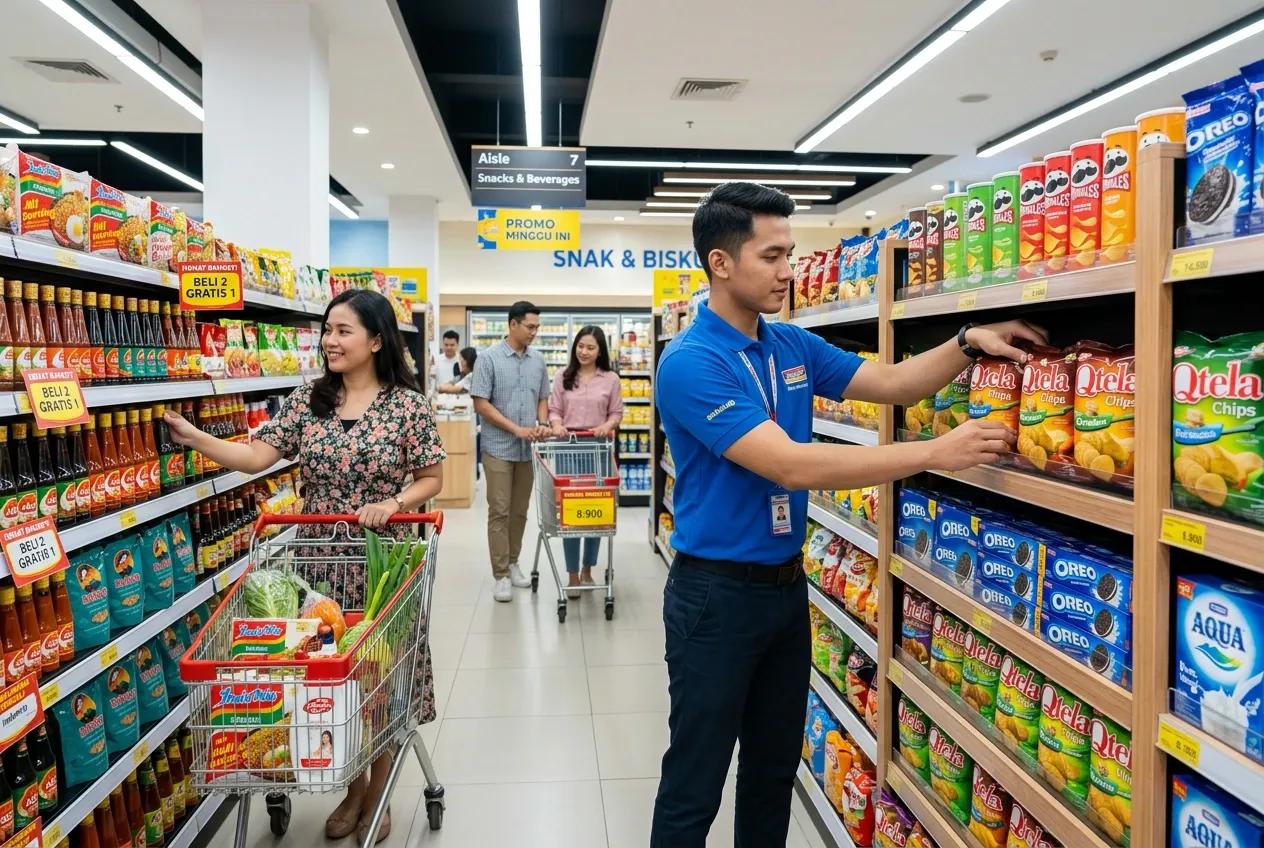
Most purchase decisions are made in-store, where product visibility, shelf placement, and availability can influence buying decisions. Even well-known brands can lose sales opportunities when products are difficult to find, out of stock, or displayed inconsistently across outlets.
This is where in-store merchandising plays an important role. Merchandising helps improve product visibility, support promotional activities, maintain product availability, and create a better shopping experience. Together, these factors can significantly increase your retail sales.
Why Does Merchandising Directly Impact Sales?
Many purchase decisions are influenced by how products are presented on the shelf. Products that are easy to see, easy to find, and displayed in the right location are more likely to attract shoppers' attention and encourage purchase decisions.
This is why in-store merchandising is an important part of retail execution. Product placement, shelf visibility, stock availability, and promotional displays all influence how products are presented in-store. When these elements are managed consistently, products become more visible to shoppers and have a greater opportunity to generate sales.
In-Store Merchandising Strategies in FMCG
In-store merchandising helps FMCG brands attract shopper attention and influence purchase decisions at the point of sale. Several strategies are commonly used to drive retail sales:
- Product Placement
The position of a product on the shelf can influence how easily shoppers notice it. High-priority or fast-moving products are often placed at eye level to increase visibility and encourage purchases. Planogram software can also help brands evaluate shelf layouts and optimize product placement. - Promotional Displays
End caps, promotional displays, and featured areas help highlight selected products within the store. Positioning products in high-traffic locations can increase product exposure and encourage impulse purchases during promotional campaigns. - Cross Merchandising
Displaying complementary products together encourages shoppers to purchase related items. For example, placing coffee next to creamer or pasta beside pasta sauce makes it easier for shoppers to find products that are commonly purchased together, helping increase basket value. - Point-of-Sale Materials
Shelf talkers, wobblers, posters, and other point-of-sale materials communicate product information directly at the shelf. They help highlight promotions, pricing, or product benefits while increasing product visibility at the point of purchase.
How to Measure In-Store Merchandising Performance
- Sales Uplift
Compare sales performance before and after merchandising activities to evaluate their impact on product sales. - Product Visibility
Assess how easily shoppers can see and locate products on the shelf during their shopping journey. - Share of Shelf
Measure the amount of shelf space allocated to a brand compared with competing products to understand in-store visibility. - Planogram Compliance
Evaluate whether products are displayed according to the approved planogram and shelf layout. - Out-of-Stock Rate
Monitor how frequently products are unavailable on the shelf to identify potential lost sales opportunities. - Promotion Compliance
Verify that promotional displays, pricing, and point-of-sale materials are implemented according to the campaign guidelines. - Sales per Outlet
Compare sales performance across different outlets to identify stores with stronger or weaker product performance. - Basket Size
Measure the average number of items or the total purchase value per transaction to evaluate cross-selling opportunities and shopper purchasing behavior.
Common In-Store Merchandising Challenges
- Products Are Not Displayed According to the Planogram
Products that are not displayed according to the approved planogram can reduce product visibility and create inconsistent shelf presentation across outlets. Incorrect product placement may also affect how easily shoppers can find the products they are looking for. - Missing Promotional Displays
Missing, incorrectly installed, or poorly maintained promotional displays can reduce campaign visibility and limit the effectiveness of promotional activities at the outlet. - Out of Stock
Even the best shelf placement cannot generate sales when products are out of stock. Empty shelves can lead to missed sales opportunities and reduce customer satisfaction. - Inconsistent In-Store Merchandising Execution
Differences in shelf layouts, product displays, and promotional materials across outlets can create inconsistent shopping experiences and make it difficult to maintain consistent brand presentation. - Limited Visibility into Merchandising Activities
Many companies still rely on manual reports to monitor merchandising activities. Without a digital merchandising solution, management has limited visibility into outlet visits, planogram compliance, product availability, and merchandiser performance.
Increase Retail Sales with BOSNET Mobile Merchandiser
Improve merchandising execution across every outlet with BOSNET Mobile Merchandiser.
BOSNET Mobile Merchandiser helps businesses take full control of their merchandising operations and ensure product availability across all outlets. Our platform provides the tools to monitor field execution in real time, validate store visits with photo and GPS proof, and manage shelf visibility.
Contact us to learn how BOSNET Mobile Merchandiser can increase your retail sales.
#BOSNET #BestFMCGRunsBOSNET #Distribution #SupplyChain #IncreaseRevenue #ReduceCost